Last updated:
Scroll through social media long enough and you’ll see it: a glass of water swirling with tiny black seeds, pitched as a natural appetite suppressant, a “gut reset” or even a cheap alternative to weight-loss drugs. Chia seed water is simple to make and genuinely nutritious, which helps explain its staying power. But does it actually help digestion or weight loss? Here’s what the evidence shows, where the hype outruns it, and how to drink it safely.
- Chia seeds are rich in fiber, so chia water can support regularity and help you feel full, much like other fiber-rich foods.
- Human trials on chia and weight loss are mixed, and no study shows chia water alone causes meaningful weight loss.
- Never eat dry chia seeds and then drink water: a gastroenterology case report describes seeds expanding and blocking the esophagus.
- Verdict: a healthy habit for some people, not a weight-loss tool or a replacement for a balanced diet.
What is chia seed water?
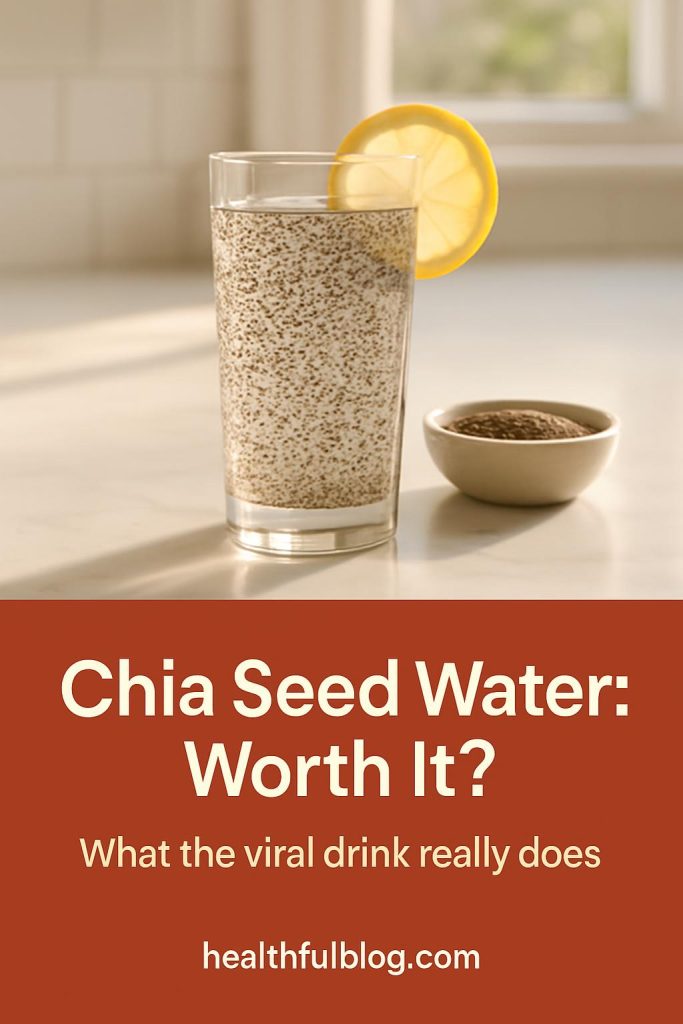
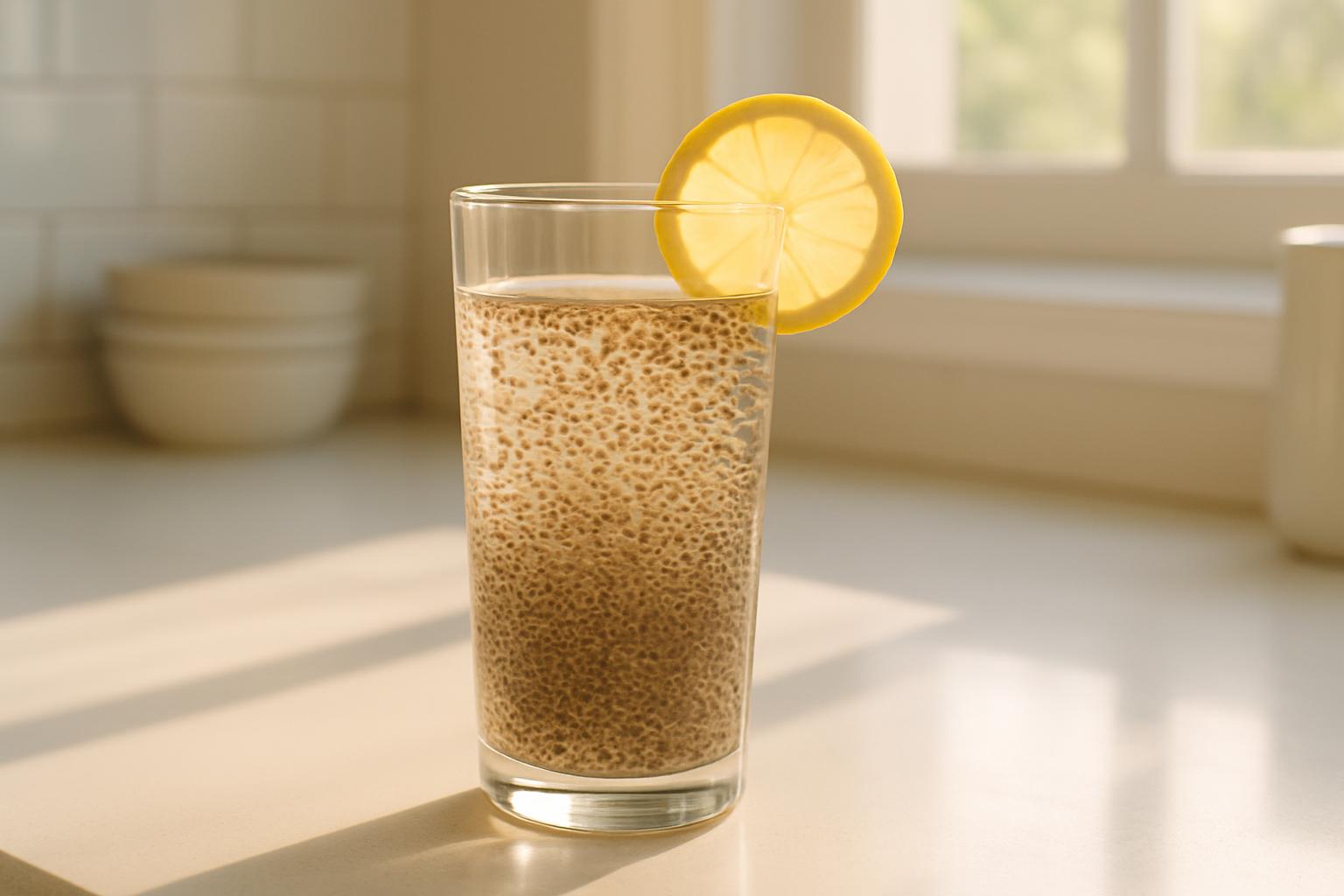
As Cleveland Clinic describes it, chia seed water is usually 1 to 2 tablespoons of chia seeds stirred into 8 to 10 ounces of water. The seeds soak up liquid and form a gel-like coating. Some people add lemon or lime juice for flavor, and many let the mixture sit for several minutes before drinking.
The idea is that the swollen seeds take up space in your stomach, slow digestion and keep you full, so you eat less later.
The viral claims vs. what we know
| Claim | What the evidence suggests | Verdict |
|---|---|---|
| It helps digestion and regularity | Chia is high in fiber, and fiber with adequate fluid supports regular bowel movements. No high-quality trials test chia water specifically. | Plausible |
| It curbs appetite | Soluble fiber slows digestion and may increase fullness, per a Cleveland Clinic dietitian. Effects in people are modest. | Partly true |
| It causes significant weight loss | Human trials are mixed; one found no effect on body weight, another found a small loss alongside a calorie-restricted diet. | Overstated |
| It works like a weight-loss medication | No study supports this comparison. | False |
What’s in chia seeds?
There’s no debate that chia seeds are nutrient-dense. According to Harvard’s Nutrition Source, about two tablespoons (28 grams) provide roughly 140 calories, 4 grams of protein, 11 grams of fiber and 7 grams of mostly unsaturated fat, along with calcium. Chia is also one of the richest plant sources of alpha-linolenic acid (ALA), a type of omega-3 fat.
That fiber number is significant. A single serving covers a sizable share of the 21 to 38 grams most adults need daily. It also means chia water is not “just water”: the calories are modest but real, and they count toward your daily total.
Does chia seed water help digestion?
For many people, a fiber boost does help with regularity. Soluble fiber, the kind that forms chia’s gel, absorbs water and helps form softer stool. If your diet is low in fiber, a daily serving of soaked chia could make a noticeable difference.
But there are caveats. Cleveland Clinic notes that eating too much fiber without enough water can actually cause constipation, bloating and gas. If you rarely eat fiber now, a full serving every day may cause discomfort at first. Starting with a teaspoon or two and building up gives your gut time to adjust.
It’s also worth remembering that chia isn’t magic for gut health. Oats, beans, berries and whole grains offer similar benefits. Our gut-healthy overnight oats combine oats and chia in a breakfast you can make the night before.
Does chia seed water help with weight loss?
This is where the hype overtakes the science. Harvard’s Nutrition Source notes that while animal studies suggested benefits, literature reviews and controlled trials in humans have not shown a specific benefit of chia seeds on cardiovascular risk factors, including body weight.
Two human studies illustrate the mixed picture:
- No effect: In a study by Nieman and colleagues summarized by the American Society for Nutrition, overweight adults who ate 50 grams of chia seeds a day for 12 weeks saw no change in body mass, body composition or disease risk factors.
- A small effect: A University of Toronto study of 77 people with obesity and type 2 diabetes found that those who ate about 30 grams of chia daily for six months lost about 4 pounds, compared with about half a pound in a control group eating oat bran and inulin fiber. Both groups were also following calorie-restricted diets.
In other words, chia may give a slight edge as part of a structured eating plan, but there’s no good evidence that simply drinking chia water leads to meaningful weight loss. A Cleveland Clinic dietitian put it plainly: it “kind of” works, and it’s no replacement for overall healthy habits.
The real risk: dry chia seeds
The biggest safety issue isn’t chia water itself, but a shortcut some people try: swallowing a spoonful of dry seeds and chasing it with water. Chia seeds can absorb many times their weight in liquid. A case report highlighted by the American College of Gastroenterology describes seeds expanding in the esophagus and causing a blockage that required endoscopic removal.
To stay safe:
- Always soak chia seeds in liquid, or mix them into moist foods like yogurt or oatmeal, before eating.
- Give the seeds a few minutes to expand and stir to break up clumps.
- Be especially careful if you have any difficulty swallowing; Harvard advises extra caution for this group.
- Increase portions gradually and drink plenty of fluids during the day.
How to make it, and who should be cautious
A simple version: stir 1 tablespoon of chia seeds into about 8 ounces of water, wait several minutes, stir again and drink. Lemon, lime or a few berries can improve the taste.
Check with a doctor or registered dietitian first if you have a swallowing disorder, a history of bowel obstruction or narrowing, inflammatory bowel disease, or you’re on a prescribed low-fiber diet. For a broader look at building balanced meals, see our essential facts for a good diet.
The verdict
Chia seed water is a reasonable way to add fiber, omega-3 fats and fluid to your day, and it may help you feel fuller or more regular. The claims that it melts fat or rivals weight-loss medications are not supported. Treat it as one healthy option among many, not as a shortcut, and never eat the seeds dry.
Seek urgent care if you feel food stuck in your throat or chest, have trouble swallowing, or can’t keep down liquids. See a healthcare professional if bloating, constipation or abdominal pain persists after adding chia, or if you’re considering any diet change to manage diabetes, weight or a digestive condition.
Frequently asked questions
Is it OK to drink chia seed water every day?
For many healthy adults, a daily serving of properly soaked chia is fine. Start small, drink plenty of fluids and talk to your doctor if you have digestive or swallowing issues.
Should I drink chia water in the morning?
There’s no evidence that timing matters. Some people prefer it before a meal for fullness, but any time that fits your routine works.
How long should chia seeds soak?
Let them sit long enough to swell and form a gel, usually several minutes, and stir to prevent clumps. Never eat them dry.
Can chia water replace a meal?
No. It lacks the protein, vegetables and variety of a balanced meal and isn’t designed to be a meal replacement.
Sources
- Cleveland Clinic, Chia seed water and weight loss
- Harvard T.H. Chan School of Public Health, The Nutrition Source: Chia Seeds
- American College of Gastroenterology, Watch It Grow: Esophageal Impaction With Chia Seeds
- University of Toronto Temerty Faculty of Medicine, Chia seeds promote weight loss in people with diabetes
- American Society for Nutrition, The Real Scoop on Chia Seeds
Save this guide for later on Pinterest