Last updated:
Prebiotics and probiotics sound almost identical, and they often sit side by side on the same supplement shelf, but they do very different jobs. Probiotics are live microbes; prebiotics are the fibers and starches that feed the microbes already living in your gut. Knowing the difference can help you make better food choices and avoid paying for supplements you may not need.
- Probiotics are live microorganisms; prebiotics are nondigestible food components that feed gut microbes.
- You can get both from everyday foods: fermented foods for probiotics, and fiber-rich plants like onions, oats, beans and green bananas for prebiotics.
- Probiotic research is strain-specific, and expert guidelines support supplements for only a few situations.
- Add new prebiotic and probiotic foods gradually to limit gas and bloating, and check with a doctor before using supplements if you are immunocompromised.
Prebiotics vs. probiotics: the basic difference
The National Center for Complementary and Integrative Health (NCCIH) defines probiotics as live microorganisms that are intended to have health benefits when consumed or applied to the body. A Mayo Clinic Health System nutrition specialist describes them as mainly bacteria and yeast that aid digestion.
Prebiotics, by contrast, are food for those microbes. Gail Cresci, PhD, RD, a digestive disease researcher at Cleveland Clinic, explains that prebiotics have to bypass digestion and reach the colon, where they act as a food source for gut microorganisms.
A simple way to remember it: probiotics are the residents, prebiotics are the groceries.
| Prebiotics | Probiotics | |
|---|---|---|
| What they are | Nondigestible fibers and starches | Live microorganisms, mainly bacteria and yeasts |
| Main job | Feed beneficial microbes already in your gut | Add microbes intended to provide a health benefit |
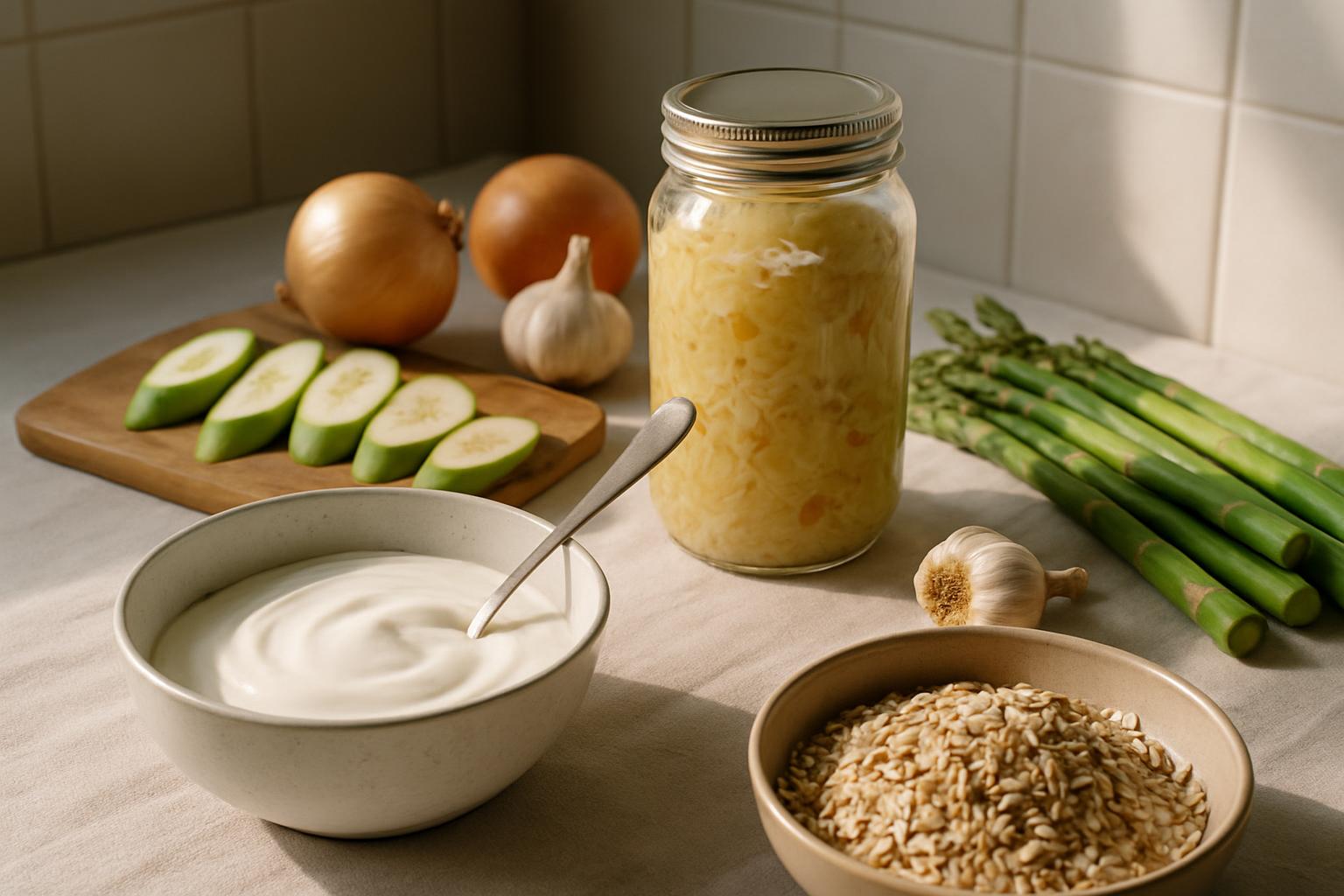
| Common food sources | Onions, garlic, asparagus, green bananas, oats, barley, beans, lentils | Some yogurts, many cheeses, sauerkraut, pickled vegetables, fermented teas |
| Common side effects | Gas, bloating if added quickly | Gas, bloating; rare serious infections in high-risk groups |
Food sources of prebiotics
Most prebiotics are types of fiber or resistant starch. Cleveland Clinic groups the main ones like this:
- Resistant starch: potatoes that are boiled then chilled, green bananas, barley, oats, rice, beans and other legumes.
- Inulin: asparagus, chicory root, garlic, onions, leeks and Jerusalem artichokes.
- Pectin: apples, carrots, raspberries, tomatoes and peaches.
Mayo Clinic’s list overlaps heavily, adding nuts, seeds, soybeans, dried beans, peas and lentils. In other words, if you are already working toward a fiber-rich diet, you are likely eating prebiotics. Our high-fiber foods list is a practical place to start, and a bowl of gut-healthy overnight oats combines oats, a prebiotic, with yogurt, a potential probiotic, in one easy breakfast.
Cresci notes that different microorganisms may use different prebiotics, so not every prebiotic has the same effect. Eating a variety of plants is a reasonable way to cover your bases.
Food sources of probiotics
Probiotics come mainly from fermented foods. Mayo Clinic lists certain yogurts, many cheeses, pickled vegetables, sauerkraut, fermented teas and apple cider vinegar.
The word “certain” matters. Not every fermented product contains live microbes by the time you eat it. A few practical tips:
- Read the label. Look for wording such as “live and active cultures” on yogurt and similar products.
- Check how it was processed. Heat treatment after fermentation can kill live cultures, so look for products that state they contain live microbes.
- Don’t assume all fermented foods are equal. Different foods contain different microbes, and research on one strain doesn’t automatically apply to another.
What the research shows about probiotics
Probiotics have some solid findings, but they are narrower than marketing suggests. According to NCCIH:
- Antibiotic-associated diarrhea: A 2017 review of 17 studies with 3,631 participants found probiotics reduced the likelihood of this diarrhea by about half.
- C. difficile: A 2017 analysis of 31 studies concluded probiotics can reduce the risk of C. difficile infection in adults and children taking antibiotics.
- Constipation: Evidence shows some benefit, particularly for Bifidobacterium lactis.
- IBS: A 2018 review of 53 studies found probiotics may help overall symptoms and abdominal pain, but firm conclusions about specific products are not yet possible.
The American Gastroenterological Association (AGA) took a cautious approach in its 2020 guidelines, according to an AGA news release. It found insufficient evidence to recommend probiotics for Crohn’s disease, ulcerative colitis or IBS, and recommended against them for acute infectious gastroenteritis in children. The panel chair, Grace L. Su, said patients taking probiotics for those conditions should consider stopping, since the supplements can be costly and benefit has not been proven. The AGA also stressed that effects are specific to particular strains and combinations.
When do supplements make sense?
For most healthy people, food is the simplest approach. Cleveland Clinic recommends getting prebiotics from food rather than supplements, and fiber-rich foods bring vitamins, minerals and other nutrients that a capsule can’t.
Probiotic supplements may be worth discussing with a clinician in specific situations that guidelines and reviews support. The AGA release lists:
- Helping prevent C. difficile infection in some people taking antibiotics
- Helping prevent necrotizing enterocolitis in preterm, low-birth-weight infants, under medical supervision
- Managing pouchitis, a complication after certain surgeries for inflammatory bowel disease
If you do try one, match the product to the strain that was studied for your situation, and give it a defined trial period rather than taking it indefinitely.
A note on regulation
Most probiotics are sold as dietary supplements, which do not need FDA approval before they are marketed, according to NCCIH. Their labels can make general claims about body function but cannot claim to treat or prevent disease without FDA authorization. A product marketed to treat a disease must go through clinical trials and FDA approval like a drug.
Safety and side effects
Both prebiotics and probiotics can cause gas and bloating, especially when you add a lot at once. Mayo Clinic recommends introducing new prebiotic and probiotic foods gradually. Cleveland Clinic notes that some people with IBS may have trouble with certain prebiotic-rich foods, such as some stone fruits. If bloating is a regular problem, our guide to bloating causes and relief may help.
Probiotic supplements carry more serious, though uncommon, risks. NCCIH reports that cases of severe or fatal infections have occurred in premature infants given probiotics, and the FDA issued a warning about this in 2023. NCCIH also lists these concerns:
- Infections in people with weakened immune systems
- Production of harmful substances by probiotic microbes
- Transfer of antibiotic-resistance genes
- Products contaminated with microbes not listed on the label
This article is general information, not medical advice. Talk with your doctor before taking probiotic supplements if you have a weakened immune system, a serious illness, a central line or recent surgery, or before giving them to an infant, especially one born prematurely. See a doctor for diarrhea lasting more than a couple of days, diarrhea with fever or blood, severe abdominal pain, or ongoing changes in bowel habits.
Frequently asked questions
Should I take prebiotics and probiotics together?
You can get both from food, for example yogurt with live cultures topped with oats and fruit. Products that combine both are sometimes called synbiotics, but there is no need to buy one to benefit from either.
Are prebiotics the same as fiber?
Many prebiotics are types of fiber or resistant starch, such as inulin, pectin and resistant starch. Not every fiber acts as a prebiotic, but a varied, fiber-rich diet supplies plenty.
Do I need a probiotic after antibiotics?
Research suggests probiotics can lower the risk of antibiotic-associated diarrhea and C. difficile in some people. Ask your doctor or pharmacist whether one makes sense for you and which strain to use.
Can probiotics help IBS?
Some studies show benefit for overall symptoms and pain, but the AGA found the evidence too limited to recommend them.
Why do prebiotic foods make me gassy?
Gut microbes ferment prebiotics, which produces gas. Adding them gradually usually makes this easier to tolerate.
Sources
- NCCIH, Probiotics: Usefulness and Safety
- Cleveland Clinic, What Are Prebiotics?
- Mayo Clinic News Network, Mayo Clinic Q&A: What are prebiotics and probiotics?
- American Gastroenterological Association via EurekAlert!, AGA guidelines on probiotics
Save this guide for later on Pinterest