Last updated:
If the TV keeps creeping louder or conversations in restaurants have become hard work, a hearing test is the logical first step. The good news is that hearing test cost is often low, and sometimes zero. This guide covers 2026 prices for each part of an audiologist’s evaluation, free and low-cost options, what online screenings can and cannot tell you, and exactly when Medicare Part B pays.
- Individual hearing tests average about $15 to $46 each in a national 2024 cost study, so a full audiologist evaluation is often in the low hundreds without insurance.
- Free options include online screenings from NIDCD and hearing aid makers, and free in-store tests at warehouse clubs for members.
- Medicare Part B covers diagnostic hearing exams, usually at 20% coinsurance after the deductible, but not exams to fit hearing aids.
- Since 2023, people with Medicare can see an audiologist once every 12 months without a doctor’s order for certain non-acute tests.
Hearing screening vs a full hearing evaluation
Not every “hearing test” is the same, and that drives the price. A screening is a quick pass/fail check, often online or in a store, that tells you whether you should be tested further. A diagnostic hearing evaluation by an audiologist is more thorough. The American Speech-Language-Hearing Association (ASHA) says it is “much more than ‘just a hearing test'”: it determines whether you have hearing loss, why, and how severe it is in each ear.
A screening is a reasonable first step if you only want to know whether something might be wrong. A full evaluation is what you need for a diagnosis, for hearing aid fitting, or if you have symptoms such as one-sided hearing loss or ringing in one ear.
How much does a hearing test cost in 2026?
The most detailed national figures come from a 2024 study of all 50 states and Washington, D.C., conducted for CareCredit. It priced each component separately:
| Test | National average | Typical range |
|---|---|---|
| Otoscopy (looking in the ear canal) | $40 | $31 to $76 |
| Pure-tone air conduction audiometry | $45 | $35 to $84 |
| Speech and word recognition | $45 | $36 to $83 |
| Tympanometry (middle ear function) | $23 | $18 to $44 |
| Acoustic reflex measurement | $15 | $12 to $29 |
| Tuning fork test | $46 | $35 to $85 |
A comprehensive evaluation usually combines several of these. Adding the averages for otoscopy, pure-tone audiometry, speech testing, tympanometry and acoustic reflexes gives about $170, as a rough self-pay estimate. Actual bills vary by region and clinic, and some practices charge a single flat fee instead.
What a hearing test includes
According to ASHA, an audiologist’s evaluation starts with a case history (your health, medications, noise exposure and the problems you notice), followed by a look in your ears with an otoscope to check for wax or other blockages. Then come the tests themselves, which commonly include:
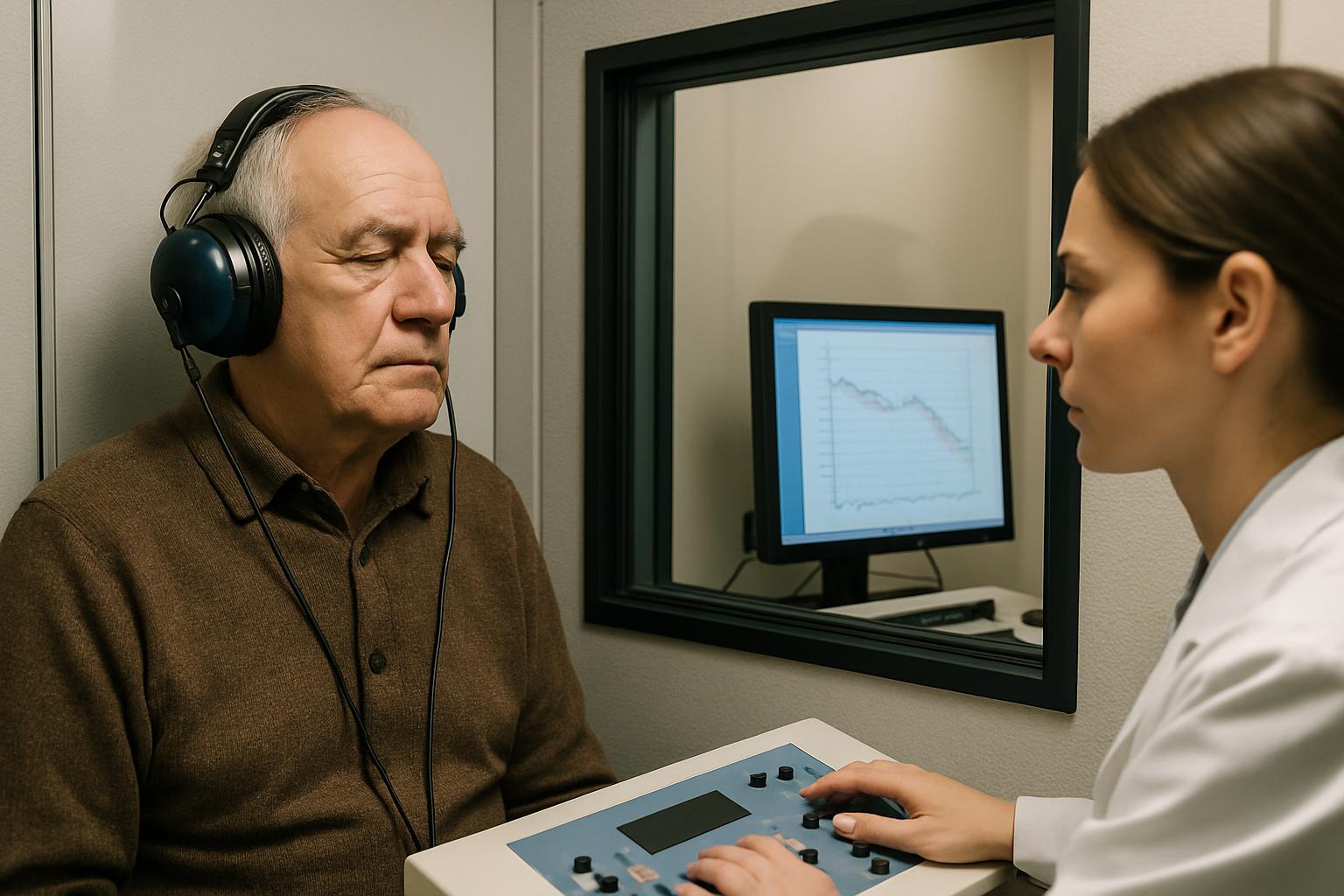
- Pure-tone testing: you listen through headphones in a sound booth and respond to beeps at different pitches and volumes. The result is your audiogram.
- Speech testing: you repeat words to show how clearly you understand speech, not just whether you hear sound.
- Tympanometry and acoustic reflexes: a small probe changes air pressure in the ear to check the eardrum and middle ear.
Afterward, the audiologist explains your results and may recommend hearing aids, other devices, or a visit to an ear, nose and throat doctor. If hearing aids are recommended, our guide to OTC vs prescription hearing aids explains your options.
Free and low-cost hearing test options
You may not need to pay anything for a first check:
- Warehouse club hearing centers: HearingTracker (updated September 2026) reports that Costco offers free hearing evaluations to members at most warehouses with a Hearing Aid Center. Tests are usually done by a licensed hearing aid dispenser, less often an audiologist, and take about 90 minutes. Membership starts at $65 a year.
- Online screenings: free checks are available from NIDCD and several hearing aid manufacturers (see below).
- Your insurance: if a doctor orders a diagnostic test for a medical reason, your plan may cover most of it.
- Hearing aid retailers: many offer free tests, but expect a sales conversation afterward.
Free tests from retailers can be useful, but they are run by businesses that sell hearing aids. If you are unsure about the results, or have unusual symptoms, a diagnostic evaluation with an audiologist is the safer route.
Online hearing tests: useful but limited
The Hearing Industries Association’s BetterHearing site lists free online hearing checks from nine manufacturers and retailers, plus a free 10-question screening quiz from the National Institute on Deafness and Other Communication Disorders (NIDCD) for adults ages 18 to 64. It is clear about the limits: an online hearing check “is no substitute for a professional hearing test.”
Online tests depend on your headphones, your device’s volume and background noise, so treat a “fail” as a reason to book a proper test, and a “pass” as reassurance only if you have no symptoms.
Does Medicare Part B cover hearing tests?
Yes, for diagnostic purposes. According to CMS, Medicare covers audiology services as diagnostic tests. UCSF’s hearing care guide explains that diagnostic hearing and balance exams are generally covered when they evaluate a medical problem, often at 20% coinsurance after the Part B deductible.
Key rules to know:
- Doctor’s order: generally required for Medicare to pay.
- Direct access exception: since January 1, 2023, an audiologist can provide certain hearing assessments without a physician order once every 12 months, according to ASHA. This applies to non-acute hearing loss; sudden hearing loss and balance (vestibular) problems still need an order.
- Not covered: hearing aids, and visits done mainly to prescribe, fit or adjust hearing aids, are generally excluded.
- Medicare Advantage: many plans include extra hearing benefits, but UCSF notes the scope varies widely by plan and network.
Private health plans often follow a similar pattern: Aflac notes that health insurance typically covers tests deemed medically necessary and ordered by a doctor, while routine checks may not be covered. For device coverage, see our guide to whether Medicare covers hearing aids.
Who should get a hearing test?
Hearing loss is common and often gradual, so many people don’t notice it at first. The NIDCD says about one in three people in the US ages 65 to 74 have hearing loss, and nearly half of those over 75 have difficulty hearing. About 15% of American adults report some trouble hearing.
Consider a test if you often ask people to repeat themselves, struggle in groups or noisy places, turn the TV up louder than others like, or if family members mention it. The NIDCD suggests starting with your primary care doctor, who can refer you to an audiologist or an ear, nose and throat specialist.
Costco hearing test vs an audiologist: where to get tested
Both can measure your hearing, but they serve different purposes.
| Warehouse club hearing center | Audiologist | |
|---|---|---|
| Cost | Free for members (membership from $65/year) | Itemized tests averaging about $15 to $46 each (2024); often covered when ordered |
| Who tests you | Usually a licensed hearing aid dispenser | A licensed audiologist |
| Best for | Typical age-related hearing loss and hearing aid shopping | Diagnosis, unusual symptoms, children, Medicare billing |
When choosing, ask who will perform the test, whether you will get a copy of your audiogram, and whether you are under any obligation to buy. A copy of your results lets you shop for hearing aids anywhere.
Get medical care urgently, ideally within days, if you have sudden hearing loss in one or both ears, since early treatment matters. See a doctor promptly for hearing loss in only one ear, ringing in one ear, ear pain or drainage, dizziness or balance problems, or hearing changes after a head injury. These need a medical evaluation, not just a hearing screening.
Frequently asked questions
How much does a hearing test cost without insurance?
Individual tests averaged $15 to $46 in a 2024 national study. A full evaluation with several tests often totals roughly $170 or more, depending on the clinic.
How often does Medicare cover a hearing test?
Medicare covers diagnostic tests when medically needed with a doctor’s order. Without an order, you can see an audiologist once every 12 months for certain non-acute tests.
Does Medicare cover a hearing test for tinnitus?
Diagnostic hearing exams to evaluate a medical problem are generally covered under Part B with a doctor’s order. Ask your doctor to document your symptoms.
Are free hearing tests accurate?
In-person tests in a sound booth can be reliable. Online screenings are only a first check and are not a substitute for a professional test.
How long does a hearing test take?
It varies by clinic and by how many tests you need. HearingTracker reports about 90 minutes for Costco’s evaluation, including intake.
Sources
- CareCredit, How Much Does a Hearing Test Cost? (2024 national cost study)
- ASHA, Medicare Hearing Assessments Provided by Audiologists Without a Physician Order
- Centers for Medicare and Medicaid Services, Audiology Services
- UCSF, Medicare and Hearing Care
- NIDCD, Age-Related Hearing Loss
Save this guide for later on Pinterest