Last updated:
A cracked molar or a tooth after a root canal often ends in the same recommendation: a crown. The dental crown cost can surprise people, because the price depends on the material, the tooth, extra prep work and how your insurance treats “major” care. Here are 2026 price ranges by crown type, what insurance usually pays, how the procedure works, how long each material lasts, and practical ways to spend less.
- A national cost study found average crown prices of $697 (resin/temporary) to $1,399 (porcelain) in 2024; 2026 guides put zirconia at about $1,200 to $3,000.
- Most PPO plans treat crowns as major care and pay about 50% after the deductible, up to an annual maximum that is often $1,000 to $2,000.
- Build-ups, posts and root canals can add hundreds of dollars to the crown itself.
- Crowns typically last 5 to 15 years, and some last far longer with good care.
What a dental crown is and when you need one
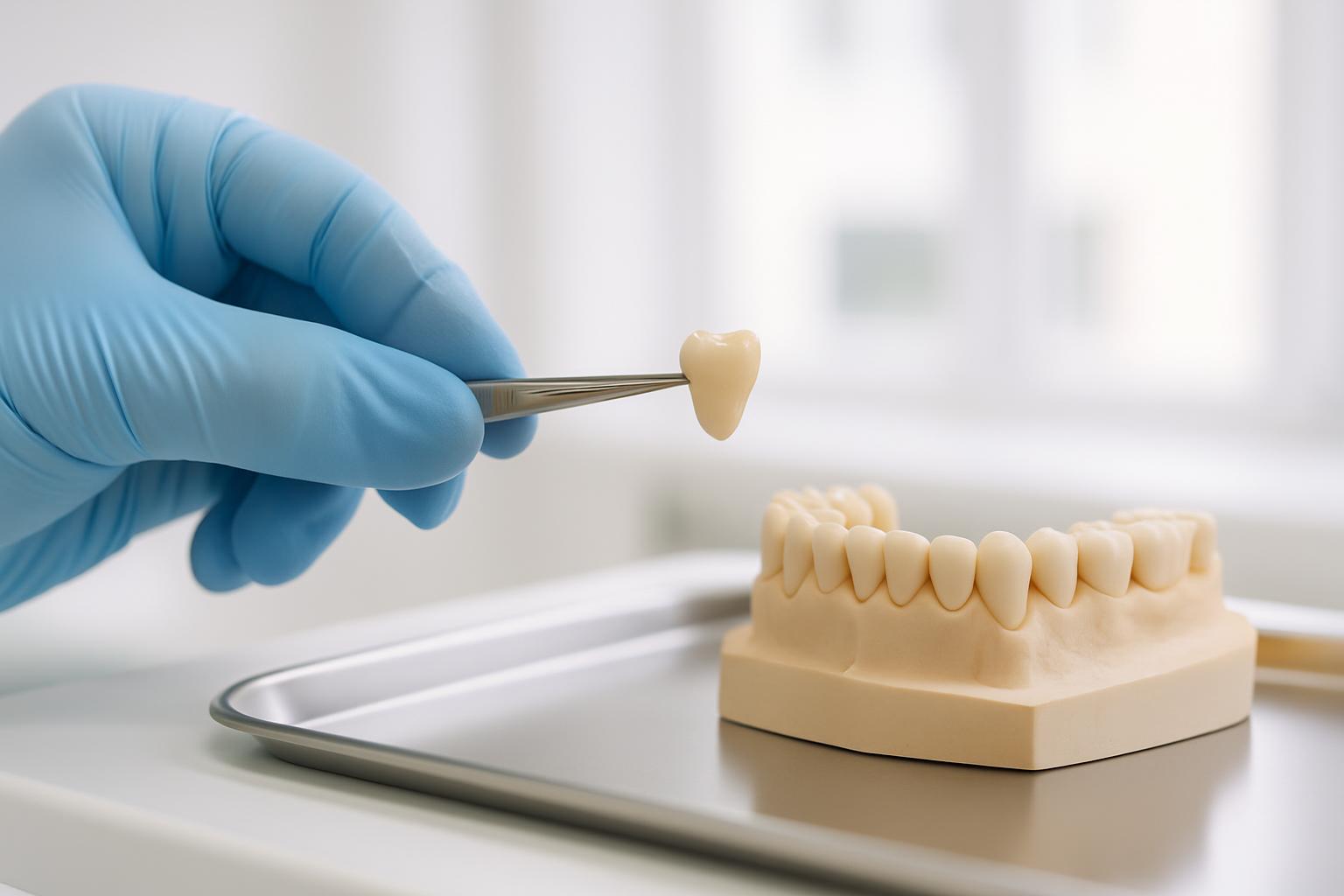
A crown is a tooth-shaped cap cemented over a damaged tooth. According to Cleveland Clinic, dentists recommend crowns to strengthen a weak or cracked tooth, restore a worn or broken tooth, cover a tooth after root canal treatment, hold a dental bridge, cover a dental implant, or improve the look of a badly stained tooth.
A crown is not always the only option. A small chip may be fixed with bonding, and a front tooth that needs only cosmetic change might suit a veneer. Ask your dentist why a crown is the right choice for your specific tooth.
Dental crown cost by type
Material is the biggest driver of price. The table combines the 2024 Synchrony Average Procedural Cost Study, published by CareCredit, with 2026 material ranges from HealthCostHub (updated June 2026). Prices are per tooth, before insurance.
| Crown type | National average (2024 study) | Typical range |
|---|---|---|
| Porcelain / all-ceramic | $1,399 | $915 to $3,254 (2024); $1,100 to $2,500 (2026) |
| Zirconia | Not reported | $1,200 to $3,000 (2026) |
| E-max (lithium disilicate) | Not reported | $1,200 to $2,800 (2026) |
| Porcelain-fused-to-metal (PFM) | $1,114 (non-gold metal) | $770 to $2,454 (2024); $900 to $1,800 (2026) |
| Metal / gold | $1,211 (metallic) | $821 to $2,861 (2024); $1,000 to $2,500 for gold alloy (2026) |
| Same-day (CEREC) | Not reported | $1,100 to $2,500 (2026) |
| Resin or temporary | $697 | $488 to $1,593 (2024) |
Location matters too: big-city practices tend to charge more. A molar crown and a front-tooth crown can also differ, because front teeth usually call for the most natural-looking (and often pricier) ceramics, while back teeth need strength.
Extra costs on top of the crown
The quote for “a crown” may not be the whole bill. HealthCostHub lists these common add-ons:
- Core build-up: about $150 to $350, to rebuild a tooth with too little structure to hold a crown.
- Post: about $200 to $500, usually after a root canal.
- Root canal: billed separately when the nerve is infected or inflamed. See our root canal cost guide for typical prices.
Exams, X-rays and the temporary crown may or may not be bundled into the fee. Ask for an itemized estimate with procedure codes so you can compare offices fairly.
Dental crown cost with insurance
Most dental insurance treats a medically necessary crown as major restorative care. HealthCostHub says standard PPO plans usually pay 50% after the deductible. Cosmetic crowns generally are not covered, as CareCredit notes.
Three plan rules can raise your share:
- Annual maximum: most PPO plans cap benefits at $1,000 to $2,000 per person per year (HealthCostHub, 2026). A crown plus a root canal can use up most of that.
- Waiting periods: new policies often impose a 6- to 12-month wait before major services are covered.
- Least expensive alternative treatment (LEAT): some plans pay only what a cheaper crown (often PFM) would cost, even if you choose zirconia or ceramic, leaving you to pay the difference.
As a rough example, for a $1,400 crown with 50% coverage and the deductible already met, you would pay about $700. Whether your plan is from Delta Dental, MetLife or another insurer, the most reliable figure is a pre-treatment estimate your dentist submits to your plan.
The crown procedure, step by step
Cleveland Clinic describes two main routes:
Traditional crown (two visits)
- The dentist numbs the area, removes decay and shapes the tooth.
- Impressions or a digital scan are taken and sent to a lab.
- You leave with a temporary crown.
- At the second visit, the temporary is removed and the permanent crown is cemented in place.
Same-day crown (one visit)
With CAD/CAM technology, the dentist scans the tooth, designs the crown and mills it in the office, then places it the same day. Cleveland Clinic notes this option is not suitable for everyone. A dentist writing for My Dental Advocate (updated June 2026) explains that same-day crowns often cost more than PFM or gold crowns because of the in-office equipment and convenience.
Sensitivity is common in the first few weeks, according to Cleveland Clinic.
How to save on a crown without insurance
If you are paying out of pocket, these options are worth comparing:
- Dental schools: HealthCostHub estimates 30% to 60% discounts, in exchange for longer appointments and wait times.
- Dental discount (savings) plans: membership plans typically take 10% to 40% off participating dentists’ fees, with no annual maximum and no waiting period.
- Choosing the material wisely: a PFM or metal crown on a back tooth usually costs less than all-ceramic or zirconia and may be what your plan pays for anyway.
- Bundling: if you also need a root canal, ask whether the office prices the two together.
- Paying with pre-tax money: HSA and FSA funds can be used for crowns.
- Payment plans: many offices offer in-house plans or third-party financing. Read the terms carefully, since promotional interest rates can end.
Delaying a needed crown to save money can backfire. A cracked or heavily filled tooth can break further, and if it cannot be saved, replacing it costs much more. Compare our dental implant cost guide to see the difference.
How long do dental crowns last?
Cleveland Clinic says crowns generally last 5 to 15 years with proper care, and some last upwards of 30 years. HealthCostHub gives these averages by material:
| Material | Typical lifespan | Notes |
|---|---|---|
| Gold / metal | 20 to 30+ years | Rarely chips; visible metal color |
| Zirconia | 15 to 25+ years | Very strong; gentle on opposing teeth |
| E-max | 12 to 20 years | Balances strength and appearance |
| PFM and all-porcelain | 10 to 15 years | Porcelain can chip; PFM may show a dark margin |
| All-resin | 3 to 5 years (Cleveland Clinic) | Cheapest but most fragile |
To make a crown last, brush twice a day, floss daily, avoid chewing ice or very hard foods, and wear a night guard if you grind your teeth.
Choosing the right crown and dentist
The “best” crown depends on the tooth. Cleveland Clinic notes that all-ceramic and zirconia crowns look most like natural enamel and suit people with metal allergies, while metal crowns are strongest for back teeth. Before you agree to treatment, ask:
- Why does this tooth need a crown rather than a filling or onlay?
- Which material do you recommend for this tooth, and why?
- Does the fee include the build-up, temporary crown and follow-up adjustments?
- What does my plan pay, and will the LEAT rule apply?
- Is the crown made in-house or by an outside lab?
Getting a second opinion is reasonable, especially when several crowns are recommended at once. For front teeth that need only cosmetic change, our veneers cost guide explains a common alternative.
See a dentist promptly if a tooth is cracked or broken, hurts when you bite, or is sensitive to hot or cold for more than a few seconds. Get urgent care for swelling in your face or gums, fever, or a pimple-like bump on the gum, which can signal infection. If you already have a crown, call your dentist if it feels loose, falls off, or your bite feels uneven after placement.
Frequently asked questions
How much is a molar crown with insurance?
With a typical PPO paying 50% after the deductible, a molar crown priced at $1,100 to $2,000 would cost you roughly $550 to $1,000, plus any amount above your annual maximum.
Is $2,000 a lot for a dental crown?
It is at the higher end for one tooth but within 2026 ranges for zirconia, e-max or ceramic crowns, especially in high-cost cities. Ask what the fee includes and compare one or two other quotes.
How much is a temporary crown without insurance?
Temporary crowns are usually included in the fee for a permanent crown. The 2024 Synchrony study put the average for a resin or temporary crown at $697 when billed on its own.
Does getting a crown hurt?
The tooth is numbed, so most people feel pressure rather than pain. Some sensitivity for a few weeks afterward is common.
Can a tooth decay under a crown?
Yes. The edge where the crown meets the tooth can still decay, and a poorly fitted crown can trap bacteria, so regular brushing, flossing and checkups still matter.
Sources
- Cleveland Clinic, Dental Crowns: Types, Procedure and Care
- CareCredit, How Much Do Dental Crowns Cost? (2024 Synchrony Average Procedural Cost Study)
- HealthCostHub, Dental Crown Cost in 2026: Porcelain vs Zirconia vs PFM vs Gold
- My Dental Advocate, How Much Do CEREC Crowns Cost?
Save this guide for later on Pinterest