Last updated:
Wall Pilates has taken over social feeds for a simple reason: it takes classic Pilates moves, adds a wall for support and resistance, and turns any living room into a studio. No reformer, no membership and no equipment beyond a mat. The wall helps beginners find the right alignment, makes balance easier and adds extra challenge to moves like bridges and squats. Here are 12 beginner-friendly wall Pilates exercises, step-by-step cues and a simple 28-day plan to build the habit.
- Wall Pilates is low impact and suitable for most beginners, including people returning to exercise.
- Pilates research shows benefits for core strength, flexibility and balance; the wall mainly adds support and feedback.
- Start with 15 to 20 minutes, 3 times a week, and progress gradually.
- Combine it with walking or other cardio to meet the recommended 150 minutes of moderate activity per week.
What is wall Pilates?
Pilates is a method of controlled movements focused on the deep core muscles, posture, breathing and flexibility. Wall Pilates uses a wall as a prop: you press your feet, hands or back against it to stabilize your body, check your alignment and create resistance. It is a gentle introduction for beginners and a fresh challenge for people who already practice mat Pilates.
Studies on Pilates in general suggest improvements in core endurance, flexibility, balance and, for some people, lower back pain. There is little research on wall Pilates specifically, so be skeptical of claims about dramatic weight loss in 28 days. What it can do is build strength and body awareness, and help you stay consistent because it is easy to start.
Before you start
- Find a clear stretch of wall with no shelves or frames, and place a mat or folded blanket on the floor.
- Wear grippy socks or go barefoot so your feet don’t slide.
- Breathe in through your nose to prepare and exhale as you work.
- Move slowly. Control matters more than the number of reps.
12 wall Pilates exercises for beginners
| # | Exercise | Main muscles | Beginner reps |
|---|---|---|---|
| 1 | Wall roll-down | Spine mobility, core | 5 slow reps |
| 2 | Wall sit with arm raise | Thighs, glutes, shoulders | 3 holds of 20 seconds |
| 3 | Wall glute bridge | Glutes, hamstrings | 10 to 12 reps |
| 4 | Single-leg wall bridge | Glutes, core | 6 per side |
| 5 | Wall dead bug | Deep core | 8 per side |
| 6 | Wall tabletop toe taps | Lower abs | 10 per side |
| 7 | Side-lying leg lifts against the wall | Outer hips | 10 per side |
| 8 | Wall push-up | Chest, arms, core | 10 reps |
| 9 | Wall angels | Upper back, posture | 8 reps |
| 10 | Wall calf raises | Calves, balance | 15 reps |
| 11 | Wall plank (incline) | Whole core | 3 holds of 20 seconds |
| 12 | Legs-up-the-wall stretch | Hamstrings, relaxation | 1 to 3 minutes |
1. Wall roll-down
Stand with your back against the wall, feet a step away. Tuck your chin and slowly peel your spine off the wall one vertebra at a time, reaching toward the floor. Roll back up the same way, pressing each vertebra back into the wall.
2. Wall sit with arm raise
Slide down the wall until your knees are bent at a comfortable angle (no lower than 90 degrees). Keep your back flat and slowly raise your arms overhead and lower them while holding the position.
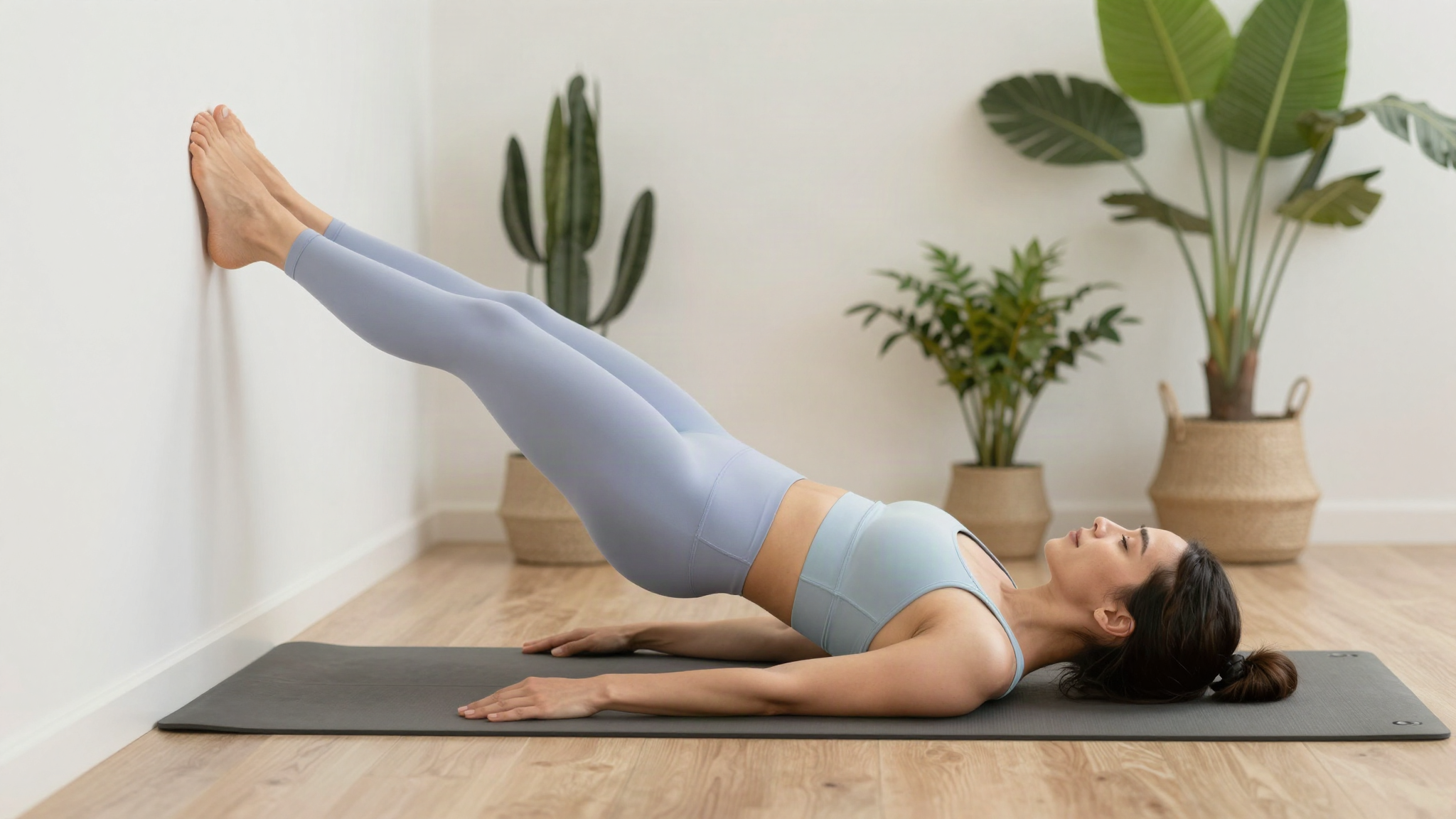
3. Wall glute bridge
Lie on your back with your feet flat on the wall and knees bent at about 90 degrees. Press through your heels and lift your hips until your body forms a straight line from shoulders to knees. Lower slowly.
4. Single-leg wall bridge
From the bridge position, lift one foot off the wall and extend that leg toward the ceiling. Lift and lower your hips with the other foot on the wall. Keep your hips level.
5. Wall dead bug
Lie on your back with your hips close to the wall and your hands pressing against it overhead. Lift your knees to tabletop. Slowly extend one leg toward the floor while keeping your lower back gently pressed down, then switch.
6. Wall tabletop toe taps
Lie with your feet on the wall and knees at 90 degrees. Keeping your core engaged, take one foot off the wall and tap it lightly back. Alternate sides.
7. Side-lying leg lifts
Lie on your side with your back and heels lightly touching the wall. Lift your top leg, keeping the heel sliding along the wall, then lower. The wall stops you from rolling backward.
8. Wall push-up
Stand an arm’s length from the wall, hands at shoulder height. Bend your elbows to bring your chest toward the wall, keeping your body straight, then press back.
9. Wall angels
Stand with your back, head and arms against the wall in a goalpost shape. Slowly slide your arms up and down while keeping contact with the wall. Great for desk posture.
10. Wall calf raises
Face the wall, hands lightly on it for balance. Rise onto your toes, pause and lower slowly.
11. Wall plank
Place your forearms on the wall and step your feet back until your body is at an angle. Hold a straight line from head to heels while breathing steadily.
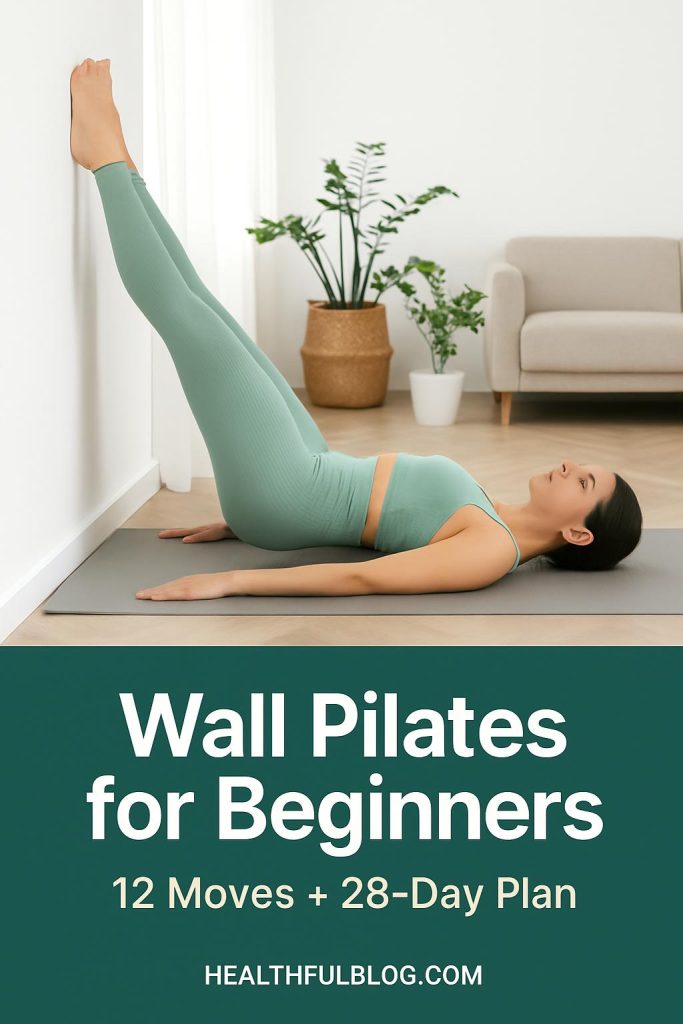
12. Legs-up-the-wall
Sit sideways next to the wall, then swing your legs up as you lie back. Rest your arms by your sides and breathe deeply. A calming way to finish.
Your 28-day beginner plan
| Week | Sessions | What to do |
|---|---|---|
| Week 1 | 3 x 15 minutes | Exercises 1, 2, 3, 8, 9 and 12, one round each |
| Week 2 | 3 x 20 minutes | Add exercises 5, 6 and 10; two rounds of the bridge and push-up |
| Week 3 | 4 x 20 minutes | All 12 exercises, one round |
| Week 4 | 4 x 25 minutes | All 12 exercises, two rounds of 3, 4, 5 and 11 |
On other days, take a brisk walk or do another activity you enjoy. Rest at least one day a week. For more on how mindful movement can support weight management, read how yoga can help us lose weight, and if motivation is your biggest hurdle, try these ways to stay motivated to exercise.
Does wall Pilates help with weight loss?
Wall Pilates builds strength and muscle endurance, which supports a healthy metabolism and makes daily movement easier. On its own, however, it burns fewer calories than brisk walking, cycling or swimming. For weight management, the most reliable formula is regular activity combined with balanced eating and good sleep. The CDC recommends that adults get at least 150 minutes of moderate aerobic activity a week plus muscle-strengthening activities on at least two days; wall Pilates counts toward the strength part.
Who should be careful
- Pregnancy: avoid lying flat on your back for long periods later in pregnancy, and ask your provider which moves are safe.
- Back, hip or knee problems: reduce the range of motion and skip anything that causes sharp pain. Our guide on protecting your joints offers more tips.
- Osteoporosis: avoid deep forward rounding of the spine, such as the roll-down, unless a physical therapist approves.
- High blood pressure or glaucoma: check with your doctor before inverted positions like legs-up-the-wall.
Talk to your doctor before starting a new exercise program if you have heart disease, uncontrolled blood pressure, diabetes, recent surgery, are pregnant or have been inactive for a long time. Stop exercising and seek medical care right away if you feel chest pain or pressure, severe shortness of breath, dizziness or fainting. See a doctor or physical therapist for joint pain that lasts more than a few days or gets worse with activity.
Frequently asked questions
Is wall Pilates good for beginners?
Yes. The wall provides support and feedback, which makes it easier to learn proper form.
How often should I do wall Pilates?
Three to four sessions a week is a good goal for beginners, with rest or light activity on other days.
Do I need equipment?
Just a wall and a mat. Grippy socks help. Later you can add a small ball or resistance band.
Can wall Pilates flatten your stomach?
It strengthens core muscles and can improve posture, but you cannot spot-reduce fat from one area. Overall activity, diet and sleep matter most.
How long until I see results?
Many people feel stronger and more flexible within 3 to 4 weeks of consistent practice.
Sources
- CDC, Physical Activity Guidelines for Adults
- Mayo Clinic, Core Exercises: Why You Should Strengthen Your Core Muscles
- Harvard Health, The Real-World Benefits of Strengthening Your Core
Save this guide for later on Pinterest