Last updated:
A chipped front tooth, a small gap or one tooth that is a little shorter than the others can make you hide your smile in photos. Dental bonding is often the quickest and most affordable fix: a dentist sculpts tooth-colored resin directly onto your tooth, usually in a single visit and often without numbing. Here is what dental bonding costs in 2026, how long it lasts, how it compares with veneers and how to know whether it is right for you.
- Dental bonding averages about $330 per tooth nationally, with a typical range of $215 to $560.
- A bonded tooth usually lasts 5 to 7 years before it needs touch-ups or replacement.
- It is often done in one visit, with little or no removal of natural enamel.
- Insurance may help when bonding repairs damage, but rarely when it is purely cosmetic.
How much does dental bonding cost?
| Number of teeth | Typical cost range | Based on the national average |
|---|---|---|
| 1 tooth | $215 to $560 | About $330 |
| 2 teeth | $430 to $1,120 | About $660 |
| 4 teeth | $860 to $2,240 | About $1,320 |
| 6 teeth | $1,290 to $3,360 | About $1,980 |
Per-tooth figures come from ADA fee survey data compiled by Pearl Dental Costs (May 2026); multi-tooth totals are our estimates. Complex reshaping or full-coverage “composite veneers” usually cost more per tooth.
What dental bonding can fix
- Small chips and cracks
- Gaps between front teeth
- Teeth that are slightly short, uneven or oddly shaped
- Stains that do not respond to whitening
- Exposed roots from gum recession, to reduce sensitivity
- Small cavities, as a tooth-colored filling
Bonding works best for small to moderate cosmetic changes on teeth that do not take heavy biting forces. Large repairs on back teeth, or teeth with big cracks or old fillings, usually need crowns or other restorations.
The bonding procedure, step by step
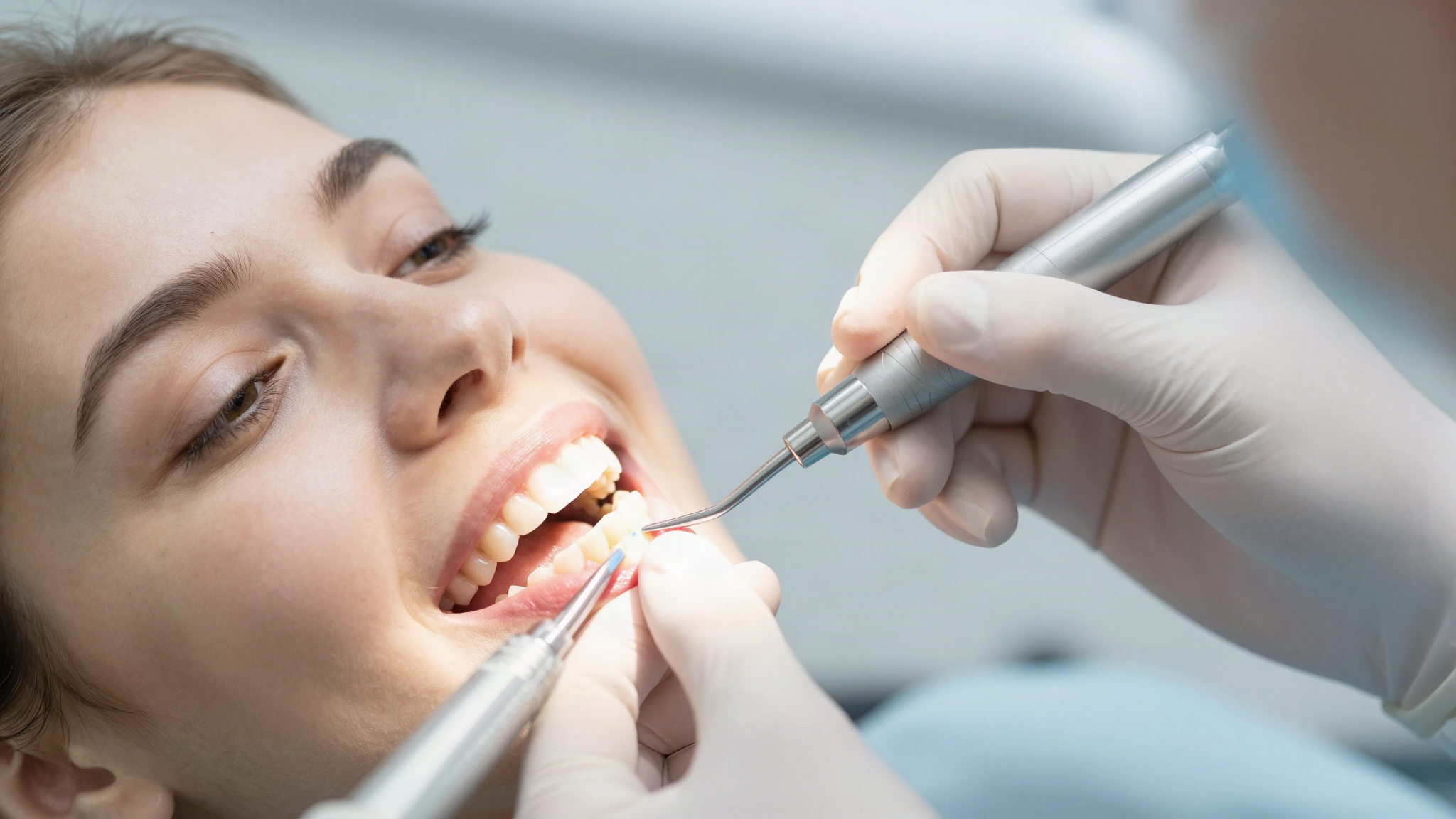
- Shade matching. Your dentist picks a resin color that matches your teeth. If you want whiter teeth, whiten first, since bonding will not change color later.
- Preparation. The surface is lightly roughened and coated with a conditioning liquid so the resin sticks. Numbing is often not needed.
- Sculpting. The dentist applies putty-like resin in layers and shapes it by hand.
- Curing. A blue light hardens each layer in seconds.
- Polishing. The tooth is trimmed and polished to match the shine of natural enamel.
The whole process takes about 30 to 60 minutes per tooth, and you can eat normally right afterward.
Bonding vs. veneers vs. crowns
| Bonding | Porcelain veneers | Crowns | |
|---|---|---|---|
| Cost per tooth | About $215 to $560 | About $925 to $2,500 | Often $1,000+ |
| Lifespan | About 5 to 7 years | 10+ years | 10 to 15 years |
| Enamel removed | Little or none | Usually a thin layer | Significant |
| Visits | Usually 1 | 2 to 3 | 2 or more |
| Stain resistance | Moderate | Excellent | Excellent |
| Best for | Small chips, gaps, minor shape fixes | Full smile makeovers | Weak or heavily damaged teeth |
For a complete makeover of many teeth, veneers often look better and last longer; see our guide to veneer costs. For a missing tooth, bonding is not an option; read about dental implant costs instead.
Pros and cons of dental bonding
Pros
- One of the most affordable cosmetic treatments
- Fast, often finished in one appointment
- Conservative: most of your natural tooth stays intact, so it is usually reversible
- Easy to repair if it chips
Cons
- Resin can stain over time, especially with coffee, tea, red wine or smoking
- Less durable than porcelain; it can chip if you bite hard objects
- Needs touch-ups or replacement every several years
- Results depend heavily on the dentist’s artistic skill
Does insurance cover bonding?
If bonding repairs a broken tooth, fills a cavity or protects an exposed root, dental insurance often covers part of the cost under basic or restorative benefits. Bonding done purely to improve appearance, such as closing a small gap, is usually considered cosmetic and not covered. Ask your dentist to submit a pre-treatment estimate to your insurer so you know your share before starting.
How to make bonding last longer
- Don’t bite nails, pens, ice or hard candy, and don’t open packages with your teeth.
- Wear a night guard if you grind or clench.
- Limit staining drinks, especially in the first 48 hours, and rinse with water afterward.
- Brush twice a day with a non-abrasive toothpaste and floss daily.
- Ask for a professional polish at your regular cleanings to keep the resin shiny.
Planning to brighten your smile too? Whiten before bonding so the resin matches your new shade; compare options in our teeth whitening cost guide.
See a dentist promptly if a chipped tooth is painful, sensitive to hot or cold, or has a sharp edge cutting your tongue or cheek. Cracks that cause pain when biting can extend into the nerve and may need more than bonding. After bonding, contact your dentist if the tooth feels high when you bite, if the bonding chips or loosens, or if you notice pain or swelling around the tooth.
Frequently asked questions
Does dental bonding hurt?
Usually not. Most cosmetic bonding is done without anesthesia because little or no enamel is removed.
How long does dental bonding last?
On average about 5 to 7 years, depending on your habits and how well you care for it.
Can bonded teeth be whitened?
No. Whitening products do not change the color of resin. Whiten your teeth before bonding.
Is bonding cheaper than veneers?
Yes, typically by several hundred to a few thousand dollars per tooth, but it does not last as long.
Can bonding close a gap between front teeth?
Often, yes, for small to moderate gaps. Large gaps may look better with orthodontics.
Sources
- Pearl Dental Costs, Tooth Bonding: National Cost (ADA fee survey data)
- Cleveland Clinic, Dental Bonding
Save this guide for later on Pinterest