Last updated:
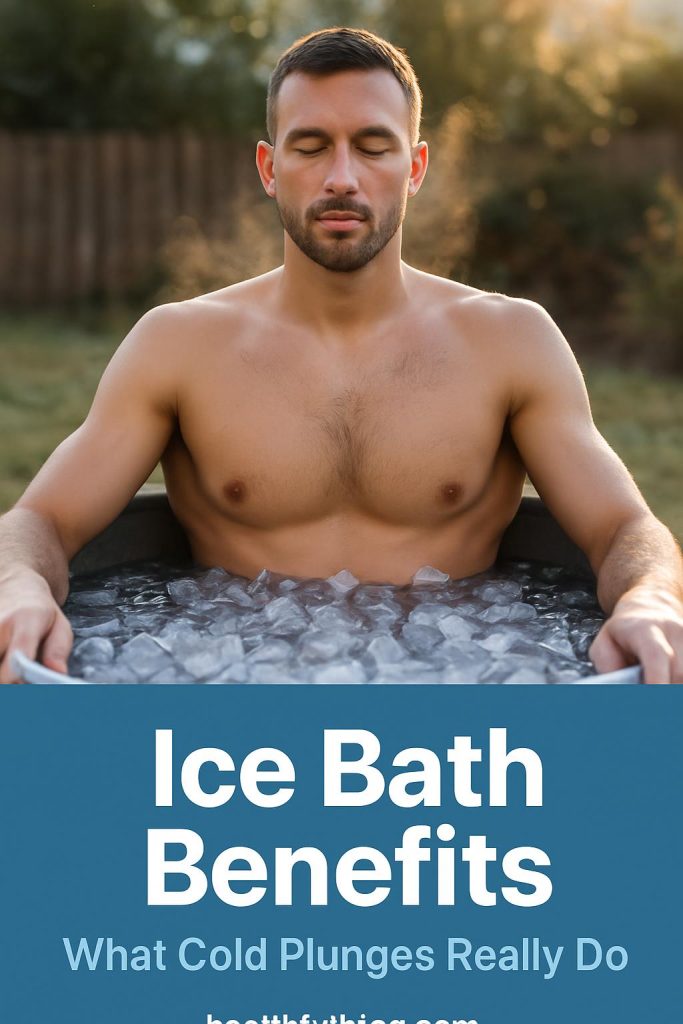
Ice bath benefits are easy to find online and harder to verify. Athletes, wellness influencers and gym owners promote cold plunges for faster recovery, better mood and even weight loss, yet the research is more modest than the hype. This guide sorts out what studies actually show, where the evidence is weak, how long to stay in an ice bath if you decide to try one, and who should skip it.
- Cold water immersion after hard exercise may ease muscle soreness for about a day, but studies are small and prone to bias.
- Evidence for mood, immunity, weight loss and hormone claims is inconsistent or missing.
- Cold shock strains the heart; people with heart disease, arrhythmias or high blood pressure should talk to a doctor first.
- Cold, short and supervised is the rule: sources suggest roughly 50 to 59 degrees F and a few minutes at most.
What is an ice bath, exactly?
An ice bath, or cold water immersion, means sitting in water cooler than about 59 degrees F (15 degrees C) for a few minutes. A cold plunge is the same idea, often in a dedicated tub or a lake. Cold showers are a milder cousin. The goal is usually to cool the body quickly and trigger a stress response that people feel as alertness.
Ice bath benefits for muscle soreness and recovery
This is where the best evidence sits. A 2022 systematic review of 52 randomized trials with 1,191 adults, summarized by the American Academy of Family Physicians, found that cold water immersion right after strenuous exercise can improve perceived recovery and delay the onset of muscle soreness within 24 hours. The summary listed water below 59 degrees F, less than 10 to 15 minutes, and starting within 15 minutes of exercise as the parameters studied (AAFP).
A separate meta-analysis of 20 studies and 419 healthy participants reported a significant drop in delayed-onset muscle soreness immediately afterward, but no significant difference from passive recovery at 24 to 48 hours. Its authors noted a high risk of bias in most trials, mainly because people cannot be blinded to sitting in ice water, and that participants were mostly young, active men (Frontiers in Physiology).
In plain terms: you may feel less sore for a short window, and some of that may be expectation.
Does a cold plunge help mood, sleep and stress?
Cold plunge benefits for the mind are popular claims. A 2025 analysis in PLOS One covering 11 studies and 3,177 participants, described by Harvard Health, found that ice baths reduced stress, with the effect showing up about 12 hours after immersion, and that men reported better sleep while women did not. It found no consistent evidence for better mood or immunity, and the studies differed too much in method to set a best protocol (Harvard Health).
A Harvard cardiologist quoted in a separate piece noted that the proof of cardiovascular benefit is shaky and that the same goals may be better served by other interventions, such as exercise (Harvard Health).
What the evidence does not support
Searches for ice baths and weight loss or testosterone are common. None of the medical sources reviewed for this article established those benefits, so treat them as unproven. The evidence is also weak for claims about longevity, fat loss or disease prevention. Harvard Health describes the science on broader health benefits as inconclusive and scant (Harvard Health).
There is a possible downside for people training for muscle. Cleveland Clinic lists interference with muscle-building recovery as a concern if you plunge within about four hours after a workout (Cleveland Clinic). If building strength is your priority, timing and need are worth discussing with a coach or clinician.
Risks: cold shock, the heart and hypothermia
The first minute is the riskiest. Sudden cold triggers the cold shock response: gasping, rapid breathing, and surges in heart rate and blood pressure. The American Heart Association notes that this can cause drowning if someone gasps while submerged, that water pulls heat from the body about 25 times faster than air, and that some research found raised troponin, a heart-muscle marker, in winter swimmers (American Heart Association).
Harvard Health explains that the cold raises adrenaline, constricts blood vessels and can disturb heart rhythm, which is why people with atrial fibrillation, cardiovascular disease, peripheral artery disease or Raynaud’s syndrome are advised to avoid cold plunges (Harvard Health). Cleveland Clinic adds high blood pressure, diabetes, pregnancy, peripheral neuropathy, poor circulation and cold agglutinin disease to the list of reasons to check with a provider first.
How long to stay in an ice bath: a practical protocol
No single protocol is proven best, and sources differ slightly. Here is what they say.
| Source | Temperature | Duration |
|---|---|---|
| Cleveland Clinic | Start at 50 to 59 degrees F; never below 40 degrees F | 1 to 2 minutes for beginners; 5 minutes maximum; once or twice weekly to start |
| Harvard Health | Typically 50 to 60 degrees F | Up to 15 minutes; never alone |
| AAFP summary of trials | Below 59 degrees F | Under 10 to 15 minutes, soon after exercise |
For anyone new to cold exposure, the shorter, warmer end is the sensible choice. Those sources and the American Heart Association suggest these habits:
- Use a thermometer rather than guessing the temperature.
- Ease in gradually, never plunge alone, and have someone nearby.
- Get out immediately if you feel faint, notice an irregular heartbeat, or lose coordination.
- Dry off and put on warm, dry clothes right away.
Hypothermia can begin within minutes in water below 65 degrees F, according to Harvard Health, so longer is not better.
Talk to a clinician before cold plunging if you have heart disease, an irregular heartbeat, high blood pressure, diabetes, poor circulation, nerve damage or are pregnant, or if you take beta blockers or blood pressure medicines. Stop and seek urgent care for chest pain, fainting, severe shortness of breath, confusion or a heartbeat that does not settle after you warm up.
Frequently asked questions
Do ice baths actually work for recovery?
They appear to reduce soreness for a short period after hard exercise, but the trials are small, hard to blind and mostly in young, active men. Effects at 24 to 48 hours were not significant in one meta-analysis.
How long should I stay in an ice bath?
Cleveland Clinic suggests 1 to 2 minutes at first and no more than 5. Other sources describe up to 10 to 15 minutes. Beginners should stay at the short end.
Are cold plunge benefits different for women?
Few studies analyze this. In the PLOS One analysis described by Harvard Health, men reported better sleep after ice baths and women did not, but more research is needed.
Are ice baths dangerous?
They can be. Cold shock raises heart rate and blood pressure and can trigger dangerous breathing and rhythm problems, especially in people with heart disease. Hypothermia is possible with long exposure.
Can an ice bath help with weight loss?
The sources reviewed here do not show that it does. Treat weight-loss claims as unproven.
Sources
- American Academy of Family Physicians, Cold Water Immersion for Muscle Soreness
- Frontiers in Physiology, Cold water immersion systematic review and meta-analysis
- Harvard Health, Research highlights health benefits from cold-water immersions
- American Heart Association, The plunge into cold water comes with risks
- Cleveland Clinic, Are Cold Plunge Ice Baths Good for You?
Save this guide for later on Pinterest