Last updated:
Search for alternative therapies for weight loss and you will find bold promises: needles, herbs, hypnosis tapes and “natural” pills that claim to do the work for you. The research tells a more modest story. Some approaches may be a useful add-on to a structured plan, while others have no good evidence and a few carry real safety risks. Here is what major health agencies and published reviews actually say.
- No complementary approach replaces the basics: a reduced-calorie eating plan, more physical activity, and ongoing support.
- Evidence for acupuncture and hypnosis is mixed or limited; mindful eating is described by NCCIH as a possible complement to other weight-loss efforts.
- NCCIH reports that none of the supplements it reviewed for weight loss have been shown to be effective, and each has side effects.
- Talk with a doctor before starting any supplement or program, especially if you take medicine or have a health condition.
What “alternative” weight-loss therapies include
The term usually covers practices outside standard medical care: acupuncture, hypnosis, mind-body methods such as meditation and yoga, herbal products, and dietary supplements. Strictly speaking, when these are used alongside conventional care they are called complementary. The distinction matters, because the best evidence for any of them is as an extra layer on top of proven methods, not as a substitute.
Does acupuncture help with weight loss?
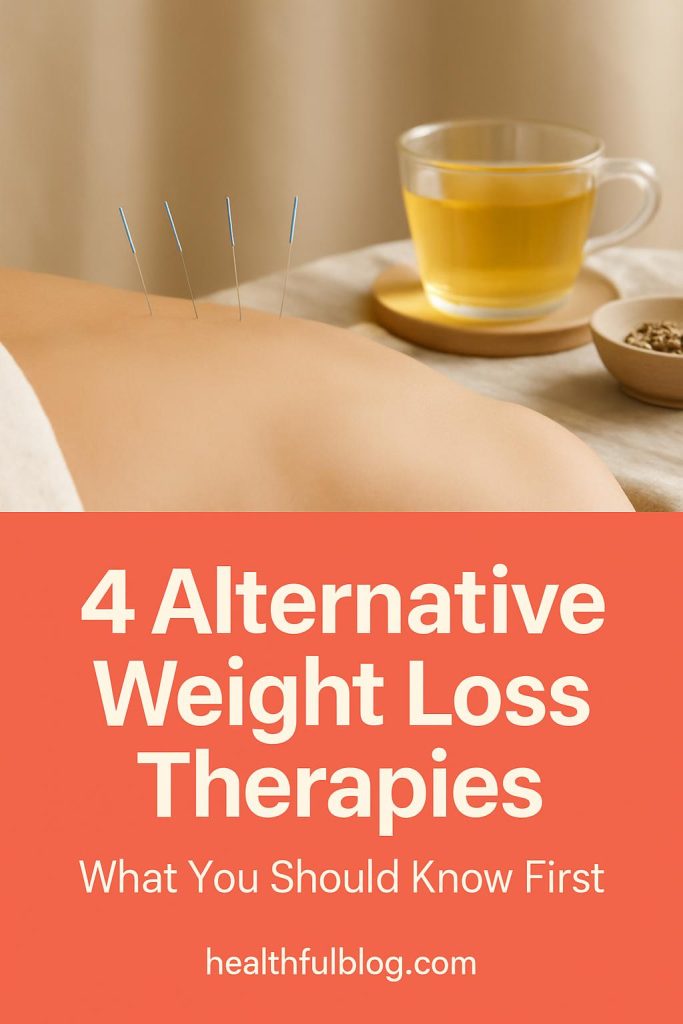
This is one of the most-searched questions, and the honest answer is “possibly as an add-on, but the evidence is uneven.” An umbrella review in the Journal of Evidence-Based Medicine analyzed 22 systematic reviews containing 60 meta-analyses. Its strongest evidence supported acupuncture combined with lifestyle interventions compared with lifestyle interventions alone, and it found no significant difference between acupuncture and pharmaceutical treatments. The authors still concluded that benefits depend on combining acupuncture with comprehensive lifestyle changes rather than using it on its own.
Earlier reviews were more cautious. The protocol for a Cochrane review noted that previous systematic reviews were limited by the poor methodological quality of the trials they covered, and that acupuncture for overweight and obesity has been associated with local pain, inflammation or, occasionally, infection. In short, acupuncture is not a proven stand-alone fix, and it should be performed by a qualified practitioner using sterile needles.
Hypnosis and mindfulness: what the research shows
A narrative review of self-help strategies in obesity treatment concluded that evidence for hypnosis as a weight-loss strategy is scarce. It noted that many trials were old, small and short, with high dropout rates. Mindfulness-based programs looked promising but varied widely in design and follow-up, so it remains unclear whether mindfulness itself drives any weight change.
NCCIH is a little more encouraging on one point: it says some mind and body approaches, such as yoga and meditation, particularly mindful eating, may be useful as complements to other weight-loss interventions. Practical mindful eating means slowing down, noticing hunger and fullness cues, and eating without screens. If gentle movement appeals to you, our guide to practicing yoga every day is a low-pressure place to start.
Are weight loss supplements safe?
Not automatically. According to NCCIH, researched supplements, including omega-3s and fish oil, chitosan, green tea extracts, Chinese herbs and bitter orange extract, have not been shown to be effective for weight loss, and each has side effects. Products marketed for rapid weight loss, such as acai and hoodia, have not been shown to help keep weight off in the long term. Ephedra was banned after links to serious cardiovascular risks.
Mayo Clinic adds that the FDA does not need to approve dietary supplements before they are sold, although it can issue warnings or ask for unsafe products to be removed. Some weight-loss supplements have been found to contain ingredients that are not on the label, including prescription medicines. Mayo’s bottom line: supplements are rarely the answer to safe, sustained weight loss.
What NCCIH and the FDA warn about
Three warnings come up again and again:
- The label may not match the bottle. NCCIH notes that the FDA has found weight-loss products tainted with prescription drug ingredients.
- “Natural” does not mean safe. Both NCCIH and Mayo Clinic make this point, and allergies and drug interactions are possible.
- Hidden drugs can be dangerous. In one FDA public notification, laboratory analysis confirmed that a product sold for weight loss contained sibutramine, which may substantially raise blood pressure or pulse and poses risks for people with heart disease, arrhythmias or a history of stroke. The FDA notes such tainted products are often marketed as “all natural.”
| Approach | What the evidence suggests | Main caution |
|---|---|---|
| Acupuncture | May help as an add-on to lifestyle changes; trial quality is uneven | Local pain, inflammation, rare infection |
| Hypnosis | Evidence described as scarce | Mostly older, small, short studies |
| Mindfulness / mindful eating | NCCIH: may be a useful complement | Unclear whether it drives weight change itself |
| Herbal and dietary supplements | NCCIH: none reviewed shown to be effective | Side effects, hidden drugs, interactions |
The evidence-based basics that do the heavy lifting
NIDDK says a safe, successful program should include a healthy, reduced-calorie eating and drinking plan, a plan for more physical activity if appropriate, guidance and support for building habits, and a plan for keeping weight off. It also suggests an initial goal of 5% to 10% of starting weight within 6 months; for someone who weighs 200 pounds, that is about 10 pounds. Red flags include promises such as “Lose weight without diet or exercise” or “Lose 30 pounds in 30 days.”
Diet quality matters as much as calories. Building meals around vegetables, fruit, whole grains and lean protein makes a reduced-calorie plan easier to sustain. If you are weighing vitamins or minerals alongside a new eating plan, see which ones may be worth discussing in our guide to daily vitamins and minerals.
Medical treatment options to discuss with a doctor
For some adults, a clinician may consider prescription medicine. NIDDK says these may be prescribed to adults with a BMI of 30 or greater, or 27 or greater with weight-related problems such as high blood pressure or type 2 diabetes. Medicines work best combined with a lifestyle program. NIDDK reports that after 1 year, adults on medication as part of a lifestyle program lost on average 3% to 12% more of their starting body weight than those in a lifestyle program without medication, and results vary from person to person. Most side effects are mild, but rarely serious ones occur. Whether medication, a structured program or another approach fits you is a decision for you and your health care professional.
Talk with your doctor or a registered dietitian before starting any weight-loss program, acupuncture course or supplement, particularly if you are pregnant or breastfeeding, take prescription medicine, or have heart disease, high blood pressure, diabetes or another chronic condition. Seek care promptly if a product causes chest pain, a racing heartbeat, severe headache, fainting or an allergic reaction.
Frequently asked questions
Does acupuncture help with weight loss?
Some reviews suggest it may add modest benefit when combined with lifestyle changes, but trial quality varies and it is not a proven stand-alone treatment.
Are weight loss supplements safe?
Not necessarily. Supplements do not need FDA approval before sale, some contain undisclosed drug ingredients, and NCCIH reports that none of the ones it reviewed have been shown to be effective for weight loss.
Can hypnosis help me lose weight?
Current evidence is described as scarce, and many studies are small, old or short. It is best viewed as unproven.
Is mindful eating worth trying?
NCCIH says it may be useful alongside other weight-loss efforts. It carries little risk and can improve awareness of hunger and fullness.
What is a realistic first goal?
NIDDK suggests 5% to 10% of starting weight over 6 months. Individual results vary, so set goals with your health care professional.
Sources
- NCCIH, Weight Loss
- Mayo Clinic, Dietary supplements for weight loss
- NIDDK, Choosing a Safe and Successful Weight-Loss Program
- NIDDK, Prescription Medications to Treat Overweight and Obesity
- FDA, Public Notification: Slim-Vie contains hidden drug ingredient
- Journal of Evidence-Based Medicine, Acupuncture for Treatment of Obesity: An Umbrella Review
- PubMed Central, The Use of Self-Help Strategies in Obesity Treatment: Hypnosis and Mindfulness
- Cochrane Library, Acupuncture for overweight or obese individuals (protocol)
Save this guide for later on Pinterest