Last updated:
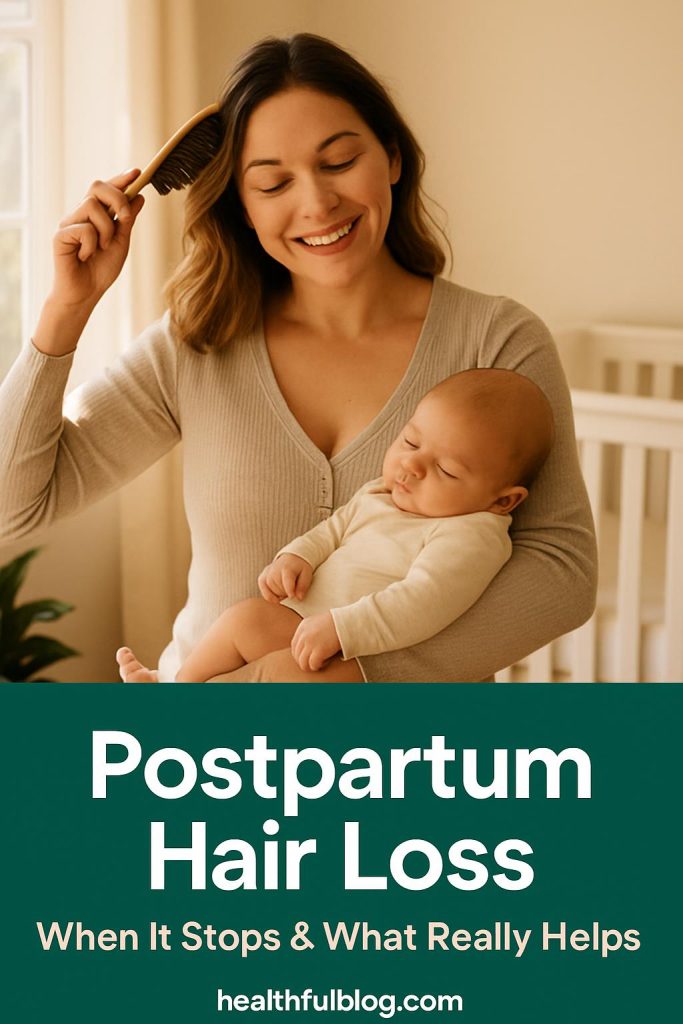
A few months after having a baby, many new moms notice something alarming: hair coming out in handfuls in the shower and covering the hairbrush. If that is happening to you, take a breath. Postpartum hair loss is extremely common, it is almost always temporary and your hair will very likely return to its usual thickness. This guide explains why it happens, when it starts and stops, what genuinely helps in the meantime and the signs that mean you should check in with a doctor.
- Postpartum shedding usually begins about 3 months after delivery.
- Most women see their hair return to normal within 6 to 12 months after giving birth.
- It is caused by the drop in pregnancy hormones, not by anything you did wrong.
- Shedding that lasts longer than a year, or comes with fatigue or mood changes, deserves a medical check.
Why hair falls out after pregnancy
Each hair on your head goes through a cycle: a long growth phase, a short transition and a resting phase that ends with the hair falling out. Normally, hairs are at different stages, so you lose a steady 50 to 100 a day without noticing.
During pregnancy, high estrogen levels keep more hairs in the growth phase. That is why many women enjoy unusually thick, shiny hair while pregnant. After delivery, hormone levels drop back to normal, and all those extra hairs move into the resting phase together. A few months later, they shed at once. Doctors call this telogen effluvium. You are not actually losing more hair overall; you are losing the hair you would have shed gradually during pregnancy, all in a short window.
According to Johns Hopkins Medicine, stress, sleep deprivation, nutritional gaps during breastfeeding, genetics and untreated thyroid disease can make shedding worse.
Postpartum hair loss timeline
| Time after birth | What usually happens |
|---|---|
| 0 to 2 months | Hair still feels thick; little change |
| About 3 months | Shedding starts, often suddenly |
| 3 to 6 months | Shedding peaks; thinning is most visible at the temples and hairline |
| 6 to 9 months | Shedding slows; short new hairs appear around the hairline |
| 9 to 12 months | Most women are back to their usual volume |
Those short, flyaway regrowth hairs around your face are a good sign: they mean the follicles are working normally again. Some moms find they get a little “fringe” for a few months while it grows in.
Does breastfeeding cause hair loss?
Breastfeeding itself is not the main cause, and stopping is not necessary to protect your hair. However, nursing increases your need for calories, protein, iron and other nutrients. If your diet falls short, it can add to the shedding. Keep taking a prenatal or postnatal vitamin if your doctor recommends it.
9 things that actually help
- Be patient and gentle. The shedding will stop on its own. Avoid aggressive brushing, especially when hair is wet. Use a wide-tooth comb.
- Skip tight styles. High ponytails, tight buns and braids put tension on fragile hair. Try loose clips and scrunchies.
- Turn down the heat. Air-dry when you can and use a heat protectant when you style.
- Use a volumizing shampoo and a light conditioner applied mainly to the ends, which keeps roots from looking flat.
- Try a fresh haircut. Shoulder-length cuts and soft layers make thinning less noticeable while hair regrows.
- Eat for recovery. Aim for protein at every meal, plus iron-rich foods (lean red meat, beans, lentils, spinach) and vitamin C to help absorb iron. Our guide to essential daily vitamins and minerals covers iron, vitamin D and zinc.
- Don’t over-supplement. High-dose biotin rarely helps if you are not deficient and can interfere with some blood tests, including thyroid tests. Check with your doctor first.
- Protect your sleep where you can. Easier said than done with a newborn, but shared night shifts and naps reduce stress hormones that can prolong shedding.
- Ask before using treatments. Minoxidil is generally not recommended while breastfeeding. Talk to your doctor before starting any hair growth product.
For more everyday styling ideas, see our tips for thinning hair.
Is it postpartum shedding or something else?
| Sign | Typical postpartum shedding | Worth investigating |
|---|---|---|
| Timing | Starts around 3 months after birth | Starts much later, or never stops |
| Pattern | Diffuse, often at the temples | Round bald patches or a widening part that keeps progressing |
| Duration | Improves by 6 to 12 months | Still heavy after 12 months |
| Other symptoms | None besides normal new-parent tiredness | Extreme fatigue, feeling cold, weight changes, palpitations, low mood |
Postpartum thyroiditis, an inflammation of the thyroid after pregnancy, affects some new mothers and can cause hair loss, fatigue, anxiety or weight changes. Iron deficiency is also common after delivery, especially after heavy blood loss. Both are easy to check with blood tests.
Taking care of your emotional health
Hair loss can hit hard at a time when your body, sleep and identity are already changing. It is normal to feel upset about it. But if you feel persistently sad, anxious, hopeless or disconnected from your baby for more than two weeks, that may be postpartum depression, which is common and treatable. Talk to your doctor or midwife. Online counseling can make support easier to fit around a baby’s schedule; our guide to online therapy costs explains options and insurance coverage.
Talk to your doctor, OB-GYN or a dermatologist if shedding continues beyond 12 months after delivery, if you develop bald patches, or if hair loss comes with severe fatigue, rapid heartbeat, weight changes, feeling unusually cold or hot, or low mood. Ask about checking your thyroid, iron (ferritin) and vitamin D levels. If you have thoughts of harming yourself or your baby, seek help immediately by calling or texting 988 in the U.S. or going to the nearest emergency department.
Frequently asked questions
Can I prevent postpartum hair loss?
Not completely, since it is driven by normal hormone changes. Good nutrition, gentle hair care and managing stress can make it less severe.
Will my hair grow back thinner?
For most women, hair returns to its pre-pregnancy thickness. If you have a family history of pattern thinning, pregnancy can sometimes unmask it, and a dermatologist can help.
Does it happen after every pregnancy?
Not necessarily. Some women shed heavily after one baby and barely notice it after another.
Can I color my hair while it is shedding?
Coloring does not cause postpartum hair loss, but harsh chemical treatments can damage fragile hair. Gentle, less frequent treatments are best.
Do hair growth vitamins work?
They help mainly if you are low in a nutrient. A blood test is the best way to know whether you need a supplement.
Sources
- Johns Hopkins Medicine, Postpartum Hair Loss
- University of Utah Health, Postpartum Hair Loss
- Office on Women’s Health, Postpartum Depression
- 988 Suicide and Crisis Lifeline
Save this guide for later on Pinterest