Last updated:
The Mediterranean diet is less a diet than a way of eating: plenty of vegetables, beans, whole grains and olive oil, fish a few times a week, and red meat only now and then. It is also one of the best-studied eating patterns for heart health. If you have been told to “eat more Mediterranean” but are not sure what that looks like on a Tuesday night, this beginner’s guide covers the food list, the evidence, weight loss, a one-week meal plan and how to do it on a budget.
- The Mediterranean diet centers on plants, olive oil, fish and legumes, with red meat eaten infrequently and sparingly, according to Harvard Health.
- In the PREDIMED trial of 7,447 people at high heart risk, Mediterranean diets with extra-virgin olive oil or nuts cut major cardiovascular events by about 30% compared with a reduced-fat diet.
- It is a pattern, not a weight-loss plan: in one randomized trial, adding calorie restriction produced more weight loss than the diet alone.
- It can be affordable: beans, whole grains, canned fish and frozen vegetables are staples.
What is the Mediterranean diet and what do you eat?
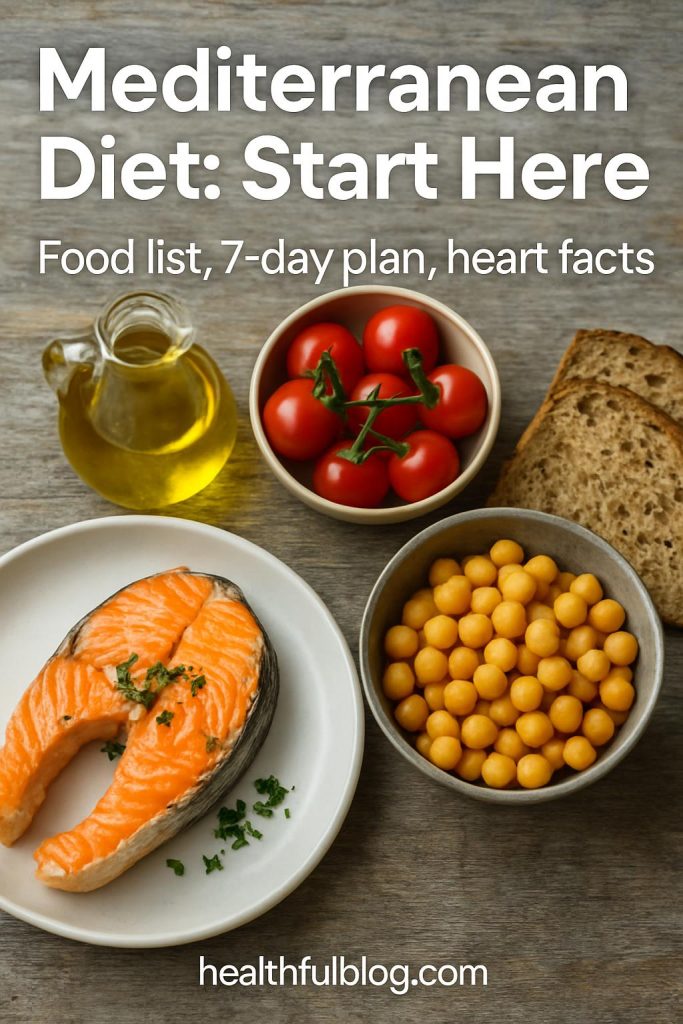
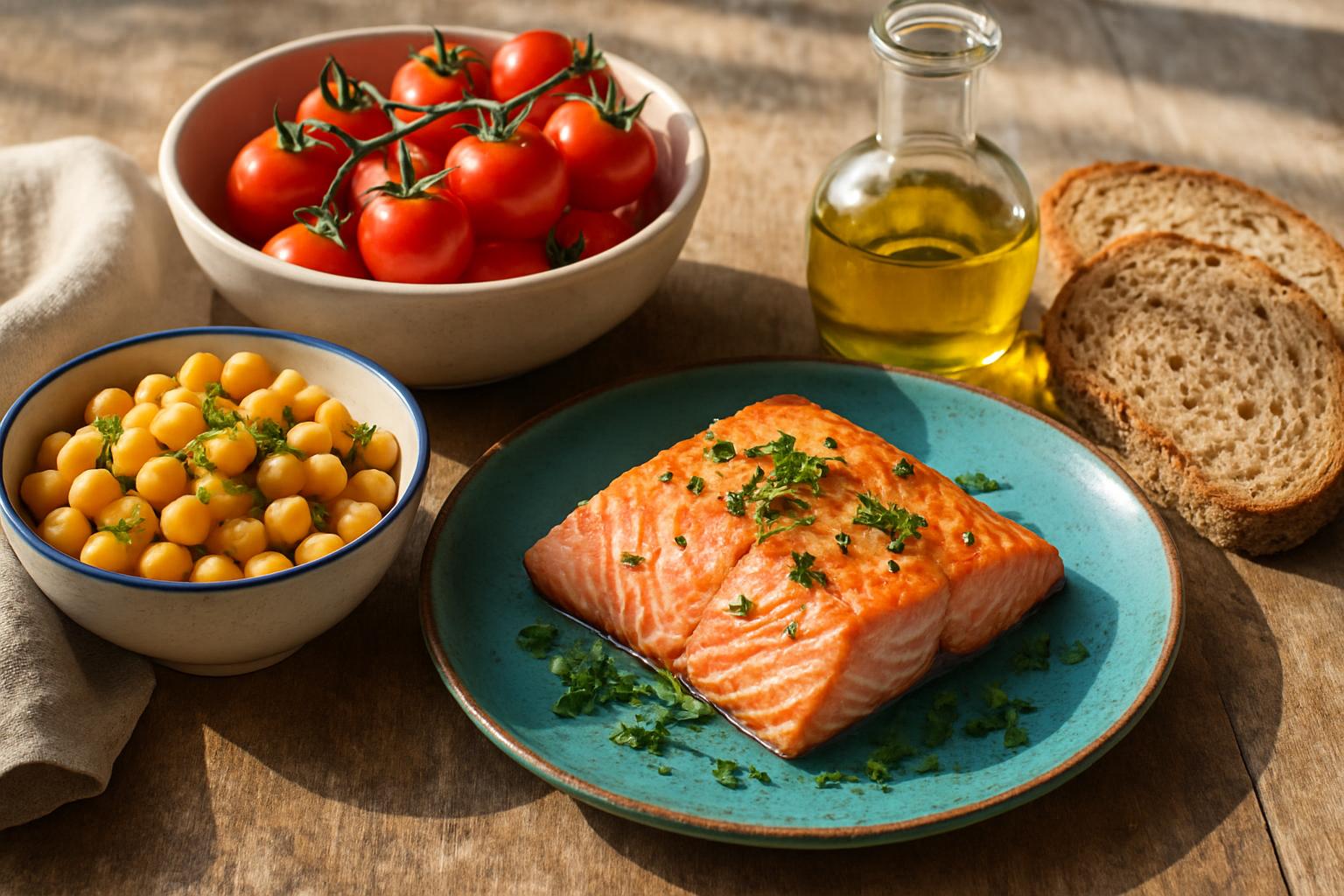
Harvard Health describes the foundation as plant foods (fruits, vegetables, whole grains, nuts and legumes), olive oil as the main fat, fish and poultry in moderate amounts several times a week, cheese and yogurt in low to moderate amounts, and red meat infrequently. Fresh fruit is the usual dessert, and sweets are occasional.
That flexibility is a big reason beginners stick with it. There is no points system and no special shopping, just a shift in what fills most of your plate.
Mediterranean diet food list and how often to eat each
Harvard Health gives practical targets: at least 3 servings of legumes a week, 2 to 3 servings of fish a week, about 3 servings of fruit a day and 3 to 4 servings of vegetables a day. Texas A&M AgriLife Extension adds that fish, legumes and white meats are weekly foods, and red meat stays under 2 servings a week.
| How often | Foods | Easy examples |
|---|---|---|
| Every day | Vegetables, fruit, whole grains, olive oil, nuts, herbs | Leafy greens, tomatoes, berries, oats, brown rice |
| Several times a week | Fish, legumes, poultry, eggs | Salmon, sardines, lentils, chickpeas, chicken |
| Low to moderate amounts | Cheese and yogurt | Plain Greek yogurt, feta |
| Rarely | Red meat, sweets, sugary drinks | Beef, pastries, soda |
The heart health evidence
The strongest evidence comes from PREDIMED, a randomized trial in Spain. The National Lipid Association’s summary says 7,447 participants were assigned to a Mediterranean diet with extra-virgin olive oil, one with mixed nuts, or a low-fat control diet. After a median of 4.8 years, both Mediterranean groups had about a 30% lower relative risk of the main cardiovascular endpoint, driven mainly by fewer strokes (hazard ratio 0.61).
The trial was republished in 2018 after randomization errors were found, and 1,588 participants were excluded in the reanalysis. Harvard’s Nutrition Source says the results remained consistent, at roughly a 30% reduction. Limitations include a control group whose fat intake ran higher than planned and mostly Mediterranean-country participants. Harvard Health also says the pattern has been linked to lower risk of heart disease, metabolic syndrome, diabetes and depression. These are trial results and associations, not guarantees for any one person.
Is the Mediterranean diet good for weight loss?
It was not designed as a weight-loss diet, and the evidence is mixed. In a three-arm randomized trial of 185 older adults with obesity, mean weight loss was 2.6 kg with the Mediterranean diet alone and 4.6 kg when calorie restriction was added. A 2026 report in HealthDay notes that a Mediterranean-style intervention improved diet quality at 24 months but did not lead to significantly greater weight loss than a calorie-restricting diet. Portion size still matters, since olive oil and nuts are calorie-dense.
Mediterranean diet breakfast ideas
Breakfast is where many beginners get stuck. Keep it simple: plain Greek yogurt with berries and walnuts, oatmeal with sliced apple and cinnamon, whole-grain toast with mashed avocado and tomato, or a vegetable omelet cooked in olive oil. The same plant-forward idea powers our anti-inflammatory diet meal plan.
A simple 1-week starter meal plan
This sample week is a template, not a prescription. Repeat meals you like, use leftovers for lunch and adjust portions to your appetite and your clinician’s advice.
| Day | Breakfast | Lunch | Dinner |
|---|---|---|---|
| Monday | Greek yogurt, berries, walnuts | Lentil soup, whole-grain bread | Baked salmon, roasted vegetables, brown rice |
| Tuesday | Oatmeal with apple and cinnamon | Leftover salmon over greens with olive oil and lemon | Chickpea and vegetable stew |
| Wednesday | Avocado and tomato toast | Leftover chickpea stew | Chicken and pepper skewers with bulgur |
| Thursday | Veggie scramble in olive oil | Hummus, cucumber and whole-wheat pita | Whole-wheat pasta with tomato sauce, spinach, white beans |
| Friday | Yogurt with oats and pear | Tuna and white bean salad | Cod with garlic, tomatoes and farro |
| Saturday | Vegetable omelet and fruit | Greek salad with chickpeas and feta | Homemade flatbread with vegetables |
| Sunday | Oatmeal with berries and almonds | Leftover farro and vegetables | Roast chicken, potatoes, green beans |
For snacks, rotate fruit, a handful of unsalted nuts, or vegetables with hummus. A pot of turmeric lentil soup works well for the Monday lunch.
How to eat Mediterranean on a budget
It does not have to be expensive. Oldways nutrition director Kelly LeBlanc told WTOP that a box of pasta, a can of beans and some leafy greens or canned tomatoes make a balanced meal in about 15 minutes. Other tips from that piece and from Fill Your Plate: buy whole grains in bulk, choose canned tuna, salmon or sardines instead of fresh fish, stock frozen vegetables and make dressings at home. University of Florida’s extension service puts sample meal plans at about $2 to $4 per serving.
Beans, whole grains and produce also raise your fiber intake; our high-fiber foods list has more ideas.
The Mediterranean diet is safe for most adults, but talk to your doctor or a registered dietitian before major changes if you have kidney disease, diabetes, a heart condition or food allergies, or if you take blood thinners or other medicines affected by diet. Wine is optional in this pattern; if you do not drink, there is no reason to start, and anyone with a health condition or taking medicines should ask a clinician about alcohol. Diet changes support, but do not replace, prescribed treatment for high blood pressure or cholesterol.
Frequently asked questions
Can I eat red meat on the Mediterranean diet?
Yes, occasionally. Harvard Health lists red meat as infrequent and sparing, with fish, legumes and poultry taking its place most days.
How many eggs per week on a Mediterranean diet?
Texas A&M AgriLife Extension lists 2 to 4 eggs a week among weekly foods. Your clinician can tailor this if you have heart disease or high cholesterol.
Is the Mediterranean diet expensive?
Not if you lean on beans, whole grains, canned fish and frozen vegetables. UF/IFAS sample meals cost roughly $2 to $4 per serving.
How is it different from an anti-inflammatory diet?
They overlap heavily. Our anti-inflammatory diet meal plan uses many of the same foods.
How fast will I see heart health benefits?
It varies. PREDIMED measured outcomes over a median of 4.8 years, so think of this as a long-term pattern rather than a quick fix.
Sources
- Harvard Health, A practical guide to the Mediterranean diet
- Harvard T.H. Chan School of Public Health, PREDIMED Study Retraction and Republication
- National Lipid Association, The PREDIMED Study
- University of Florida IFAS Extension, The Mediterranean Diet
- PMC, Tussing-Humphreys et al., Mediterranean diet and calorie restriction randomized clinical trial (2022)
Save this guide for later on Pinterest