Last updated:
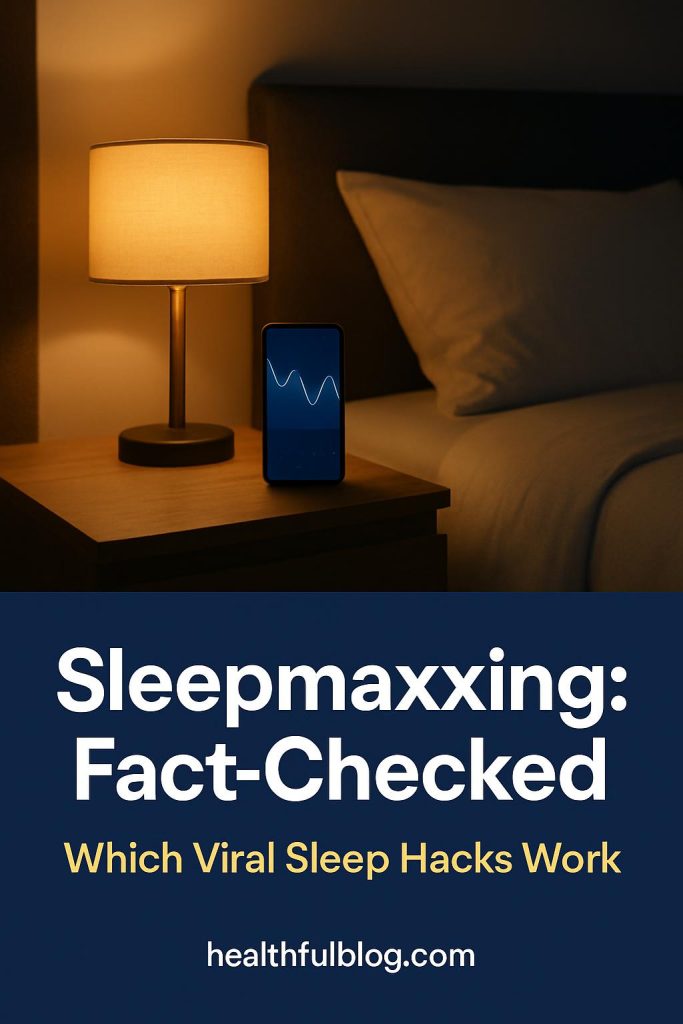
Scroll through TikTok or X at night and you will find “sleepmaxxing”: routines stacked with mouth tape, magnesium drinks, kiwis, sunrise lamps and sleep-score screenshots. The goal sounds reasonable—better, deeper, more restorative sleep. But how much of the sleepmaxxing playbook is backed by science, and could chasing perfect sleep actually make your nights worse?
- Sleepmaxxing is a social media label, not a medical term; a Harvard Health review found zero research results for the word itself.
- The basics it borrows (consistent schedule, cool dark room, less evening caffeine and light) are well supported by evidence.
- Mouth taping has weak evidence and real risks, especially for people with nasal blockage or undiagnosed sleep apnea.
- Obsessing over sleep scores can backfire; persistent sleep problems deserve a medical evaluation, not more hacks.
What is sleepmaxxing?
Sleepmaxxing borrows the “-maxxing” suffix from online self-optimization culture: take one area of life and push it to the maximum. In practice, it is a bundle of tips aimed at “longer, better, and more restorative sleep,” as Harvard Health Publishing describes it.
Harvard’s writer searched PubMed, PsycNet and Google Scholar for “sleepmaxx” and “sleepmaxxing” and found zero results. In other words, there is no sleepmaxxing protocol that has been studied as a whole. Each tip has to be judged on its own evidence.
Commonly shared tactics include mouth taping, avoiding fluids two hours before bed, a cold bedroom, blackout curtains and white noise, kiwis or magnesium before sleep, melatonin, weighted blankets, 30 minutes of daily sunlight and daily meditation.
The sleepmaxxing claims vs. the evidence
Here is how the most popular tactics stack up against what major medical sources say.
| Sleepmaxxing tactic | What the evidence shows | Verdict |
|---|---|---|
| Consistent wake time, even on weekends | A core recommendation of the American Academy of Sleep Medicine (AASM) | Supported |
| Cool, dark, quiet bedroom | Recommended by AASM and supported by research cited by Harvard Health | Supported |
| Screens off before bed | AASM advises turning off electronics at least 30 minutes before sleep | Supported |
| Mouth taping | A 2025 PLOS One review of 10 studies found little benefit and possible risks | Not recommended |
| Melatonin for everyday sleep | Evidence is strongest for jet lag, not chronic insomnia | Limited |
| Kiwis before bed | Based on a small study of 24 people | Unproven |
| Weighted blankets | “Intriguing” research but no convincing evidence for general adults | Unproven |
Mouth taping: the riskiest hack
Mouth taping is pitched as a way to force nasal breathing, reduce snoring and improve sleep quality. The research does not back the hype.
A systematic review published in PLOS One in May 2025 analyzed 10 studies with 213 total patients. According to a summary of the review, only 2 of the 10 studies suggested possible benefit, and only for people with mild sleep apnea. Four studies flagged a risk of asphyxiation, particularly for people with nasal obstruction. The authors also warned about choking risk if someone vomits during sleep.
A sleep surgeon interviewed by CU Anschutz noted that in one 2024 study of more than 50 patients, some people with the worst airflow got distinctly worse with their mouths sealed. The same article reports that the AASM recommends against mouth taping.
The biggest concern is that loud snoring can be a sign of obstructive sleep apnea. Taping over the symptom can delay a diagnosis. If you snore heavily or wake up gasping, read about the signs of sleep apnea and how it’s treated before trying any tape.
Melatonin, magnesium and the supplement stack
Many sleepmaxxing routines include supplements. Melatonin is the most common, but it is not a general sleep booster. The National Center for Complementary and Integrative Health (NCCIH) notes that AASM and the American College of Physicians found not enough strong evidence on melatonin’s effectiveness or safety for chronic insomnia. The evidence is better for jet lag.
Product quality is another issue. NCCIH cites a 2023 study in which 22 of 25 melatonin gummy products were inaccurately labeled, with some containing up to 3.5 times the labeled amount.
Harvard Health similarly cautions that viral food and supplement tips, like kiwis before bed, rest on small studies. Before adding any supplement, check with a pharmacist or doctor, especially if you take other medications.
What sleepmaxxing gets right
Strip away the gadgets and the trend overlaps heavily with classic sleep hygiene, which has solid support. The AASM’s healthy sleep habits include:
- Getting up at the same time every day, including weekends.
- Going to bed only when you feel sleepy.
- Getting out of bed if you can’t fall asleep within about 20 minutes and doing something quiet in dim light.
- Keeping the bedroom dark, quiet and cool.
- Avoiding large meals, caffeine, alcohol and excess fluids close to bedtime.
- Exercising regularly.
Daylight exposure and a calming wind-down routine also fit within mainstream advice. If gentle movement helps you unwind, there is research interest in whether yoga can ease anxiety, which often feeds into poor sleep.
How much sleep is the target? The CDC recommends 7 or more hours for adults ages 18 to 60, 7 to 9 hours for ages 61 to 64, and 7 to 8 hours for people 65 and older.
The hidden risk: orthosomnia
Sleep researchers have a name for an unhealthy pursuit of perfect sleep: orthosomnia. Harvard Health explains that wearables and sleep apps can push people who actually sleep well into anxious over-optimization.
The irony is that worry about sleep is itself a driver of insomnia. Even good sleepers have a so-so night about twice a week, according to Harvard Health. Treating every low sleep score as a failure can create the very arousal that keeps you awake.
A practical approach: use trackers for broad trends, not nightly grades. If you feel rested during the day, a “bad” score probably doesn’t need fixing. Remember that rest matters beyond the hours you log; here’s more on how rest helps your mind.
Verdict: should you try sleepmaxxing?
Partly. The useful core of sleepmaxxing is old, boring and effective: a regular schedule, a comfortable bedroom, less evening light and caffeine, and daytime activity. The flashier add-ons, particularly mouth taping and supplement stacks, range from unproven to potentially risky.
If you’ve already tried good sleep habits and still struggle, the next step isn’t another hack. It’s a conversation with a clinician, who can screen for conditions like sleep apnea or insomnia disorder that respond to real treatment.
Talk to a healthcare professional if you snore loudly, stop breathing or gasp during sleep, feel very sleepy during the day despite enough time in bed, or have trouble falling or staying asleep most nights for several weeks. Also check with a doctor or pharmacist before starting sleep supplements, especially if you are pregnant, take prescription medicines or have a chronic health condition.
Frequently asked questions
Is sleepmaxxing safe?
The sleep-hygiene parts are safe for most people. Some add-ons, especially mouth taping, carry risks for people with nasal blockage or sleep apnea, and supplements can interact with medications.
Does mouth taping help snoring?
Evidence is weak. A 2025 review of 10 studies found possible benefit only in people with mild sleep apnea and flagged asphyxiation risk in several studies. Heavy snoring should be evaluated by a doctor.
How many hours of sleep should I aim for?
The CDC recommends 7 or more hours for adults ages 18 to 60, with slightly different ranges for older adults.
Can a sleep tracker make sleep worse?
It can for some people. Fixating on nightly scores is linked to orthosomnia, an anxious pursuit of perfect sleep that can worsen insomnia.
Is melatonin part of a good sleep routine?
Not for most people. Evidence supports melatonin mainly for jet lag, not for chronic insomnia, and product labels are often inaccurate.
Sources
- Harvard Health Publishing, Should you be sleepmaxxing to boost health and happiness?
- Powers Health, Mouth taping for better sleep: little benefit, lots of risk, review says
- CU Anschutz, Mouth tape for better sleep: myth or miracle?
- American Academy of Sleep Medicine, Healthy sleep habits
- NCCIH, Melatonin: What you need to know
Save this guide for later on Pinterest