Last updated:
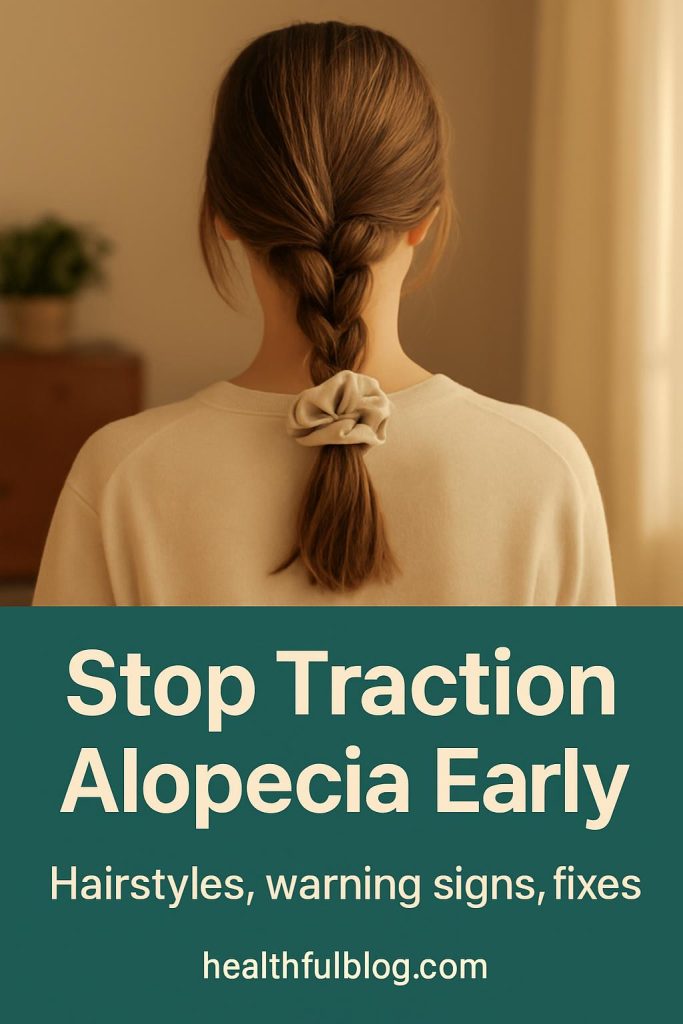
Traction alopecia is hair loss caused by hairstyles that pull on the hair for too long, and it is one of the few types of hair loss you can often stop and even reverse on your own. The catch is timing: caught early, hair usually grows back once the tension stops, but years of pulling can scar follicles for good. Here is how to recognize traction alopecia, which styles carry the most risk and what to do at the first signs.
- Traction alopecia comes from repeated tension on the hair, such as tight braids, ponytails, buns, weaves and extensions.
- Early signs include broken hairs and thinning at the hairline, scalp pain or stinging, and small bumps around follicles.
- Loosening or changing the style early often allows regrowth; long-term pulling can cause permanent, scarring hair loss.
- Dermatologists can add treatments such as corticosteroids, antibiotics or minoxidil, and hair transplants are an option for advanced cases.
What causes traction alopecia
When hair is pulled tight day after day, the constant tension inflames and damages the follicles. According to a 2018 review by Billero and Miteva in Clinical, Cosmetic and Investigational Dermatology, “the risk of TA is increased by the extent of pulling and duration of traction, as well as the use of chemical relaxation” (full text). In other words, tighter, longer and chemically weakened hair all raise the risk.
Anyone can develop it, but it is especially common in people who wear tension styles for long periods. The American Academy of Dermatology (AAD) notes that for people of African descent, “the shape of your hair follicles makes your hair more likely to be damaged from rough or tight hairstyles.” The same review describes traction alopecia in Sikh boys who wear tightly wrapped turbans from adolescence, showing it is about tension, not one culture or hair type.
How common it is
Estimates vary widely depending on who was studied. The Billero and Miteva review summarizes several findings:
- Traction alopecia affects about one-third of women of African descent, by some estimates.
- A primary care study in Cape Town found a prevalence of 37% among women.
- Among South African schoolgirls, prevalence rose from 8.6% in the first year of school to 21.7% by the final year, suggesting the damage builds with years of styling.
That school data is a useful reminder: habits that start in childhood can show up as thinning edges in adulthood.
Hairstyles that can cause it
Most of these styles are fine when worn loosely and with breaks. The risk comes from tightness, weight and duration.
| Style or habit | Why it can pull | Lower-risk adjustment |
|---|---|---|
| Tight braids and cornrows | Small, tight sections put focused tension on the hairline | Choose thicker braids and keep the hairline loose |
| Locs | Weight of mature locs and tight retwisting | Avoid over-tight retwists at the roots |
| High ponytails, buns and updos | Hair pulled back hard against the temples | Wear lower and looser; vary placement |
| Weaves and extensions | Added weight and tension, especially on relaxed hair | Prefer sewn-in over glued; limit how long you wear them |
| Rollers worn often to bed | Hours of overnight tension | Use them less often or choose looser methods |
| Tight head coverings over pulled-back hair | Continuous traction at the hairline | Loosen hair underneath and alternate wrapping styles |
Styles listed are from the AAD, which identifies each as a potential cause when worn tightly.
Early warning signs to check for
The AAD recommends checking your hairline about once a month for:
- Broken hairs around your forehead
- A receding hairline
- Patches of hair loss where hair is pulled tightly
- Pain, stinging or crusty areas on the scalp
- Scalp “tenting,” where the skin lifts around tight sections
Doctors also look for small red bumps or pustules around follicles, which Billero and Miteva describe as features of early traction alopecia. Another clue is the “fringe sign,” a thin row of short, finer hairs left along the front or temple edge. In a study of 41 women with traction alopecia published in Dermatology Online Journal (2011), 85% had the fringe sign, including every woman whose hairline margin was affected.
A simple rule from the AAD: “If your hairstyle feels painful, the style is too tight.”
How to reverse it early
The single most important step is removing the tension. Billero and Miteva note there is currently no cure, but early hairstyle changes can reverse most cases before scarring sets in. AAD dermatologists recommend:
- Loosen up. Keep braids loose at the hairline and choose thicker braids.
- Limit duration. Wear braids no longer than 6-8 weeks before switching styles. For weaves and extensions, the AAD’s guidance is two or three months at most, then a break.
- Rotate styles. Alternate tension styles with looser, natural styles to give follicles time to recover.
- Speak up at the salon. If a style hurts or gives you a headache, ask your stylist to loosen it.
- Be careful combining chemicals and tension. Relaxed hair under tight styles raises the risk.
- Protect fragile edges. The AAD suggests water-based gels for delicate hairline hair and keeping the scalp clean and hydrated.
For gentle everyday habits, our tips for thinning hair are a good companion to these changes.
Medical treatments
If changing your style is not enough, the AAD says dermatologists may prescribe corticosteroids, antibiotics or minoxidil. The Billero and Miteva review details these options:
- Topical or injected corticosteroids along the margins of hair loss to calm inflammation.
- Oral or topical antibiotics, used for their anti-inflammatory effect.
- Topical minoxidil 2%, which has shown regrowth in reported cases. Our guide to minoxidil vs finasteride explains how minoxidil works.
Once follicles have scarred, the AAD warns that “your hair cannot grow back.” At that stage, hair transplantation is the main option. Surgery only makes sense after the traction has stopped for good, or transplanted hair can be lost the same way. If you are weighing that route, see our hair transplant cost guide.
See a board-certified dermatologist if your hairline keeps thinning after you loosen your styles, if you have scalp pain, pus-filled bumps or crusting, or if smooth, shiny bald patches appear. Early treatment gives you the best chance of regrowth, and a dermatologist can rule out other conditions, such as frontal fibrosing alopecia, that can look similar.
Frequently asked questions
Can traction alopecia grow back?
Often, if caught early. Removing the tension can allow regrowth, but after long-term pulling the follicles can scar and hair may not return.
How long does it take for edges to grow back?
It varies with how long the traction lasted and how much damage occurred. Expect months rather than weeks, and see a dermatologist if there is no improvement.
Are protective styles bad for your hair?
Not inherently. The AAD’s concern is tightness and duration, so keep styles loose, limit wear time and take breaks.
Can men get traction alopecia?
Yes. Tight ponytails, man buns, braids, locs and tightly wrapped turbans can all cause it, as researchers have documented in Sikh boys who wear tight turbans.
Sources
- American Academy of Dermatology, Hairstyles that pull can lead to hair loss
- American Academy of Dermatology, How to prevent hair damage from a weave or extensions
- Billero and Miteva, Traction alopecia: the root of the problem (Clinical, Cosmetic and Investigational Dermatology, 2018)
- Samrao et al., The “Fringe Sign”: a useful clinical finding in traction alopecia (Dermatology Online Journal, 2011)
Save this guide for later on Pinterest