Last updated:
If your doctor suspects sleep apnea or another sleep disorder, the next step is a sleep study. And one of the first questions people ask is what it will cost. The answer ranges from about the price of a nice dinner out to more than a used car, depending on whether you test at home or in a sleep lab, where you live and how your insurance treats it. This guide breaks down the real cost of home and in-lab sleep studies in 2026, what Medicare and private insurance cover, and how to choose the right test without overpaying.
- A home sleep apnea test usually costs about $150 to $1,000+ without insurance.
- An in-lab sleep study (polysomnography) ranges from about $1,000 to $10,000+, averaging around $3,000.
- Medicare covers sleep studies ordered by your doctor, paying 80% of the approved amount after the Part B deductible.
- Home tests are convenient and cheaper but can underestimate sleep apnea; a negative home test does not always rule it out.
Sleep study cost at a glance
| Type of study | Typical cost without insurance | What it measures |
|---|---|---|
| Home sleep apnea test (HSAT) | About $150 to $1,000+ | Breathing, airflow, oxygen level, heart rate |
| In-lab polysomnography | About $1,000 to $10,000+ (average about $3,000) | Brain waves, sleep stages, breathing, oxygen, heart, leg and eye movement |
| Split-night study | Similar to in-lab polysomnography | Diagnosis in the first half, CPAP setting in the second half |
| CPAP titration study | Similar to in-lab polysomnography | The air pressure you need on CPAP |
| Multiple sleep latency test (MSLT) | Often added to an overnight study | Daytime sleepiness, used to diagnose narcolepsy |
Cost ranges from the Sleep Foundation. The price you pay depends heavily on your insurance and the facility.
Home sleep test vs. in-lab sleep study
Home sleep apnea test
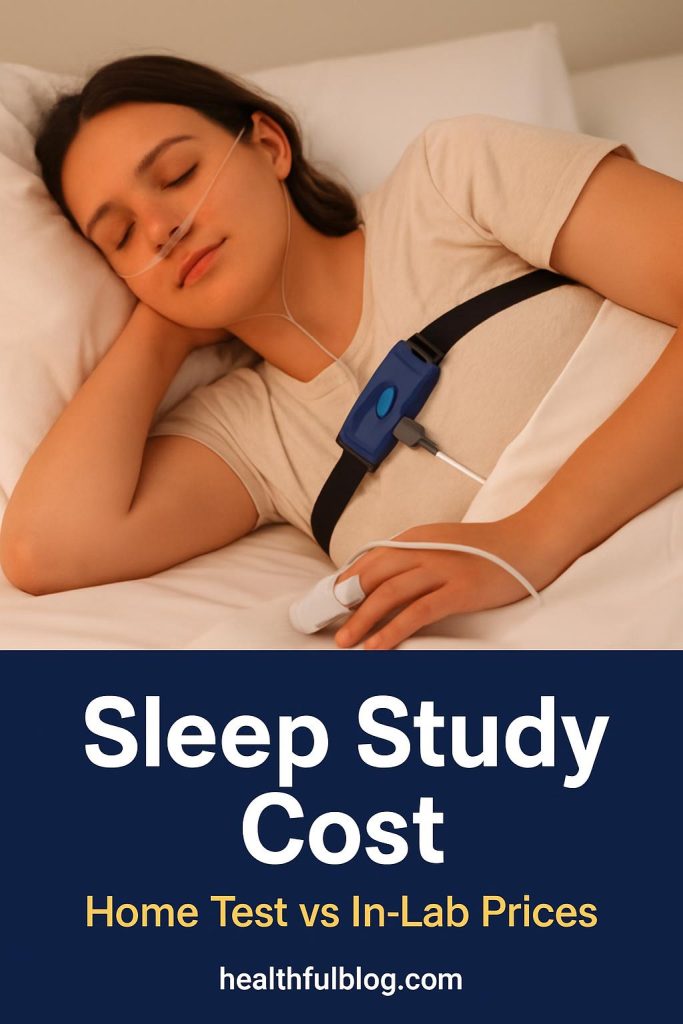
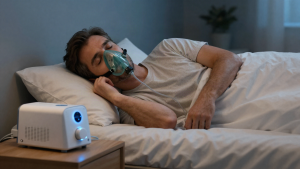
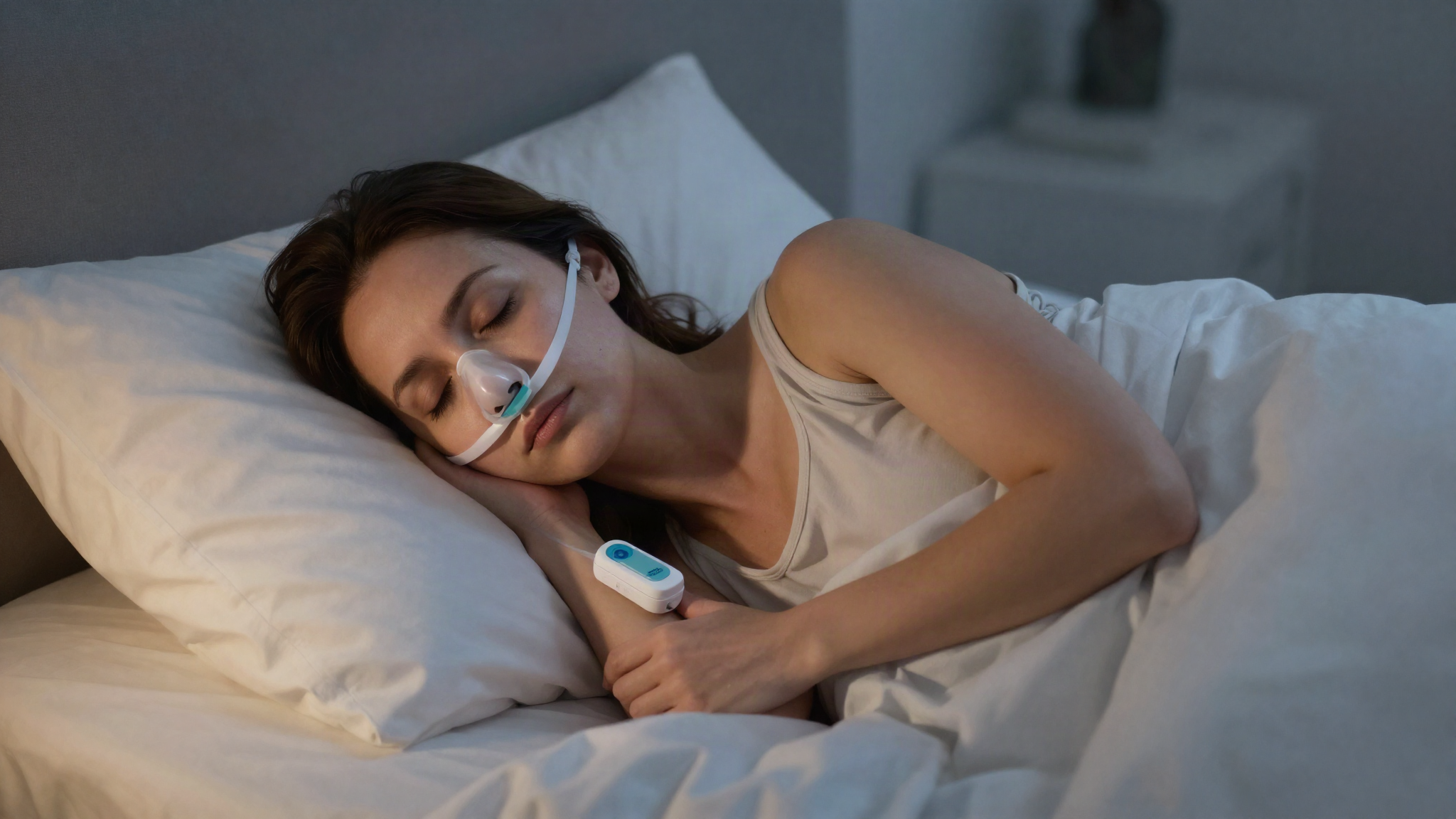
You pick up or receive a small device by mail, wear it for one to three nights in your own bed, and return it. Sensors typically include a nasal cannula for airflow, a chest belt for breathing effort and a finger clip for oxygen. It is cheaper, more comfortable for many people and often available faster.
The limitation: home tests do not measure actual sleep. They record the total time you wear the device, including time awake, which can make your sleep apnea look milder than it is. They are designed to diagnose obstructive sleep apnea only.
In-lab polysomnography
You spend the night in a private room at a sleep center while a technologist monitors you. Electrodes record brain waves, eye movements, muscle activity, heart rhythm, breathing and oxygen levels. It is the most complete test and can diagnose a wider range of disorders.
Which one do you need?
A home test is often appropriate for adults with a high likelihood of moderate to severe obstructive sleep apnea and no major heart, lung or neuromuscular disease. An in-lab study is usually recommended if:
- A home test was negative or inconclusive but symptoms continue
- You have heart failure, COPD, neuromuscular disease or use opioid medications
- Your doctor suspects central sleep apnea, narcolepsy, seizures during sleep, REM sleep behavior disorder or periodic limb movements
- The patient is a child
Does insurance cover a sleep study?
Medicare
Medicare Part B covers diagnostic sleep studies, including home tests and in-lab studies, when your doctor orders them because you have symptoms of sleep apnea. After the Part B deductible ($283 in 2026), you typically pay 20% coinsurance. A Medigap plan can cover that share. A sleep study diagnosis is also required before Medicare will cover a CPAP machine.
Private insurance
Most private plans cover sleep studies when they are medically necessary, but many require prior authorization, and some require you to try a home test first before approving an in-lab study. If you have a high-deductible plan, you may pay the full negotiated rate until you meet the deductible.
Questions to ask before booking
- Is prior authorization needed, and has it been approved?
- Is the sleep center in network? Is the interpreting physician in network too?
- Will the study be billed as a hospital outpatient service or at an independent sleep center? Hospital billing is often higher.
- What is my estimated out-of-pocket cost?
How to save money on a sleep study
- Ask whether a home test is appropriate. If you qualify, it can save thousands.
- Compare independent sleep centers and hospitals. Prices for the same test can differ dramatically.
- Ask for the cash price. If you have a high deductible, the self-pay price may be lower than the insurance rate.
- Use HSA or FSA funds. Sleep studies are eligible medical expenses.
- Request a split-night study when appropriate, which combines diagnosis and CPAP setting in one night instead of two.
- Be wary of very cheap online tests. Make sure a board-certified sleep physician interprets the results and that the test is accepted by your insurer for CPAP coverage.
What happens during an in-lab sleep study
You usually arrive in the evening and bring your own pajamas and toiletries. A technologist attaches sensors to your scalp, face, chest and legs with a mild adhesive, a process that takes 30 to 60 minutes. The room resembles a hotel room, and you can read or watch TV until your usual bedtime. A camera and microphone let staff monitor you overnight. Most people sleep less than at home, but usually enough for an accurate result. You go home in the morning, and results typically take one to two weeks.
Tips for a successful night: keep your usual routine, avoid caffeine in the afternoon, skip alcohol, wash your hair without conditioner or styling products, and take your regular medications unless told otherwise.
After the study: understanding your results
Your report includes the apnea-hypopnea index (AHI), the number of breathing pauses and shallow breaths per hour. For adults, an AHI of 5 to 14 is mild, 15 to 29 is moderate, and 30 or more is severe. Your doctor will also look at oxygen levels and, in an in-lab study, sleep stages and leg movements.
If you are diagnosed with sleep apnea, our guide to sleep apnea signs and treatment explains the next steps. If the study shows no apnea but you still struggle to sleep, chronic insomnia is often treated with cognitive behavioral therapy for insomnia (CBT-I), which is available online; see our overview of online therapy costs. Restless legs at night can be linked to low iron, which is covered in our guide to daily vitamins and minerals.
Ask your doctor about a sleep study if you snore loudly, someone has seen you stop breathing or gasp in your sleep, you wake with headaches or a dry mouth, or you are sleepy during the day despite enough time in bed. Seek prompt care if you have fallen asleep while driving, have chest pain or an irregular heartbeat at night, or experience sudden episodes of muscle weakness with strong emotions.
Frequently asked questions
How much is a sleep study with insurance?
It depends on your deductible and coinsurance. Many people pay little for a home test, while an in-lab study can cost hundreds to a few thousand dollars before the deductible is met.
Is a home sleep test accurate?
It is accurate for diagnosing moderate to severe obstructive sleep apnea in the right patients, but it can underestimate severity and miss other sleep disorders.
Does Medicare pay for an at-home sleep test?
Yes, when ordered by your doctor for suspected obstructive sleep apnea. You pay 20% after the Part B deductible.
Can I sleep on my side during a sleep study?
Yes. Sleep in whatever position is natural. The technologist may ask you to spend some time on your back, since sleep apnea is often worse in that position.
How long does it take to get sleep study results?
Usually one to two weeks, after a sleep physician reviews the data.
Sources
- Sleep Foundation, How Much Does a Sleep Study Cost?
- Medicare.gov, Sleep Studies
- NHLBI (NIH), Sleep Studies
- American Academy of Sleep Medicine, Sleep Education: Sleep Studies
Save this guide for later on Pinterest