Last updated:
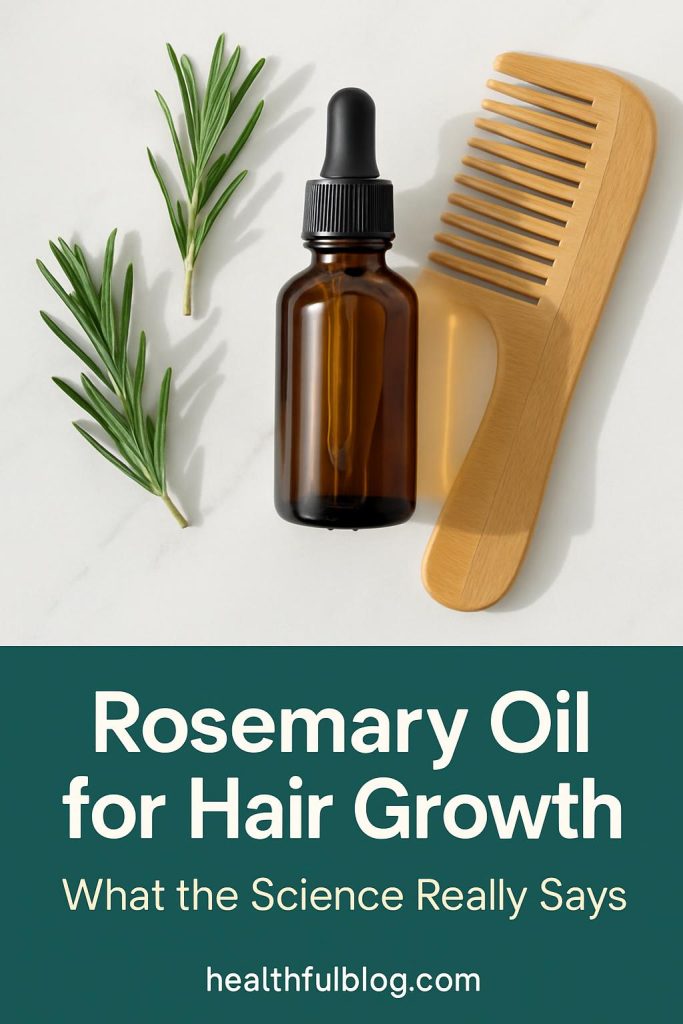
Rosemary oil has become one of the most popular hair growth remedies online. Videos promise thicker hair in weeks, and bottles sell out regularly. But what does the science actually say? Is rosemary oil really “as good as minoxidil,” and how should you use it if you want to try it safely? This guide separates the evidence from the hype, explains how to apply rosemary oil correctly, and tells you who should skip it.
- The main study behind the trend compared rosemary oil with 2% minoxidil in 100 men and found similar increases in hair count after 6 months, with no change at 3 months.
- The evidence is promising but limited: one small trial, mostly men, no placebo group.
- Always dilute rosemary essential oil in a carrier oil and patch test first.
- For genetic thinning, proven treatments such as minoxidil remain the first choice; rosemary is a low-cost add-on.
What the research says
The study most people quote was published in 2015 in the journal SKINmed. Researchers randomly assigned 100 men with androgenetic alopecia (male pattern baldness) to use either rosemary oil or minoxidil 2% solution for six months (Panahi et al., 2015).
- At 3 months, neither group showed a significant increase in hair count.
- At 6 months, both groups had a significant increase, and the difference between them was not statistically significant.
- Scalp itching was more common in the minoxidil group.
That sounds impressive, but it comes with important caveats:
- It was a single, small study that has not been widely replicated.
- Participants were men; results may differ for women.
- It compared rosemary with the weaker 2% minoxidil, not the 5% strength most dermatologists recommend for men.
- There was no placebo group, so we cannot know how much improvement would have happened anyway.
Laboratory and animal studies suggest that compounds in rosemary may improve circulation and reduce inflammation in the scalp, which could support follicles. These findings are interesting, but they are not proof that it works for people.
Rosemary oil vs. minoxidil vs. other options
| Option | Evidence | Typical cost | Best for |
|---|---|---|---|
| Rosemary oil (diluted) | One small human trial | About $8 to $20 per bottle | Mild thinning, people who want a natural add-on |
| Minoxidil 5% | Decades of research, FDA approved | About $10 to $40 per month | Male and female pattern thinning |
| Rosemary water rinse | No direct human trials | Pennies | A gentle routine; benefits unproven |
| Scalp massage | Small studies suggest a modest benefit | Free | Everyone, as part of a routine |
| PRP or laser devices | Moderate evidence as add-ons | Hundreds to thousands of dollars | Pattern thinning with a bigger budget |
How to use rosemary oil for hair
- Pick a carrier oil. Jojoba, sweet almond, argan or fractionated coconut oil work well. Jojoba is light and less likely to clog the scalp.
- Dilute it. A common guideline is about 2 to 3 drops of rosemary essential oil per teaspoon (5 ml) of carrier oil. Never apply pure essential oil to your scalp.
- Patch test. Dab a little of the mix on the inside of your forearm and wait 24 hours. Skip it if you see redness, itching or bumps.
- Massage it in. Part your hair and apply a few drops along the parts, then massage your scalp with your fingertips for 3 to 5 minutes.
- Leave it on for at least 30 minutes or overnight, then shampoo. If your hair feels greasy, try a lighter carrier or use less.
- Be consistent. Most people use it two to four times a week. In the study, changes only appeared after six months.
Ready-made rosemary hair serums and shampoos are convenient, but their concentrations vary and most have not been tested in studies.
What about rosemary water?
Rosemary water is made by simmering fresh or dried rosemary in water, cooling it and using it as a spray or rinse. It is gentle and inexpensive, but it contains far less of the plant’s oils than the products used in research, and there are no human studies on it. Store it in the fridge and use it within about a week.
Who should avoid rosemary oil
- People with sensitive skin, eczema or scalp psoriasis, unless their dermatologist approves
- Anyone with a known allergy to rosemary or related plants
- People who are pregnant or breastfeeding, or who have a seizure disorder: talk to your doctor before using concentrated essential oils
- Children, unless a doctor recommends it
- Keep essential oils away from your eyes and out of reach of children and pets
Realistic expectations
Rosemary oil is unlikely to regrow hair on areas that have been bald for years, and it will not fix hair loss caused by low iron, thyroid problems or hormonal conditions. It may be worth trying for mild thinning if you are patient, understand the limits of the evidence and keep using it for at least six months.
Combine it with good habits from our list of tips for thinning hair and make sure your diet covers the vitamins and minerals your hair needs. If thinning is advanced, medical treatment or a transplant may be the only way to restore coverage; our guide to hair transplant costs explains the options.
See a dermatologist if your hair falls out in clumps or patches, if your scalp is red, scaly, painful or itchy, or if you have no improvement after six months of home care. Stop using rosemary oil and seek care if you develop a rash, blistering or swelling. Sudden or rapid hair loss, or hair loss with fatigue, weight changes or irregular periods, can signal a medical condition that needs testing.
Frequently asked questions
How long does rosemary oil take to work?
In the main study, a difference appeared only after six months of regular use. Anyone promising results in two weeks is overselling it.
Can I mix rosemary oil with minoxidil?
Some people use both, applied at different times of day. Ask your dermatologist first, since combining products can increase scalp irritation.
Can I leave rosemary oil in my hair overnight?
Yes, if it is diluted and does not irritate your skin. Protect your pillowcase with a towel.
Does rosemary oil work for women?
It may, but the main study included only men. Women with pattern thinning should consider minoxidil, which is approved for them.
Is rosemary oil safe for color-treated hair?
Generally yes. Oils can make hair look darker or greasy temporarily, but they wash out.
Sources
- Panahi Y. et al., Rosemary Oil vs Minoxidil 2% for the Treatment of Androgenetic Alopecia, SKINmed 2015
- Mayo Clinic, Hair Loss: Diagnosis and Treatment
Save this guide for later on Pinterest