Last updated:
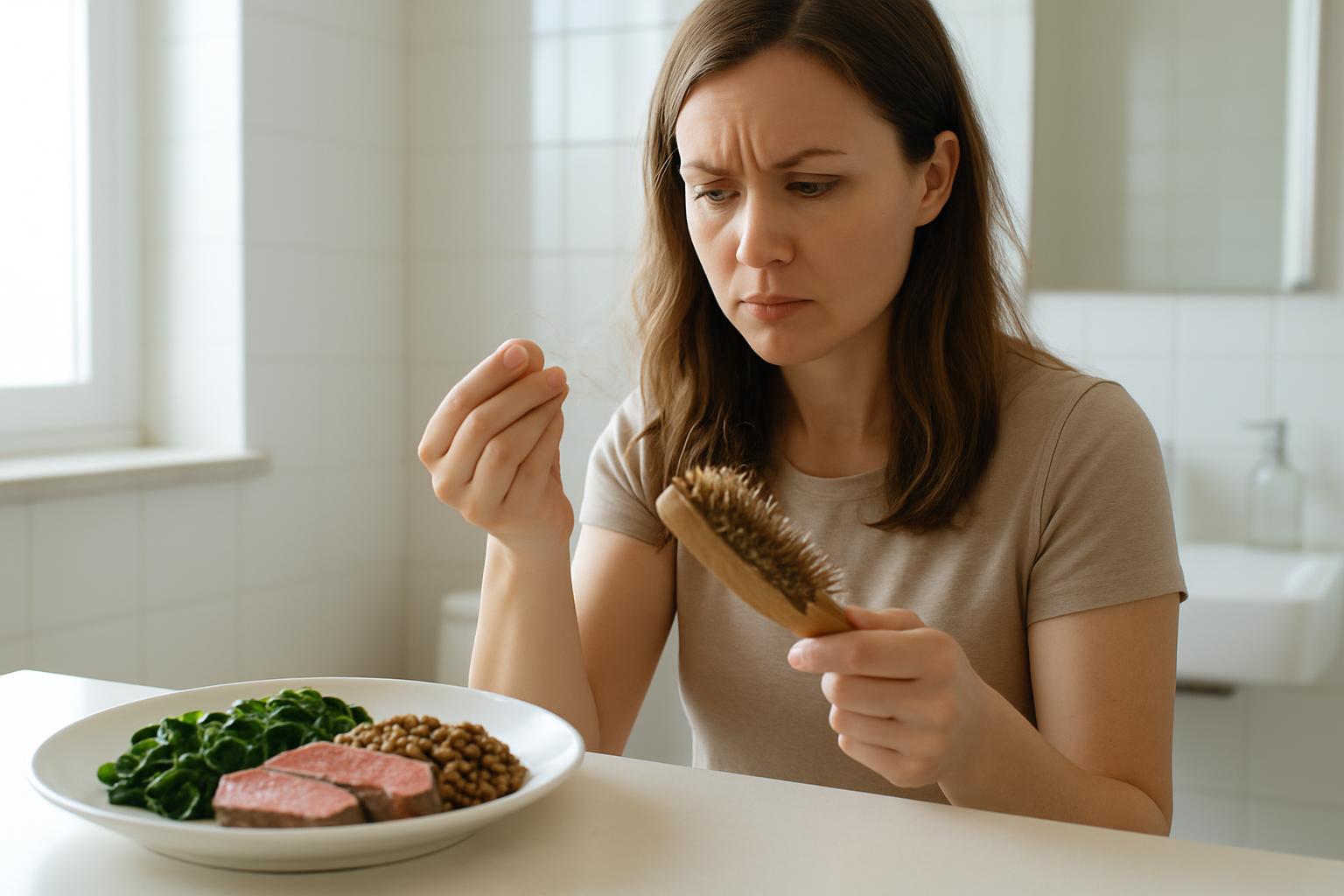
More hair in the shower drain, a thinner ponytail, and you are tired all the time. Low iron is one of the first things dermatologists think about when a woman notices diffuse shedding, and it is one of the easiest causes to check. Here is what ferritin tells you, which symptoms point toward low iron, and what actually helps your hair recover.
- Ferritin is your body’s iron storage protein, and a low result can point to depleted iron even before you become anemic.
- Iron deficiency is linked to telogen effluvium (diffuse shedding), especially in premenopausal women, though studies are mixed and supplements are not proven to regrow hair on their own.
- A blood test, not guesswork, should come before iron pills, because too much iron is harmful and some people absorb it excessively.
- Recovery is slow: rebuilding iron stores can take months, and hair regrowth lags behind that.
How iron and hair growth are connected
Hair follicles are among the most active cells in the body, and they need a steady supply of nutrients. When iron runs low, the body appears to prioritize vital organs over “nonessential” tissue like hair.
A review of diet and hair loss in Dermatology and Therapy calls iron deficiency the most common nutritional deficiency in the world. Most of the studies it covers suggest a relationship between low iron and telogen effluvium, a type of shedding where more hairs than usual enter the resting phase and fall out. Some studies found no clear link, so iron is best seen as one possible contributor, not a guaranteed cause.
The American Academy of Dermatology lists getting too little iron, biotin, protein or zinc among the common causes of noticeable hair loss.
What ferritin is and why it matters more than “iron”
Ferritin is a protein that stores iron inside your cells so your body can draw on it later. Because it reflects reserves, it often drops before hemoglobin does. That means you can have a “normal” blood count and still be running on empty.
Reference ranges vary by lab. MedlinePlus lists typical values of 13 to 150 ng/mL for women and 30 to 400 ng/mL for men, while Cleveland Clinic cites 15 to 205 ng/mL for women and 30 to 566 ng/mL for men.
Here is where hair specialists diverge from general lab ranges. The Dermatology and Therapy review notes that a ferritin cutoff of 30 detects iron deficiency with 92% sensitivity and 98% specificity, and a cutoff of 41 reaches 98% for both. It also reports that some authors recommend keeping ferritin above 40, or even 70, when treating telogen effluvium. Those higher targets are opinions from the literature, not official guidelines, so discuss your number with your clinician.
Why one test is not the whole picture
Ferritin rises with inflammation. Cleveland Clinic notes that infections and autoimmune conditions can push ferritin up, which can mask a true deficiency. Doctors often order a broader iron panel and a complete blood count to see the full story.
Symptoms of low iron to watch for
Hair shedding rarely shows up alone. According to Mayo Clinic, iron deficiency anemia can cause:
- Extreme tiredness and weakness
- Pale skin
- Shortness of breath, chest pain or a fast heartbeat
- Headaches, dizziness and cold hands and feet
- A sore tongue and brittle nails
- Restless legs
- Cravings for ice, dirt or other nonfood items (pica)
Iron-related shedding is usually diffuse, spread across the whole scalp rather than in patches. A widening part or thinning at the crown may also suggest female pattern hair loss, which can occur alongside low iron. Our guide to female hair loss causes and treatments covers how to tell them apart.
Who is most likely to run low
The NIH Office of Dietary Supplements identifies these higher-risk groups:
- Teen girls and women with heavy periods
- Pregnant people
- Frequent blood donors
- People with cancer, gastrointestinal disorders or heart failure
Mayo Clinic adds vegetarians and vegans, people who have had gastric bypass surgery, and those with celiac disease, Crohn’s disease or ulcerative colitis. Shedding after pregnancy can overlap with low iron, too; see our article on postpartum hair loss.
Testing: what to ask for and what it costs
Ask your doctor whether a ferritin test, iron panel and complete blood count make sense. Many dermatologists also check thyroid function and vitamin D when evaluating shedding. With insurance, these tests are often covered when ordered for symptoms.
If you prefer to order a test yourself, Quest’s direct-to-consumer Iron, TIBC and Ferritin Panel was listed at $59 plus a $6 physician service fee ($65 total) as of October 2026, with an optional $79 in-home collection fee. MedlinePlus notes you may be asked to fast before the blood draw.
| Option | What it includes | Typical cost (Oct. 2026) |
|---|---|---|
| Doctor-ordered labs | Ferritin, iron panel, CBC, often thyroid | Varies by insurance; often covered with symptoms |
| Quest self-order panel | Iron, TIBC, ferritin | $65 total (plus $79 if in-home draw) |
| Over-the-counter iron tablets | Ferrous sulfate, gluconate or fumarate | Inexpensive, but use only after testing |
| IV iron | Iron given through a vein | Prescribed for severe cases; cost depends on coverage |
What helps: food, supplements and patience
Eat iron-rich foods
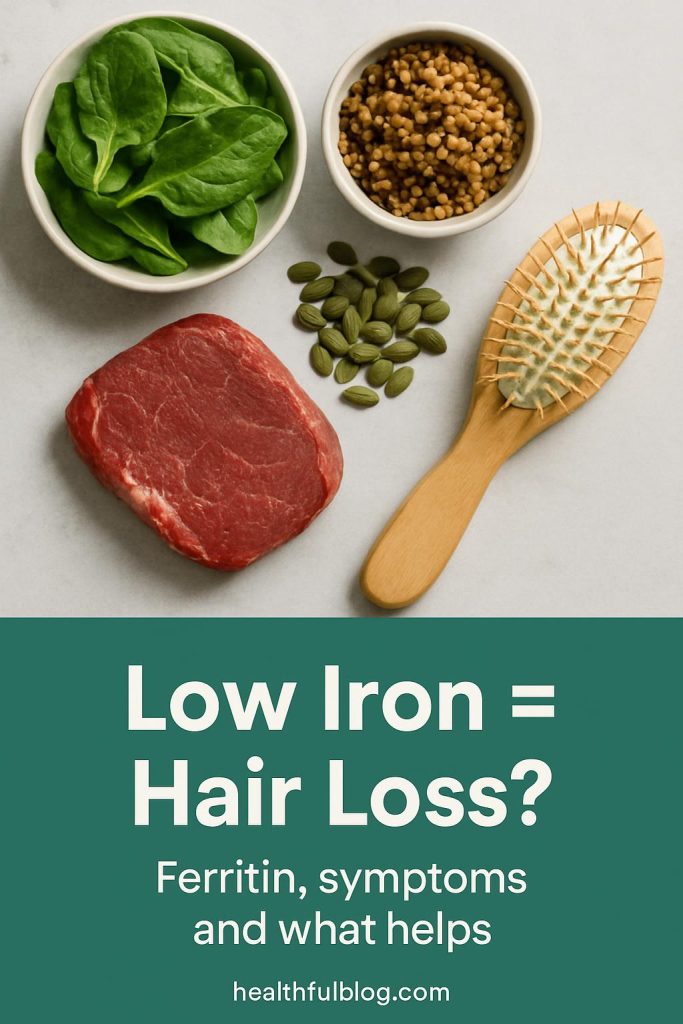
The recommended daily amount is 18 mg for women ages 19 to 50, 8 mg for women over 50 and adult men, and 27 mg during pregnancy, according to the NIH. Strong sources from the NIH health professional fact sheet include:
- Fortified breakfast cereal: 18 mg per serving
- Oysters: 8 mg per 3 ounces
- Canned white beans: 8 mg per cup
- Lentils, spinach or tofu: about 3 mg per half cup
- Beef or sardines: about 2 mg per 3 ounces
Heme iron from meat and seafood is absorbed better than the nonheme iron in plants. Pairing plant foods with vitamin C-rich foods or a little meat improves absorption. For broader nutrition basics, see our list of vitamins and minerals to consider daily.
Take supplements the smart way
If your doctor recommends iron, Mayo Clinic suggests taking it before meals if you can tolerate it, with vitamin C, and separating it from antacids by a few hours and from coffee or tea by at least an hour. Black stools are common and harmless; constipation and nausea are the most frequent complaints.
The NIH advises separating calcium and iron supplements and leaving four hours between iron and levothyroxine. The adult upper limit is 45 mg a day from all sources unless a doctor prescribes more.
Set realistic expectations
Mayo Clinic notes that rebuilding iron stores often takes several months or longer. Hair lags further behind, because new growth only becomes visible after follicles cycle back into their growth phase. The Dermatology and Therapy review also cautions that evidence that iron replacement alone reverses shedding is limited, so treating other causes matters too.
When iron is not the answer
More iron is not better. The NIH warns that people with hereditary hemochromatosis should avoid iron and vitamin C supplements because they absorb too much iron. And if ferritin is normal, extra iron will not fix hair loss from genetics, thyroid disease or other triggers. In those cases, options like minoxidil may be more useful.
See a doctor if you are shedding noticeably for more than a few months, have patchy loss, scalp pain or redness, or symptoms like fatigue, shortness of breath, a racing heart or very heavy periods. Unexplained iron deficiency, especially in men and postmenopausal women, needs a workup for hidden blood loss. Do not start high-dose iron without testing.
Frequently asked questions
What ferritin level causes hair loss?
There is no single official number. Some hair experts aim for ferritin above 40 to 70 ng/mL when treating shedding, but lab “normal” ranges start lower. Your doctor will interpret your result alongside symptoms and other labs.
Will hair grow back after fixing low iron?
Often, yes, if iron was the main trigger. Expect several months to rebuild stores and longer to see regrowth.
Can I take iron for hair without a blood test?
It is not recommended. Excess iron causes stomach upset at best and can be dangerous for people with hemochromatosis.
Does low iron cause bald patches?
Typically not. Iron-related shedding is usually diffuse. Patchy loss suggests other conditions, such as alopecia areata.
Sources
- NIH Office of Dietary Supplements, Iron Fact Sheet for Health Professionals
- Dermatology and Therapy, The Role of Vitamins and Minerals in Hair Loss: A Review
- MedlinePlus, Ferritin Blood Test
- Mayo Clinic, Iron Deficiency Anemia
- American Academy of Dermatology, Hair Loss: Causes
Save this guide for later on Pinterest