Last updated:
Few digestive problems are as common, or as easy to feel stuck with, as constipation. If you are looking for constipation relief, the most reliable options are usually not exotic: more fiber, enough fluids, regular movement, a steady bathroom routine, and, when needed, the right type of laxative. What matters is matching the approach to the cause and knowing when the problem needs a professional.
This guide explains what counts as constipation, common constipation causes, how much fiber per day official sources recommend, how each laxative type works, and which complications and red flags to take seriously.
- The NIDDK defines constipation as fewer than three bowel movements a week, or stools that are hard, dry, lumpy, or difficult to pass.
- Adults need about 22 to 34 grams of fiber a day depending on age and sex; add it gradually and drink fluids with it.
- Laxatives come in distinct types, and stimulant laxatives are for severe cases or when other treatments have failed.
- Blood in the stool, constant abdominal pain, unexplained weight loss, or constipation that persists needs medical evaluation.
What counts as constipation
The National Institute of Diabetes and Digestive and Kidney Diseases (NIDDK) describes constipation as having fewer than three bowel movements a week; stools that are hard, dry, or lumpy; stools that are difficult or painful to pass; or a feeling that not all stool has passed.
Mayo Clinic adds that straining, a sense of rectal blockage, and needing manual help to empty the rectum also count. It calls constipation chronic when two or more of these symptoms last three months or longer.
Constipation causes
There is rarely one single reason. The NIDDK and Mayo Clinic group causes into a few categories.
| Category | Examples |
|---|---|
| Diet and habits | Too little fiber, too few fluids, little physical activity, ignoring the urge to go, travel, or changes in routine |
| Medicines and supplements | Opioid pain medicines, iron supplements, aluminum- or calcium-containing antacids, some antidepressants, diuretics, calcium channel blockers, and anticonvulsants |
| Medical conditions | Irritable bowel syndrome, diabetes, hypothyroidism, Parkinson’s disease, celiac disease, and pelvic floor disorders |
| Blockages | Tumors or other obstructions in the colon, rectum, or nearby tissue |
Mayo Clinic lists older age, being female, a sedentary lifestyle, and conditions such as depression or eating disorders as risk factors. Pregnancy and aging are also named by the NIDDK. If you take a medicine that may be involved, do not stop it on your own; the NIDDK advises talking with your doctor first.
How much fiber per day do you need?
The NIDDK says adults should aim for 22 to 34 grams of fiber a day, depending on age and sex. Its examples of high-fiber foods include:
- Whole grains: whole wheat bread and pasta, oatmeal, bran cereals
- Legumes: lentils, black beans, kidney beans, chickpeas, soybeans
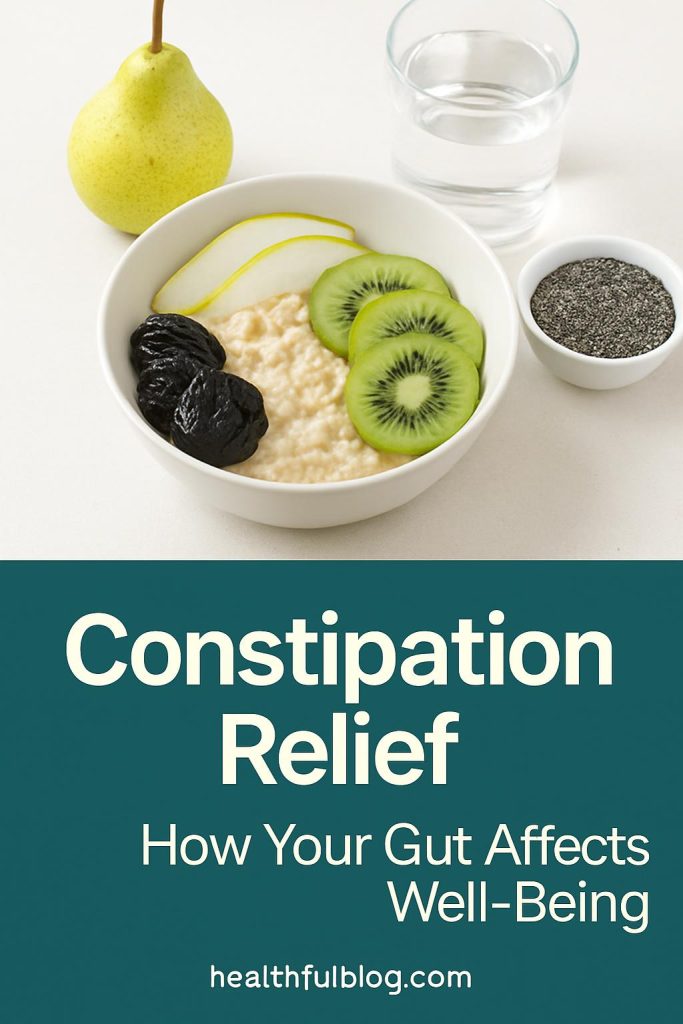
- Fruits: berries, apples with the skin, oranges, pears
- Vegetables: carrots, broccoli, green peas, collard greens
- Nuts: almonds, peanuts, pecans
Two practical rules apply. First, add fiber gradually so your body can adjust, since sudden jumps can cause gas and bloating. Second, drink water and other liquids as you eat more fiber, because fiber works best with fluid. The NIDDK also notes that low-fiber foods such as chips, fast food, hot dogs, and frozen or microwavable meals may make constipation worse. For an easy start, a fiber-rich morning meal is a good habit; our anti-inflammatory breakfast recipes include several options built around whole grains, fruit, and nuts.
Constipation relief at home: habits that help
Beyond diet, official sources point to a few simple habits:
- Move regularly. The NIDDK says regular physical activity may help relieve symptoms, and Mayo Clinic recommends exercise on most days.
- Use your morning window. Both sources suggest trying to have a bowel movement at consistent times. The NIDDK says 15 to 45 minutes after breakfast is ideal, when eating stimulates the colon.
- Do not ignore the urge. Holding it in is a recognized contributor to constipation.
- Consider prunes. Mayo Clinic notes they provide fiber and have a natural fluid-drawing effect.
These measures work gradually. Do not expect instant results, and be skeptical of any product promising overnight fixes for ongoing problems.
Constipation medicine: laxative types explained
When lifestyle changes are not enough, the NIDDK and Mayo Clinic describe several over-the-counter laxative types. Each works differently.
| Type | How it works | Examples named by official sources |
|---|---|---|
| Fiber supplements | Add bulk to stool | Psyllium, methylcellulose, calcium polycarbophil |
| Osmotics | Draw fluid into the digestive tract | Magnesium hydroxide, polyethylene glycol, lactulose |
| Stool softeners | Soften stool consistency | Docusate |
| Lubricants | Ease stool passage | Mineral oil |
| Stimulants | Trigger the bowel to contract | Bisacodyl, senna products |
The NIDDK specifies that stimulants should be used only if constipation is severe or other treatments have not worked. Always follow label directions and ask a pharmacist or doctor if you take other medicines or have a medical condition. Enemas and suppositories, which deliver an osmotic, stimulant, or lubricant agent into the rectum, are described by Mayo Clinic as options when other treatments fail.
When prescription treatment is considered
For constipation that does not respond to the steps above, doctors can prescribe lubiprostone, linaclotide, plecanatide, or prucalopride. For constipation caused by opioid pain medicines, Mayo Clinic lists methylnaltrexone, naldemedine, and naloxegol. Biofeedback therapy, which uses sensors to help people learn to coordinate the muscles involved in a bowel movement, is another option, particularly when pelvic floor problems are suspected. Surgery is reserved for specific cases, such as structural problems or severe muscle dysfunction, once conservative treatment has failed.
Complications and red flags
Long-term straining and hard stools can lead to problems. Mayo Clinic lists hemorrhoids, anal fissures, fecal impaction, and rectal prolapse as possible complications. The NIDDK also notes that constipation can reflect an underlying condition, which is why persistent symptoms deserve attention rather than another round of self-treatment.
The NIDDK advises seeing a doctor if constipation continues despite self-care or becomes long-term, and promptly if it comes with rectal bleeding or blood in the stool, constant abdominal pain, inability to pass gas, vomiting, fever, lower back pain, or unexplained weight loss. Mayo Clinic suggests getting evaluated when symptoms last longer than three weeks.
Frequently asked questions
What is the best immediate constipation relief?
There is no single instant fix that suits everyone. Official sources point to fluids, fiber, movement, and, if needed, an over-the-counter laxative used as directed. Severe symptoms need medical advice.
How much fiber per day should an adult eat?
The NIDDK cites 22 to 34 grams a day depending on age and sex. Increase intake slowly and drink fluids.
Can medicines cause constipation?
Yes. Opioids, iron supplements, some antacids, and certain antidepressants, diuretics, and blood pressure or seizure medicines can. Talk to your doctor before changing anything.
Is it safe to use laxatives every day?
Official sources describe laxative types and say stimulants should be reserved for severe cases or when other treatments fail. Ongoing need for laxatives is a reason to see a doctor for a cause.
When is constipation an emergency?
Blood in the stool, constant abdominal pain, vomiting, fever, or inability to pass gas warrant prompt medical care.
Sources
- NIDDK, Constipation
- NIDDK, Symptoms and Causes of Constipation
- NIDDK, Eating, Diet, and Nutrition for Constipation
- NIDDK, Treatment for Constipation
- Mayo Clinic, Constipation: Symptoms and Causes
- Mayo Clinic, Constipation: Diagnosis and Treatment
Save this guide for later on Pinterest