Last updated:
Psyllium husk is the active ingredient in many familiar fiber powders, and it is one of the few fiber supplements with solid research and even an FDA-authorized heart-health claim behind it. It can help with constipation, some IBS symptoms and cholesterol, but it also has rules: take it with plenty of fluid, start small, and keep it away from certain medications. Here is how psyllium works, how to use it safely, and how it stacks up against other fiber supplements.
- Psyllium is a gel-forming, soluble fiber from the husk of Plantago ovata seeds, used mainly for constipation.
- The American College of Gastroenterology recommends psyllium, but not wheat bran, for overall IBS symptom relief.
- Always take it with at least 8 ounces of liquid; MedlinePlus warns about choking risk and medication timing.
- Methylcellulose, polycarbophil and wheat dextrin work differently, so the “best” supplement depends on your goal.
What is psyllium husk?
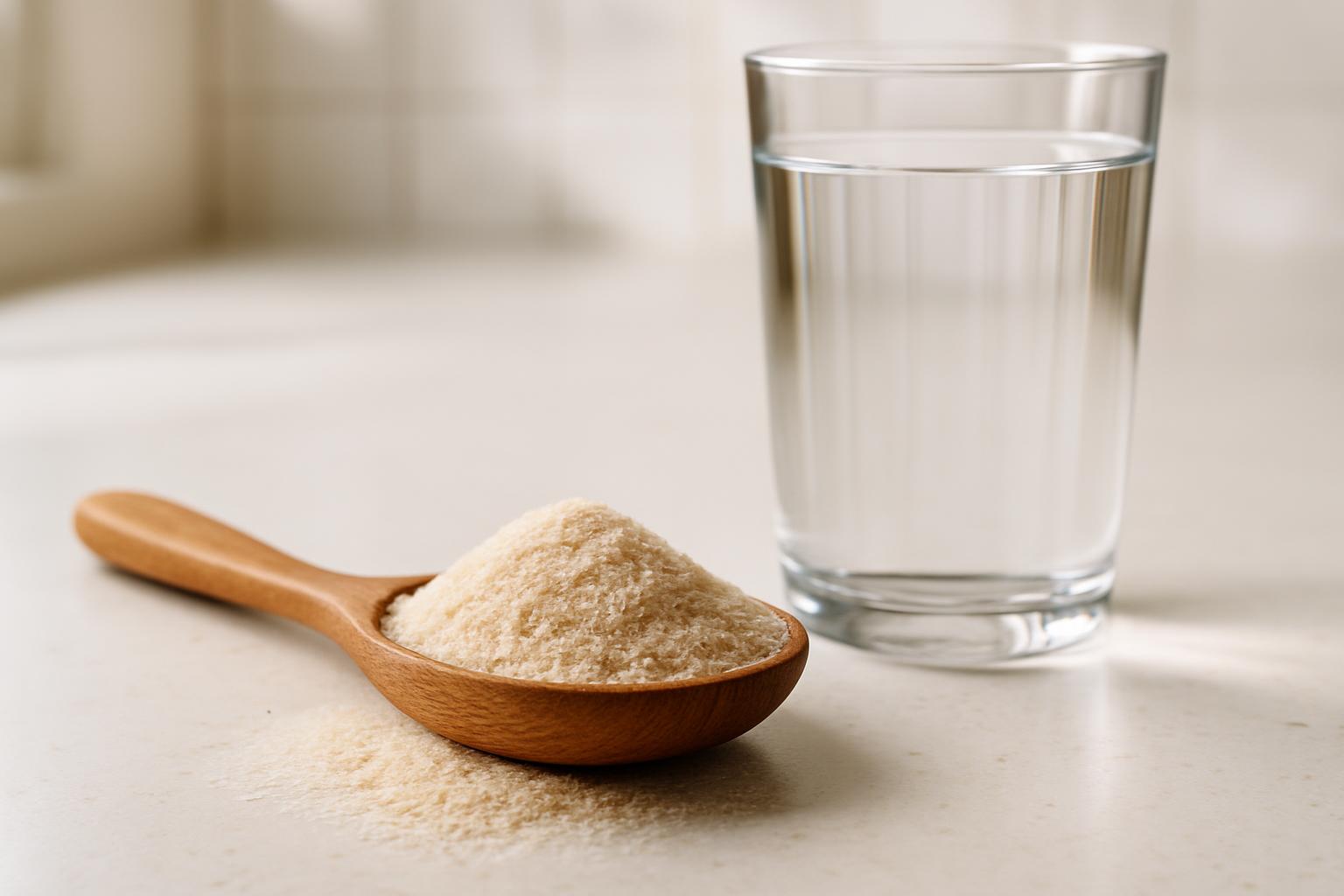
Psyllium is a natural fiber extracted from the seeds or husks of the Plantago ovata plant, according to the Tufts Health & Nutrition Letter. When mixed with water it becomes viscous, forming a gel. That gel is what makes psyllium different from many other fibers.
It is sold as powders, granules, capsules, wafers and more, often under brand names such as Metamucil and Konsyl, as Mayo Clinic notes. MedlinePlus classifies it as a bulk-forming laxative.
Proven benefits of psyllium
Constipation relief
Constipation is psyllium’s main approved use. MedlinePlus describes it as a bulk-forming laxative used to treat constipation, and it may also be prescribed for diarrhea or high cholesterol. Because the gel holds water, it helps soften stool and add bulk. If constipation is your main concern, pair a supplement with food changes from our list of the best foods for constipation.
IBS symptom relief
The American College of Gastroenterology (ACG) recommends psyllium, but not wheat bran, for overall symptom improvement in people with irritable bowel syndrome. The ACG describes psyllium as a poorly fermented, soluble, gel-forming fiber that softens stool and increases stool bulk, which may be especially helpful for IBS with constipation. It notes benefits typically show up within days to weeks.
Heart health and cholesterol
Psyllium is one of a small number of ingredients with an FDA-authorized health claim. Under 21 CFR 101.81, foods can say that diets low in saturated fat and cholesterol that include 7 grams or more per day of soluble fiber from psyllium seed husk may reduce the risk of coronary heart disease. Qualifying foods must provide at least 1.7 grams of psyllium soluble fiber per serving. The claim uses “may,” and it applies within an overall heart-healthy diet, not as a stand-alone treatment.
Harvard’s Nutrition Source notes that a meta-analysis of 67 controlled trials found soluble fiber offers modest benefits in lowering total and LDL cholesterol. Tufts adds that psyllium may have some impact on blood sugar control as well.
How to take psyllium husk
Follow the product label or your clinician’s instructions. Doses vary by brand and form. A few rules apply across the board, based on MedlinePlus guidance:
- Mix it with liquid. Stir powder or granules into 8 ounces (240 milliliters) of a pleasant-tasting liquid, such as fruit juice, right before you drink it.
- Drink enough. You must drink at least 8 ounces of liquid with each dose.
- Space out certain medications. Do not take digoxin, salicylates such as aspirin, or nitrofurantoin within 3 hours of psyllium. Ask your pharmacist about any other daily medicines.
- Avoid inhaling the powder. MedlinePlus advises being careful not to breathe in psyllium dust while mixing.
- Don’t self-treat for long. When using it as a laxative, do not use it for more than one week without talking with a doctor.
Start low and increase gradually. The ACG advises titrating slowly over days to weeks, and Mayo Clinic suggests starting with small amounts to avoid gas, not exceeding label directions and drinking plenty of fluids every day.
How much fiber is in a dose?
It is less than many people expect. According to gastroenterologist Benjamin Krevsky, MD, MPH, at Temple Health, a teaspoon of psyllium powder provides roughly 3.4 grams of fiber, and a capsule about 0.4 grams. Check your product’s label, since formulations differ. That math also shows why supplements work best as a top-up to a fiber-rich diet. Our high-fiber foods list can help you close the rest of the gap.
Side effects and who should be careful
Most side effects are digestive and tend to ease as your body adjusts. The ACG lists bloating, distention, flatulence and cramping as common adverse effects. Mayo Clinic notes that fiber supplements can cause belly bloating and gas, at least at first.
More serious warning signs need prompt attention. MedlinePlus says to get emergency help for difficulty breathing, difficulty swallowing, stomach pain, rash, itching, nausea or vomiting after taking psyllium. Tell your doctor before using it if you have:
- Difficulty swallowing, since a thickening dose taken without enough liquid can pose a choking risk
- Rectal bleeding
- A history of intestinal blockage
- Kidney disease
People with diabetes should also check in: Mayo Clinic notes that fiber supplements can lower blood sugar, so medication doses may need adjusting. If gas is your main complaint, our guide to bloating causes and relief covers other common triggers too.
Psyllium vs. other fiber supplements
Not all fiber supplements act alike. Some form a gel, some are fermented by gut bacteria, and some are not absorbed or fermented at all. Here is how the common options compare, based on Tufts and Temple Health:
| Supplement | Example brand | Type | Notable points |
|---|---|---|---|
| Psyllium husk | Metamucil, Konsyl | Natural, gel-forming | Helps constipation; FDA heart-health claim; ACG-recommended for IBS; can cause gas and bloating at first |
| Methylcellulose | Citrucel | Soluble | Not fermented, so typically less gas; some versions contain added sugar |
| Calcium polycarbophil | Tablets or chewables | Synthetic, insoluble | Not fermented; used for constipation, diarrhea and IBS; contains calcium |
| Wheat dextrin | Various | Modified wheat starch, soluble | Non-gel-forming and fermentable; may act as a prebiotic; people with celiac disease should ask a doctor first |
| Inulin | Various | Plant-derived, fermentable | Listed by Mayo Clinic among common fiber supplements; fermentation can mean more gas for some people |
Experts don’t fully agree on the details. Tufts says wheat dextrin does not form a gel and so is unlikely to help constipation or cholesterol, while Temple’s gastroenterologist describes it as useful for diabetes and cholesterol management. Where they agree: psyllium is a strong all-around choice, and any supplement should be built up slowly with plenty of fluid.
Which one should you choose?
- Constipation or IBS: Psyllium has the strongest backing, including the ACG recommendation.
- Cholesterol support: Psyllium is the option with an FDA-authorized claim, as part of a heart-healthy diet.
- Gas-sensitive: A non-fermented option like methylcellulose or polycarbophil may be easier to tolerate.
- Celiac disease: Avoid wheat dextrin unless your doctor approves it.
Food first, supplements second
Mayo Clinic says it is best to get fiber from food, because supplements lack the vitamins, minerals and other nutrients that fiber-rich foods provide. Harvard similarly notes that psyllium can help when it is hard to eat enough fiber, but supplements are not meant to completely replace high-fiber foods. Think of psyllium as a tool, not a substitute for beans, whole grains, fruit and vegetables.
This article is general information, not medical advice. Check with your doctor or pharmacist before starting psyllium if you take daily medications, have diabetes, kidney disease, trouble swallowing, or a history of bowel blockage. Stop and get medical help right away for chest pain, trouble breathing or swallowing, or severe stomach pain. See a doctor if constipation lasts more than a week of self-treatment, or if you notice rectal bleeding, unexplained weight loss or a lasting change in bowel habits.
Frequently asked questions
Is it safe to take psyllium husk every day?
Many people use fiber supplements regularly, but MedlinePlus advises not using psyllium as a laxative for more than a week without a doctor’s guidance. For daily long-term use, talk with your clinician.
When is the best time to take psyllium?
There is no single best time, but timing matters around medications. Keep digoxin, aspirin-type salicylates and nitrofurantoin at least 3 hours apart from psyllium, and ask your pharmacist about other medicines.
Does psyllium cause gas?
It can, especially at first. Starting with a small dose and increasing gradually over days to weeks usually helps.
Can psyllium lower cholesterol?
It may help modestly. The FDA allows a claim that 7 grams a day of psyllium soluble fiber, as part of a diet low in saturated fat and cholesterol, may reduce heart disease risk. It does not replace prescribed cholesterol medication.
Can I take psyllium capsules instead of powder?
Yes, but each capsule contains only a small amount of fiber, so you may need several to match a spoonful of powder. Drink a full glass of liquid either way.
Sources
- MedlinePlus, Psyllium
- American College of Gastroenterology, Soluble Fiber (Psyllium, Ispaghula Husk)
- Code of Federal Regulations, 21 CFR 101.81 Health claims: Soluble fiber and coronary heart disease
- Mayo Clinic, Fiber supplements: Safe to use?
- Tufts Health & Nutrition Letter, Psyllium vs. wheat dextrin fiber supplements
Save this guide for later on Pinterest