Last updated:
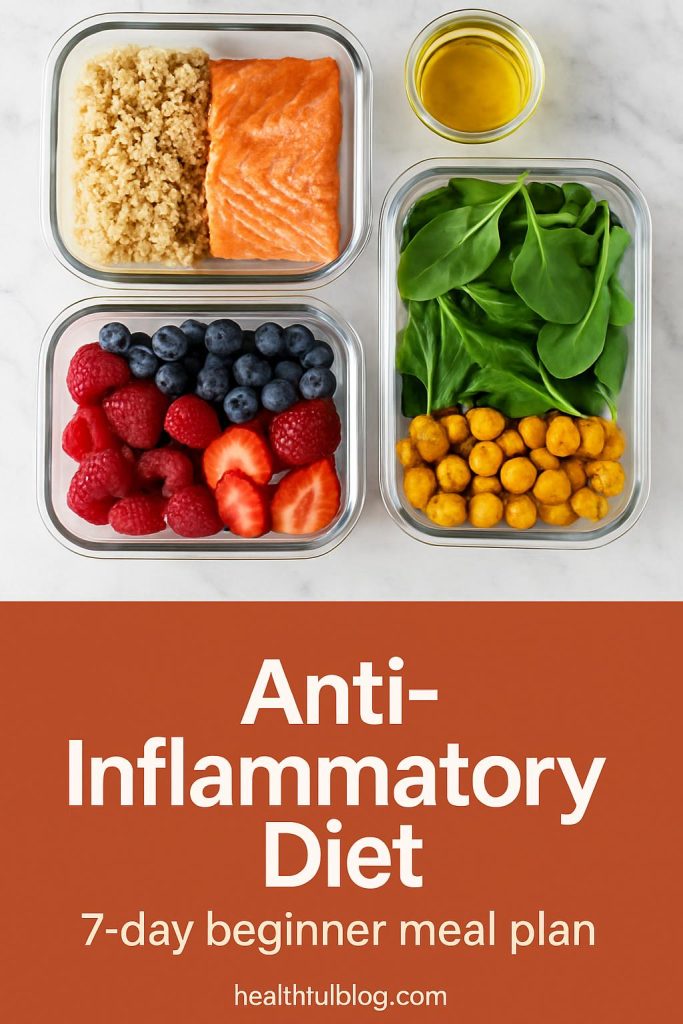
“Anti-inflammatory diet” sounds like a strict protocol, but in practice it looks a lot like the way nutrition experts already recommend eating: more plants, more healthy fats and fewer ultra-processed foods. Harvard Health notes that chronic inflammation has been linked to conditions including heart disease, type 2 diabetes, arthritis and Alzheimer’s disease. This beginner guide explains what to eat, what to limit and gives you a simple 7-day meal plan, with no calorie counting required.
- An anti-inflammatory eating pattern centers on vegetables, fruits, whole grains, beans, nuts, olive oil and fatty fish.
- Refined carbs, sugary drinks, fried foods and processed meats are the main foods to limit.
- Research support is strongest for overall patterns like the Mediterranean and DASH diets, not single “superfoods.”
- Expect gradual change; Cleveland Clinic suggests giving new habits several months.
What is an anti-inflammatory diet?
Inflammation is part of how your body heals. Problems arise when low-grade inflammation lingers for a long time. An anti-inflammatory diet isn’t a branded plan; it’s an eating pattern built on whole, minimally processed foods that contain fiber, healthy fats and plant compounds such as polyphenols.
Cleveland Clinic points to the Mediterranean and DASH diets as examples with research support, noting links to improvements in markers such as inflammation, cholesterol, blood pressure and blood sugar. If you already follow general healthy-eating advice, you’re likely partway there.
Foods to emphasize
Harvard Health, Cleveland Clinic and Johns Hopkins Medicine highlight similar foods:
- Vegetables: leafy greens like spinach, kale and collards; tomatoes; peppers; broccoli.
- Fruits: berries, cherries, oranges, apples and avocados.
- Fatty fish: salmon, mackerel, sardines, herring and tuna. The American Heart Association recommends two servings of fish a week, with a serving being 3 ounces cooked.
- Whole grains: oats, brown rice, wild rice and other intact grains.
- Beans and legumes: lentils, chickpeas, black beans and dried peas.
- Nuts and seeds: walnuts and almonds in particular.
- Healthy fats: extra virgin olive oil as your main cooking oil.
- Spices and drinks: turmeric and cinnamon; green tea and coffee also appear on expert lists.
Foods to limit
The same sources agree on what tends to promote inflammation:
- Refined carbohydrates such as white bread and pastries
- Sugary drinks, including soda and sports drinks
- Fried foods like french fries
- Processed meats such as bacon, sausage and hot dogs, and large amounts of red meat
- Commercially baked goods, candy and packaged snacks
- Margarine, shortening and lard
You don’t need to eliminate these entirely. The goal is to make them occasional rather than daily staples.
A 7-day sample anti-inflammatory meal plan
This plan is a template, not a prescription. Portions aren’t listed on purpose: eat to comfortable fullness and adjust to your appetite, activity and any guidance from your doctor or dietitian. Fish appears twice to match the AHA recommendation.
| Day | Breakfast | Lunch | Dinner | Snack |
|---|---|---|---|---|
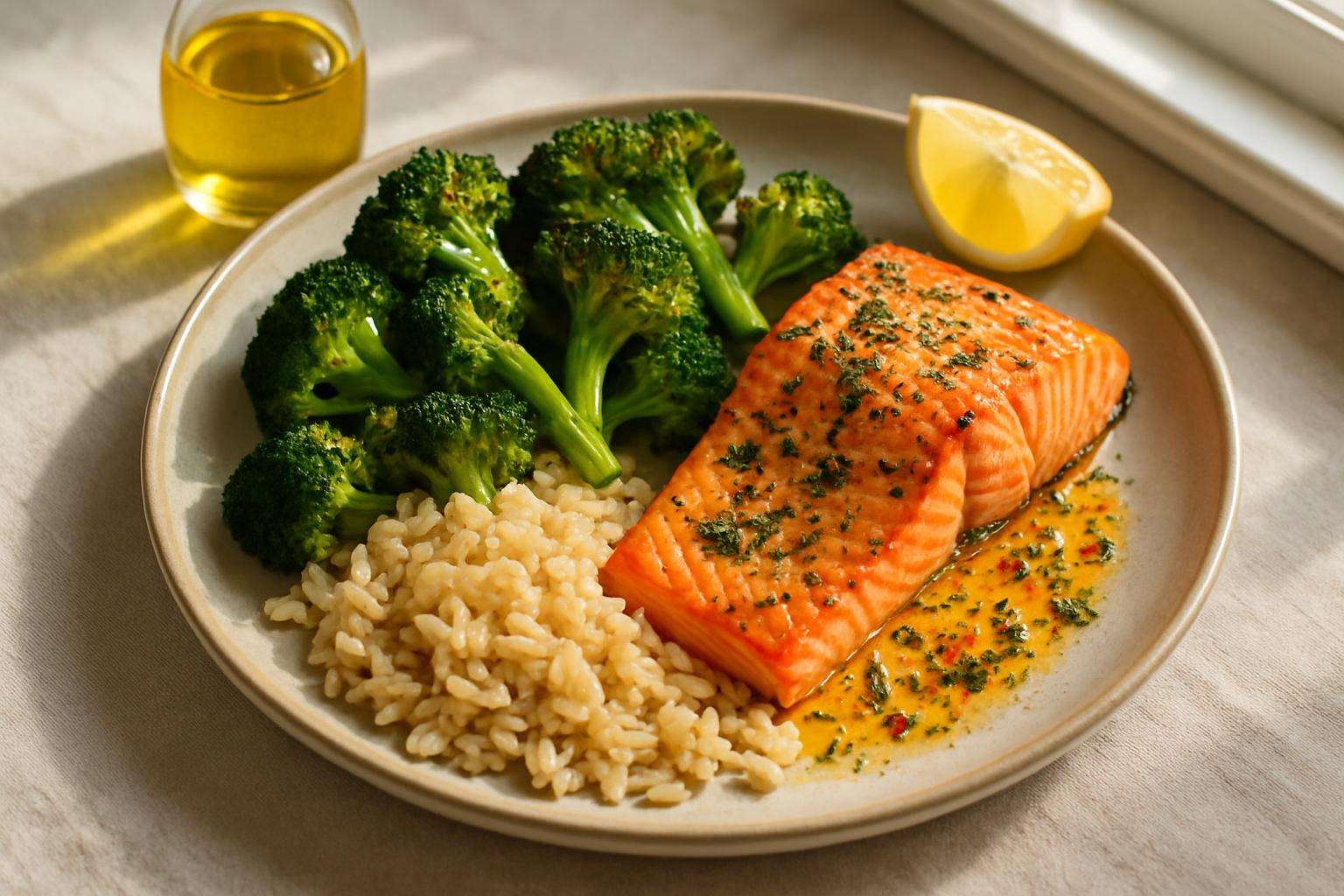
| Monday | Oatmeal with blueberries and walnuts | Spinach salad with chickpeas, tomatoes, olive oil and lemon | Baked salmon, roasted broccoli, brown rice | Orange |
| Tuesday | Plain yogurt with strawberries and ground flaxseed | Leftover salmon and brown rice bowl with greens | Lentil soup with a side salad | Handful of almonds |
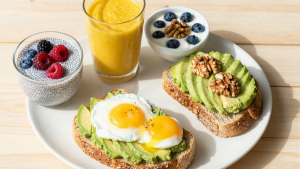
| Wednesday | Whole-grain toast with avocado and tomato | Lentil soup leftovers | Chicken and pepper stir-fry in olive oil over wild rice | Apple slices |
| Thursday | Overnight oats with cherries and cinnamon | Whole-grain wrap with turkey, spinach and hummus | Black bean and vegetable chili | Carrots and hummus |
| Friday | Veggie omelet with spinach and peppers | Chili leftovers | Sardines or mackerel with whole-wheat pasta, tomatoes and kale | Berries |
| Saturday | Smoothie with kale, berries, yogurt and oats | Quinoa salad with roasted vegetables and feta | Grilled chicken, sweet potato and green beans | Walnuts |
| Sunday | Whole-grain pancakes topped with berries | Tomato and white bean soup | Turkey meatballs in tomato sauce with zucchini and brown rice | Green tea and a pear |
Want ready-made ideas? Swap in recipes from our anti-inflammatory breakfast recipes, or make a batch of turmeric lentil soup for Tuesday and Wednesday.
How to get started without overhauling everything
Cleveland Clinic recommends starting with an honest look at what you currently eat, reading nutrition labels and making small changes you can sustain. A few beginner moves:
- Switch your cooking oil to extra virgin olive oil.
- Add one vegetable to lunch and dinner before removing anything.
- Replace sugary drinks with water, unsweetened tea or coffee.
- Plan two fish meals a week; canned salmon and sardines are budget-friendly.
- Make beans a habit two or three times a week in soups, salads or chili.
- Batch-cook on Sunday so leftovers cover busy weekdays, as the plan above does.
What results to realistically expect
This way of eating isn’t a cure for any disease. Cleveland Clinic suggests giving dietary changes three to six months, and notes that people’s food triggers vary, so what bothers one person may not affect another. Some people report benefits such as better energy or digestion, but those vary widely.
Food also works alongside other habits. Regular activity, sleep and maintaining joint mobility all matter; if joint comfort is your goal, see our guide to improving joint health.
Common beginner mistakes
- Chasing single superfoods. Harvard emphasizes overall patterns; a turmeric latte won’t offset a diet heavy in fried food.
- Cutting out whole food groups unnecessarily. Whole grains and beans are core parts of this pattern, not foods to fear.
- Relying on “anti-inflammatory” supplements. Supplements aren’t a shortcut and can interact with medications.
- Going all-or-nothing. An occasional treat doesn’t undo a week of mostly whole foods.
If you have an inflammatory or autoimmune condition, diabetes, kidney disease, or take blood thinners or other medications, talk with your doctor or a registered dietitian before making major diet changes or adding supplements. See a healthcare provider for persistent joint pain, swelling, fatigue or digestive symptoms rather than relying on diet alone.
Frequently asked questions
Is the anti-inflammatory diet the same as the Mediterranean diet?
They overlap heavily. The Mediterranean diet is one of the best-studied examples of an anti-inflammatory eating pattern.
Do I have to give up red meat?
No, but experts suggest limiting red meat and especially processed meats, and choosing fish, poultry and beans more often.
Is coffee allowed?
Harvard Health lists coffee among foods associated with lower inflammation. Skip sugary add-ins and talk to your doctor if caffeine affects you.
Do I need to count calories on this plan?
No. The focus is on food quality and variety. If you have specific weight or medical goals, a dietitian can personalize portions.
Sources
- Harvard Health Publishing, Foods that fight inflammation
- Cleveland Clinic, Anti-inflammatory diet
- Johns Hopkins Medicine, Healthy eating tips to ease chronic inflammation
- American Heart Association, Fish and omega-3 fatty acids
Save this guide for later on Pinterest