Last updated:
When you’re constipated, “eat more fiber” is the advice you’ll hear first, but it’s not the whole story. Newer research points to specific foods, like kiwifruit and prunes, that have stronger evidence behind them than general fiber advice. Here’s a practical guide to the best foods for constipation relief, what to cut back on, and how to make changes without making things worse.
- Kiwifruit, prunes, rye bread and high-mineral water have some of the best clinical evidence among foods for chronic constipation.
- Whole grains, beans, fruits, vegetables and nuts still matter; NIDDK recommends 22 to 34 grams of fiber a day for adults.
- Low-fiber, heavily processed foods such as chips, fast food and frozen meals can make constipation worse.
- Add fiber gradually and drink enough fluids; see a doctor for blood in stool, weight loss or constipation lasting longer than three weeks.
What counts as constipation?
Mayo Clinic defines constipation as having fewer than three bowel movements a week or having a hard time passing stool. Common signs include hard, dry or lumpy stools, straining, and feeling like you haven’t fully emptied your bowels. When two or more of these symptoms last three months or longer, it’s considered chronic.
Constipation happens when stool moves too slowly through the colon, giving it time to lose water and harden. That’s why both what you eat and how much you drink matter. For a broader look at how this affects daily life, see our article on how constipation can affect your well-being.
What the newest research says
In October 2025, researchers led by King’s College London published dietary guidelines for chronic constipation, endorsed by the British Dietetic Association. According to ScienceDaily’s summary, the panel reviewed data from more than 75 clinical trials and produced 59 recommendations.
Two findings stand out. First, specific foods such as kiwifruit, rye bread and mineral-rich water showed benefit. Second, the panel found there isn’t enough evidence that a general high-fiber diet works specifically for chronic constipation. That doesn’t mean fiber is useless; it means targeted choices may be more effective than vague advice.
The best foods for constipation relief
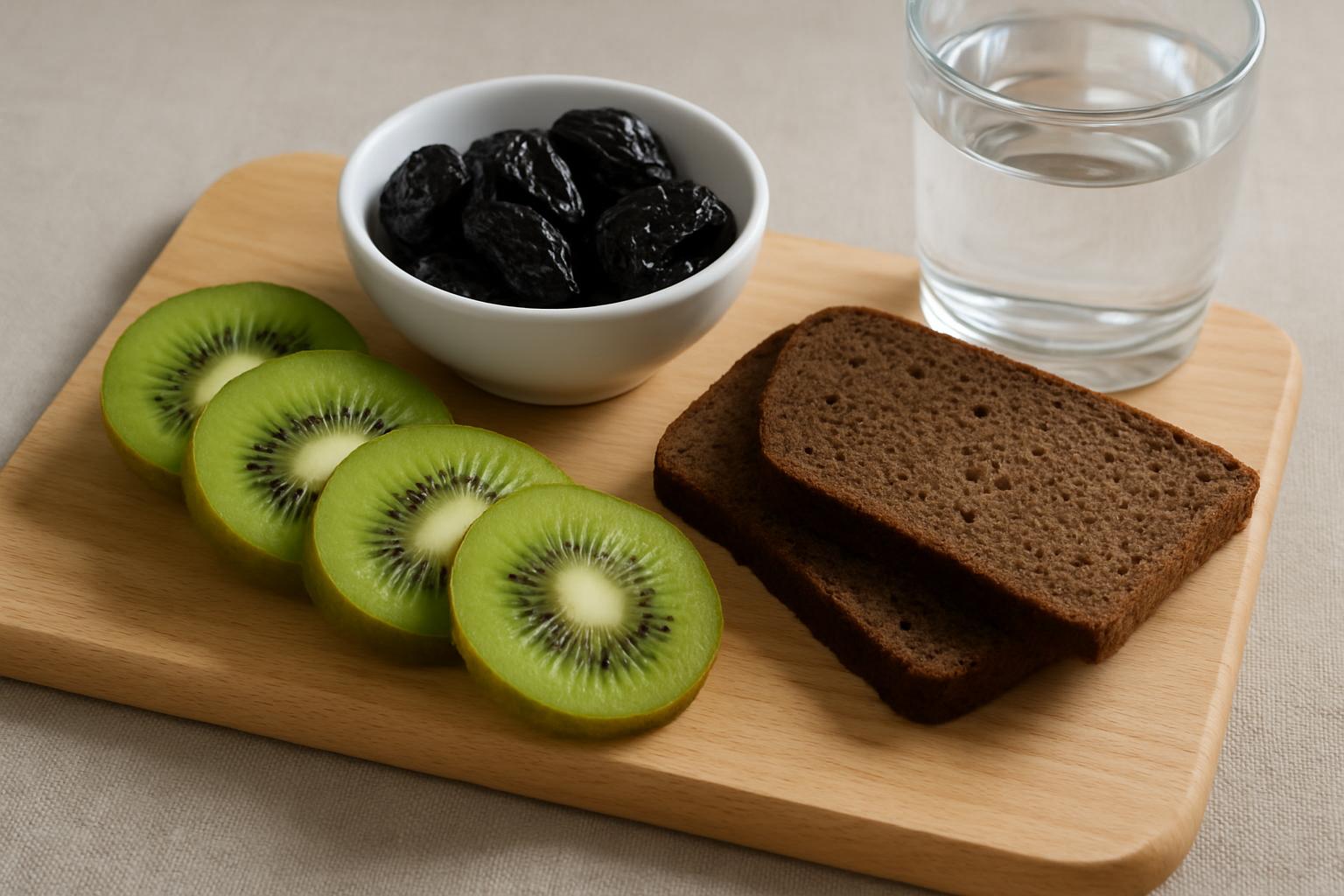
Kiwifruit
As CNN reported, the guidelines suggest two to three kiwifruits a day. Experts quoted in that report noted kiwis are generally well tolerated and are best eaten fresh rather than cooked.
Prunes
The same report notes the guidelines recommend about six to eight prunes a day, but advises working up to that amount gradually because prunes can cause more gas and discomfort if you start too fast.
Rye bread
Whole-grain rye bread was one of the foods singled out for helping stool frequency. Swapping it in for white bread at a meal or two is an easy change.
High-mineral water
Water rich in minerals such as magnesium was included as a complementary option. Plain water still helps, too: NIDDK notes fluids help fiber work and prevent dehydration.
Classic high-fiber foods
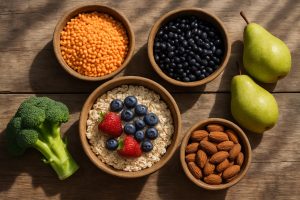
The National Institute of Diabetes and Digestive and Kidney Diseases (NIDDK) recommends adults get 22 to 34 grams of fiber a day, depending on age and sex. Good sources include:
- Whole grains: whole-wheat bread and pasta, oatmeal, bran cereal
- Legumes: lentils, black beans, kidney beans, chickpeas
- Fruits: berries, apples with the skin on, oranges, pears
- Vegetables: carrots, broccoli, green peas, collard greens
- Nuts: almonds, peanuts, pecans
Need breakfast inspiration? Our quick and healthy breakfast ideas make it easier to start the day with whole grains and fruit.
Foods to eat and foods to limit
| Eat more often | Why it may help | Limit | Why |
|---|---|---|---|
| Kiwifruit | Clinical trial evidence for stool frequency | Chips and fast food | Low in fiber |
| Prunes | Recommended in 2025 guidelines, built up gradually | Frozen and microwave meals | Highly processed, usually low in fiber |
| Rye bread | Evidence for more frequent bowel movements | Hot dogs and processed meats | Little or no fiber |
| Beans and lentils | Among the richest fiber sources | Large portions of meat replacing plants | Meat contains no fiber |
| Water and clear soups | Help fiber soften stool | Too little fluid overall | Can leave stool harder and drier |
The “limit” column reflects NIDDK’s list of low-fiber foods to avoid. Meat isn’t harmful in itself, but when it crowds out vegetables, beans and whole grains, your fiber intake drops.
What about supplements?
The 2025 guidelines also found evidence for some supplements, including psyllium fiber, magnesium oxide and certain probiotic strains, according to ScienceDaily. Senna did not have convincing evidence in that review.
Supplements aren’t right for everyone. Magnesium products, for example, may not be appropriate for people with kidney problems, and fiber supplements can interact with some medications. Ask your doctor or pharmacist before starting one.
Tips for making changes stick
- Go slowly. NIDDK advises adding fiber a little at a time so your body can adjust. A sudden jump can cause gas and bloating.
- Pair fiber with fluid. Have a glass of water with fiber-rich meals and snacks.
- Try one targeted food first. Two kiwis a day for a couple of weeks is a simple experiment.
- Track what changes. Note how often you go, stool consistency and straining, the same measures researchers used.
- Move your body. Mayo Clinic lists a sedentary lifestyle as a risk factor for chronic constipation.
Why it’s worth addressing
Ongoing straining isn’t just uncomfortable; it can contribute to problems such as hemorrhoids. If that’s already an issue, our guide on treating hemorrhoids covers what helps. Mayo Clinic notes that constipation is more common with older age and in women, so these groups may benefit most from building good habits early.
According to Mayo Clinic, see a healthcare provider if constipation lasts longer than three weeks or interferes with daily life, or if you notice bleeding from your rectum, blood on toilet tissue, black or bloody stools, unexplained weight loss or ongoing abdominal pain. Also talk to your doctor before using laxatives regularly or if a new medication seems to have caused the change.
Frequently asked questions
How quickly do kiwis or prunes work?
Results vary. Clinical trials typically measure changes over several weeks, so give a new habit at least a couple of weeks before judging it.
Is coffee good for constipation?
Some people find coffee prompts a bowel movement, but it’s not a substitute for fiber, fluids and activity. Our sources didn’t list it among the evidence-backed options.
Can too much fiber make constipation worse?
Adding a lot of fiber quickly, especially without enough fluid, can cause gas, bloating and discomfort. Increase gradually and drink water.
Are bananas bad for constipation?
Bananas contain some fiber and aren’t on NIDDK’s list of foods to avoid. If you notice they don’t agree with you, track it and adjust.
Sources
- NIDDK, Eating, Diet and Nutrition for Constipation
- Mayo Clinic, Constipation: Symptoms and causes
- ScienceDaily, New dietary guidelines for chronic constipation (King’s College London)
- CNN via KVIA, Eating 2 to 3 kiwis a day can relieve chronic constipation
Save this guide for later on Pinterest