Last updated:
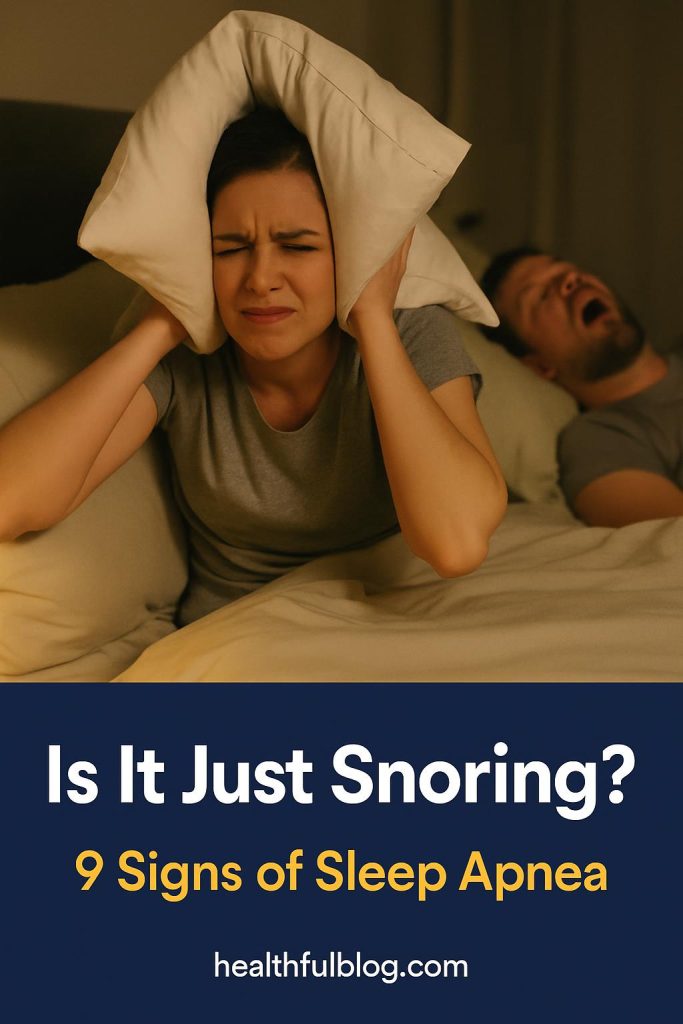
Loud snoring is often treated as a joke, but sometimes it is a sign of something more serious. With obstructive sleep apnea, your breathing repeatedly stops and starts during the night, leaving you exhausted the next day. The good news: it is treatable, and today there are more options than the classic CPAP mask. Here are the signs to watch for and the treatments available in 2026.
- Breathing that stops and starts, gasping and loud snoring are classic night-time signs.
- Daytime tiredness, morning headaches and trouble concentrating are common too.
- A sleep study, sometimes done at home, confirms the diagnosis.
- Treatments include CPAP, custom mouthpieces, nerve stimulation, surgery and, for some adults with obesity, an FDA-approved medication.
9 signs it might be more than snoring
The National Heart, Lung, and Blood Institute (NHLBI) lists these common symptoms (NHLBI):
At night
- Breathing that stops and starts, often noticed by a bed partner.
- Frequent, loud snoring, more common in men.
- Gasping or choking during sleep.
- Restless, broken sleep.
During the day
- Feeling very tired even after a full night in bed.
- Dry mouth on waking.
- Morning headaches.
- Trouble concentrating and slower reaction time.
- Sexual dysfunction.
Women are more likely to describe their symptom as fatigue rather than sleepiness, so sleep apnea can be missed in women (NHLBI).
Why it matters
Untreated sleep apnea is linked to high blood pressure, heart disease, stroke and type 2 diabetes, and daytime sleepiness raises the risk of accidents at work and on the road (NHLBI). Treating it often brings better sleep, more energy and better concentration.
How sleep apnea is diagnosed
Your doctor will ask about your sleep and may recommend a sleep study. Some are done overnight in a sleep center; others use a simpler device you wear at home. The study measures how often your breathing pauses or becomes shallow during the night.
Treatment options in 2026
| Treatment | How it works | Often used for |
|---|---|---|
| CPAP, APAP, BPAP | A machine and mask keep the airway open with air pressure | Most people with moderate to severe apnea |
| Oral appliance | Custom mouthpiece holds the lower jaw or tongue forward | Mild to moderate apnea, or people who can’t tolerate CPAP |
| Hypoglossal nerve stimulation | An implanted device moves the tongue to keep the airway open | Selected patients who can’t use CPAP |
| Surgery | Removes tonsils or tissue, or moves the jaw forward | Specific airway anatomy |
| Medication | FDA-approved weekly injection that helps with weight loss | Adults with obesity and moderate to severe apnea |
| Lifestyle and positional therapy | Healthy weight, less alcohol, no smoking, sleeping on your side | Everyone, alongside other treatment |
Source: NHLBI, Sleep Apnea Treatment.
CPAP: still the first choice for many
A CPAP machine delivers steady air pressure through a mask. Newer APAP machines adjust the pressure automatically, and BPAP machines use different pressures for breathing in and out (NHLBI). If the mask is uncomfortable, ask about different sizes and styles before giving up.
Can’t tolerate CPAP? Ask about these
Custom-fitted mouthpieces made by a dentist, hypoglossal nerve stimulation and certain surgeries are all options your doctor may discuss. Exercises that strengthen the mouth and face muscles, called orofacial therapy, can also help some people (NHLBI).
A medication option for some adults
On December 20, 2024, the FDA approved Zepbound (tirzepatide) for adults with obesity and moderate to severe obstructive sleep apnea. In two 52-week trials, people taking it had a meaningful drop in breathing interruptions compared with placebo (Becker’s Hospital Review). It is a prescription medicine and is not right for everyone.
Simple habits that can help tonight
- Sleep on your side instead of your back.
- Limit alcohol, especially in the evening.
- Stop smoking. See the health benefits of quitting smoking.
- Keep a regular sleep schedule and stay active during the day.
These habits support treatment; they are not a replacement for seeing a doctor if you have symptoms.
Talk to a doctor if someone has noticed you stop breathing or gasp in your sleep, if you snore loudly most nights, or if you feel sleepy during the day even after enough sleep. Never drive when you feel drowsy.
Frequently asked questions
Does everyone who snores have sleep apnea?
No. Many people snore without sleep apnea. Snoring combined with pauses in breathing, gasping or daytime sleepiness is the warning sign.
Can I do a sleep test at home?
Often, yes. Your doctor can tell you whether a home test is suitable or whether you need an overnight study in a sleep center.
Is sleep apnea curable?
It can often be controlled very well. For some people, weight loss or surgery improves it a lot; others manage it long term with CPAP or a mouthpiece.
Does sleeping position really matter?
For some people, apnea is worse on the back. Read more about how sleep position affects your body.
Sources
- NHLBI, Sleep Apnea: Symptoms
- NHLBI, Sleep Apnea: Treatment
- Becker’s Hospital Review, FDA approves Zepbound for obstructive sleep apnea
Save this guide for later on Pinterest