Last updated:
For millions of people with obstructive sleep apnea, CPAP works, but only if they can actually sleep with a mask on their face. Many cannot. That is where the Inspire implant comes in: a small device placed under the skin that gently moves the tongue forward during sleep to keep the airway open, with no mask and no hose. It has become one of the most searched sleep treatments in the country. Here is how it works, who qualifies, what the research shows, what it costs and how to deal with insurance.
- Inspire is a hypoglossal nerve stimulator: it stimulates the nerve that controls the tongue so the airway stays open during sleep.
- Typical candidates are adults 22 and older with moderate to severe obstructive sleep apnea who cannot use or tolerate CPAP.
- In the landmark STAR trial, the average number of breathing events per hour fell by about 68 percent at 12 months.
- Without insurance the total is often around $30,000 to $40,000; most major insurers and Medicare cover it when strict criteria are met.
How the Inspire implant works
In obstructive sleep apnea, the muscles of the throat and tongue relax during sleep and collapse into the airway, causing repeated pauses in breathing. Inspire addresses one of the main culprits, the tongue.
The system has three parts:
- A small generator, similar in size to a pacemaker, placed under the skin below the collarbone.
- A breathing sensor that detects your breathing pattern.
- A stimulation lead attached to the hypoglossal nerve under the jaw.
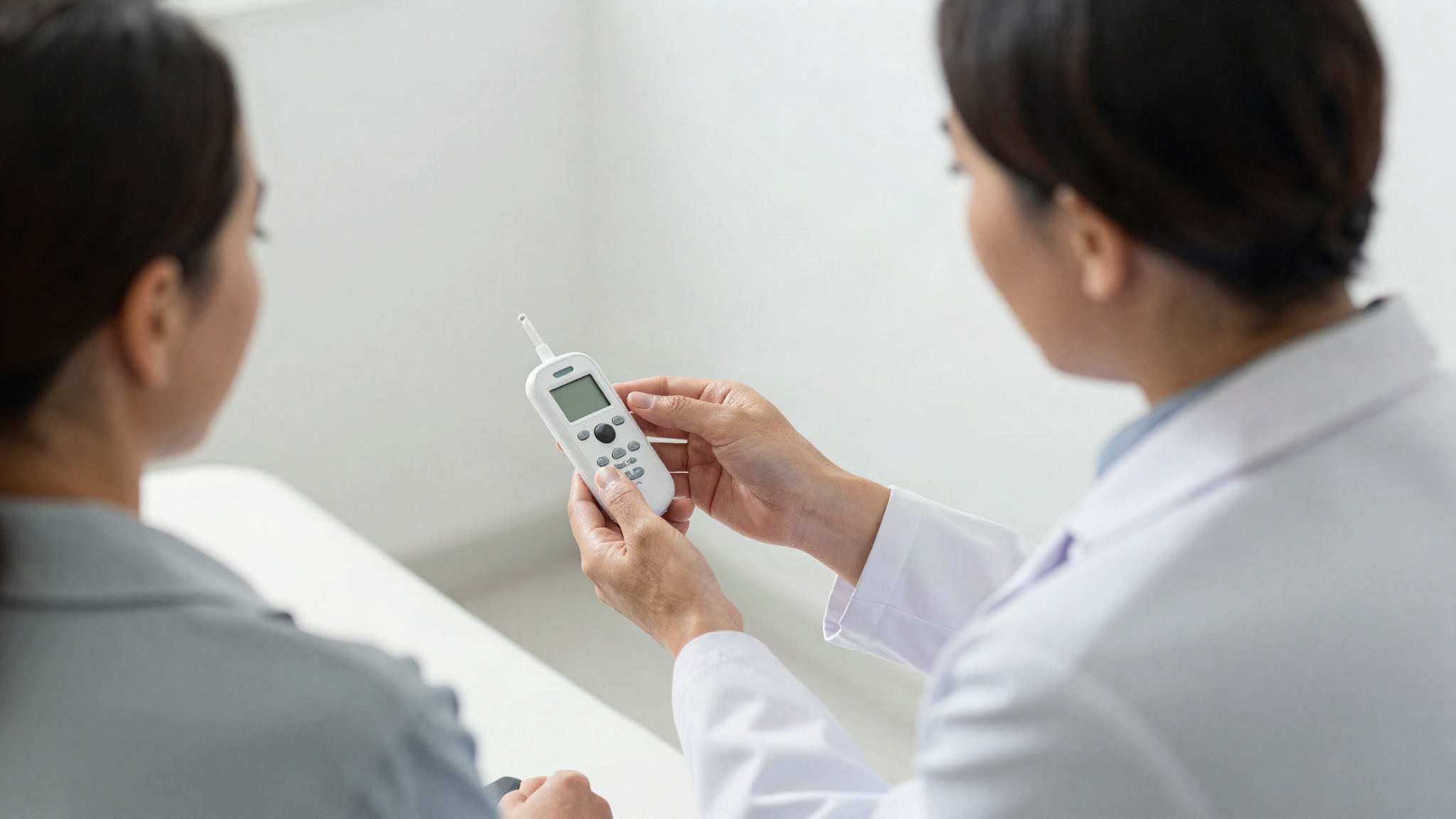
When you inhale during sleep, the device sends a mild pulse to the nerve, moving the tongue slightly forward. You turn it on with a handheld remote before bed and off when you wake. Most people do not feel it once the settings are fine-tuned.
Who qualifies for Inspire?
Not everyone with sleep apnea is a candidate. According to Mayo Clinic, typical criteria include:
| Criterion | Typical requirement |
|---|---|
| Age | 22 or older (some exceptions for adolescents with Down syndrome) |
| Sleep apnea severity | Moderate to severe, commonly an AHI between 15 and 65 |
| CPAP | Tried and unable to use or tolerate it |
| Body mass index (BMI) | Commonly below 33 to 35, depending on the insurer |
| Airway anatomy | No complete concentric collapse at the palate, confirmed by a drug-induced sleep endoscopy (DISE) |
| Apnea type | Mostly obstructive, with few central apneas |
The FDA expanded Inspire’s approved range in 2023 to include higher AHI and BMI values, but many insurers still use stricter cut-offs. AHI, the apnea-hypopnea index, counts breathing pauses and shallow breaths per hour of sleep. If you have never had a sleep study, our guide to sleep apnea signs and treatment explains how testing works.
The DISE exam: a key step
Before surgery, most patients have a drug-induced sleep endoscopy. Under light sedation that mimics sleep, a doctor passes a thin camera through the nose to see exactly how and where the airway collapses. Inspire works best when the tongue and the front-to-back collapse of the soft palate are the main problems. If the airway closes in a complete circle at the palate, the device is unlikely to help and another treatment will be recommended.
Does Inspire work? What the research shows
The pivotal STAR trial, published in the New England Journal of Medicine, followed patients for 12 months after implantation. The median AHI dropped from 29.3 to 9.0 events per hour, a 68 percent reduction, and about two-thirds of participants met the study’s definition of treatment success. Patients also reported less daytime sleepiness and better quality of life, and many bed partners reported less snoring. Longer-term follow-up has shown that benefits generally persist for years.
It is worth being clear about expectations: Inspire does not cure sleep apnea, and it is not effective for everyone. Results depend on careful patient selection and on using the device every night.
How much does Inspire cost?
The device and surgery are expensive. Without insurance, the total for the device, surgeon and facility fees commonly lands around $30,000 to $40,000, according to the National Council on Aging. What you actually pay with insurance depends on your deductible, coinsurance and out-of-pocket maximum.
| Cost element | What to know |
|---|---|
| Sleep study | Required to confirm diagnosis and severity |
| DISE exam | Usually billed separately as an outpatient procedure |
| Device and implant surgery | The bulk of the cost, typically outpatient |
| Activation and titration visits | Office visits and sometimes a follow-up sleep study |
| Battery replacement | A minor outpatient procedure, typically after about 10 years |
Insurance and Medicare coverage
Medicare and most major private insurers cover hypoglossal nerve stimulation when you meet their medical criteria and have documented CPAP failure or intolerance. Medicare Advantage plans and private plans usually require prior authorization.
Initial denials are common, but appeals often succeed when the paperwork is complete. To improve your odds:
- Document your CPAP attempts: dates, masks tried, pressure changes and the reasons you could not tolerate it.
- Make sure your sleep study is recent, as many insurers want one from the past 24 months.
- Ask your surgeon’s office whether they have a dedicated prior-authorization coordinator.
- Appeal in writing with a letter of medical necessity if you are denied.
- Plan around your out-of-pocket maximum: once you hit it, covered care for the rest of the plan year costs nothing more.
For a CPAP-first comparison, including how Medicare rents and covers machines, ask your sleep doctor to walk you through both paths side by side.
Surgery and recovery
Implantation is usually an outpatient procedure under general anesthesia, and most patients go home the same day. The surgeon makes small incisions under the jaw and in the upper chest. Expect soreness and swelling for a week or two and temporary restrictions on heavy lifting.
The device is not turned on right away. About a month after surgery, your doctor activates it and programs the settings. Over the following weeks, the strength is adjusted for comfort and effectiveness, sometimes with a follow-up sleep study.
Possible side effects
- Tongue soreness or discomfort from the stimulation, often improved by adjusting settings
- Dry mouth
- Pain, swelling or infection at incision sites
- Temporary tongue weakness
- Rarely, the need for revision surgery
Inspire vs. CPAP vs. oral appliances
- CPAP remains the first-line treatment and is the most effective when used consistently.
- Oral appliances made by a dentist move the lower jaw forward. They suit many people with mild to moderate sleep apnea.
- Inspire is for moderate to severe cases when CPAP has failed and anatomy is suitable.
- Weight loss helps many people, and newer weight-loss medications have been studied for sleep apnea in people with obesity. If joint pain makes exercise difficult, our article on improving joint health offers low-impact ideas.
Chronic poor sleep also takes a toll on mood. If you are struggling, our guide to online therapy costs explains affordable ways to get support.
See a doctor if you snore loudly, wake up gasping or choking, have morning headaches, or feel sleepy during the day despite a full night in bed. If you already have sleep apnea and cannot tolerate CPAP, do not simply stop treatment: talk to your sleep specialist about alternatives. After Inspire surgery, call your surgeon for fever, increasing redness or drainage at the incisions, or new difficulty swallowing or speaking. Never drive when you feel drowsy.
Frequently asked questions
Is Inspire better than CPAP?
Not for everyone. CPAP is highly effective when used every night. Inspire is designed for people who cannot use CPAP and who meet specific medical criteria.
How long does the Inspire battery last?
Typically about 10 years. Replacing the generator is a shorter outpatient procedure.
Can I have an MRI with Inspire?
Current Inspire models allow certain MRI scans under specific conditions. Always tell the imaging team you have an implant.
Does Medicare cover Inspire?
Yes, when you meet Medicare’s criteria, including moderate to severe obstructive sleep apnea and documented CPAP failure or intolerance.
Will Inspire stop my snoring?
Many patients and bed partners report much less snoring, but results vary.
Sources
- Mayo Clinic, The Emerging Option of Upper Airway Stimulation Therapy
- Strollo et al., Upper-Airway Stimulation for Obstructive Sleep Apnea (STAR trial), NEJM 2014
- National Council on Aging, Inspire Sleep Apnea Device Review
- NHLBI (NIH), Sleep Apnea Treatment
Save this guide for later on Pinterest