Last updated:
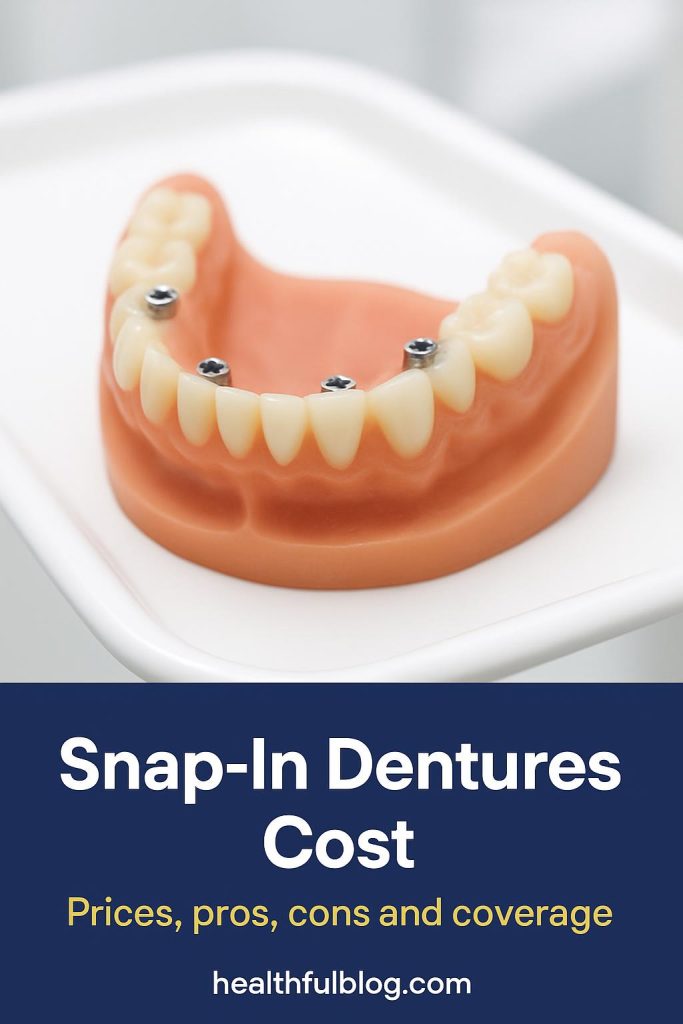
Snap-in dentures, which dentists call implant-supported or implant-retained overdentures, sit between regular dentures and fixed implant bridges. A few implants in the jaw hold a removable denture firmly in place, so it doesn’t slip when you eat or talk. You can still take it out to clean it.
Here is what snap-in dentures cost, how they work, who they suit, and the trade-offs to weigh before you commit.
- Snap-in dentures typically cost about $2,000 to $13,300 per arch, averaging around $8,300. A conventional denture averages about $2,085.
- Most designs use 2 to 4 implants per jaw. For a lower denture, two implants are considered the first-choice standard of care.
- They are far more stable than conventional dentures and help slow jawbone loss, but they require surgery and ongoing upkeep of the attachments.
- Original Medicare doesn’t cover them, and private plans often exclude the implants, so plan on paying much of the cost yourself.
What are snap-in dentures?
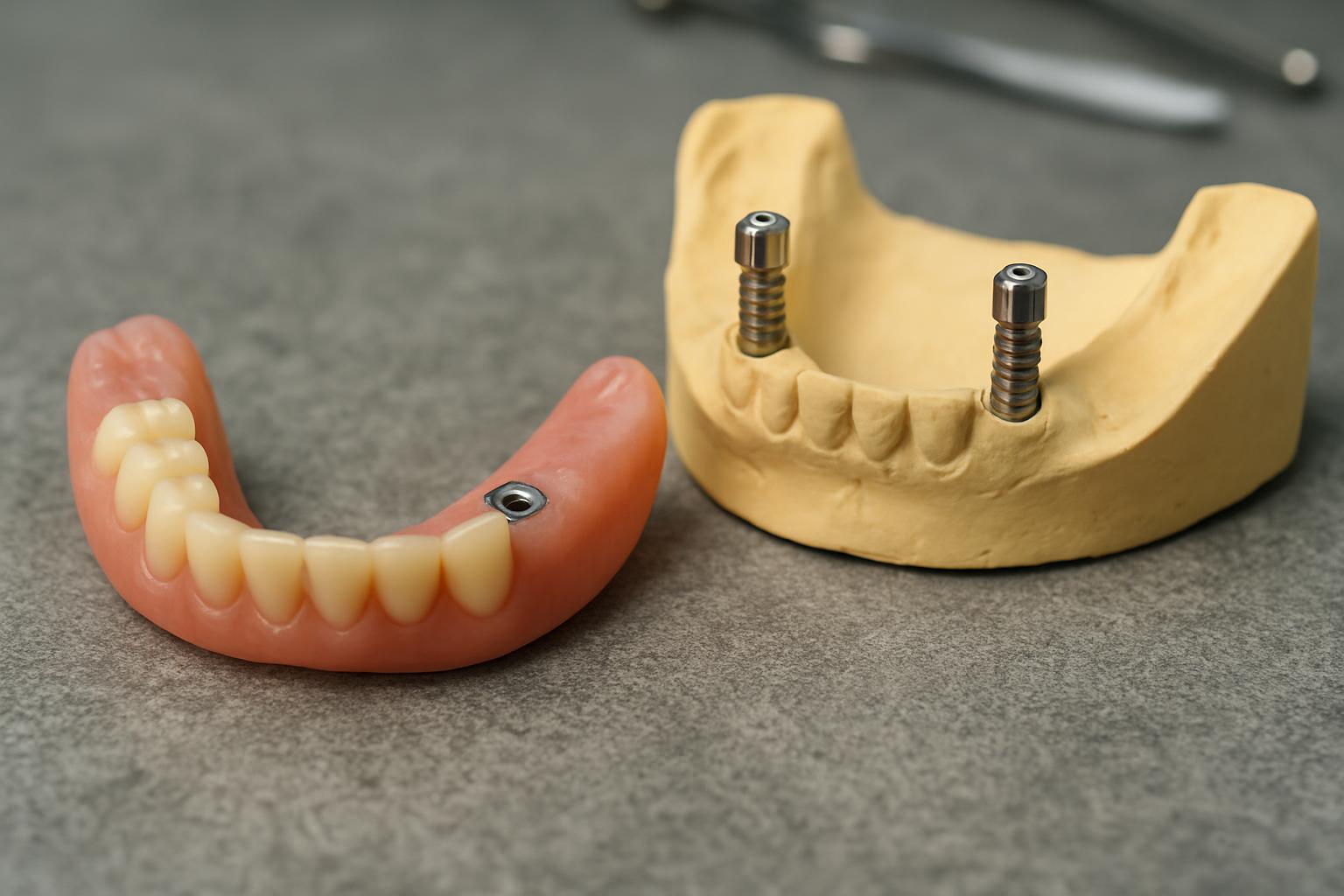
A snap-in denture looks like a regular full denture, but its underside contains small attachments that click onto implants in your jaw. Cleveland Clinic separates implant-retained dentures, which snap in and out, from implant-supported dentures, which are fixed and can’t be removed at home. In everyday use, “snap-in” means the removable kind.
Attachment types
- Ball or locator-style attachments. Each implant has its own low-profile connector, and the denture has matching inserts that click onto it. This is a widely used, simpler design.
- Bar attachments. A thin metal bar connects the implants, and clips inside the denture grip the bar. This design usually involves more lab work and a higher fee.
The number of implants varies. Healthline cites 2 to 6 per jaw. Your dentist will recommend a number based on your bone, your bite and which jaw is being treated.
How much do snap-in dentures cost?
| Option (per arch) | Typical cost | Removable? |
|---|---|---|
| Conventional denture | $1,360-$3,565 (avg. $2,085) | Yes |
| Snap-in denture (implant-retained) | $2,000-$13,300 (avg. about $8,300) | Yes |
| All-on-4 fixed bridge | $11,600-$27,500 | No |
| Single implant (for reference) | $3,000-$5,600 per tooth | No |
Sources: NewMouth (May 2026) and Pearl Dental Costs (ADA fee survey data, May 2026).
The wide range reflects several things: how many implants you need, whether you use locators or a bar, whether you need extractions or a bone graft, and whether the dentist can convert your existing denture or must make a new one. Pearl’s national data puts each implant’s surgical placement alone at an average of $3,075, so every extra implant pushes the total up. For a breakdown of the implant hardware itself, see our dental implants cost guide.
Costs that are easy to forget
- Extractions, if you still have failing teeth. A simple extraction averages about $260 (Pearl).
- Bone grafts, at $549 to $5,148 per site, according to NewMouth.
- Replacement inserts and relines over the years, because the attachments wear with daily use.
- A new denture every several years, since the denture teeth themselves wear down.
Pros of snap-in dentures
- Much better stability. Colgate notes they’re more stable and less likely to slip than conventional dentures, so you can chew firmer foods with more confidence.
- Less jawbone loss. Colgate notes that implants help retain bone mass, while conventional dentures can let the jawbone weaken over time.
- Strong evidence for the lower jaw. The 2002 McGill consensus statement named the two-implant lower overdenture as the first-choice standard of care for people without teeth.
- Easy to clean. Because you can take the denture out, it’s easier to brush under it and around the implants than with a fixed bridge.
- Lower cost than fixed options. It usually costs less than an All-on-4 arch.
Cons and trade-offs
- Surgery. Placing the implants requires surgery, and the bone usually needs three to nine months to fuse with them, according to Cleveland Clinic.
- Maintenance. Healthline notes that attachments can loosen over time. Expect to have the inserts replaced periodically and the denture relined.
- Still removable. Some people dislike taking their teeth out at night. A snap-in denture also moves a little more than a fixed bridge.
- Cost. It’s several times the price of a conventional denture, and insurance often won’t cover the implants.
- Not for everyone. Uncontrolled diabetes, active gum disease, heavy smoking or too little bone can delay or rule out implants.
Snap-in dentures vs All-on-4
Both options use implants to stabilize a full arch of teeth. The difference is whether you can take the teeth out yourself. All-on-4 is a fixed bridge that only the dentist removes, and it costs about $11,600 to $27,500 per arch, according to NewMouth. It stays in place full time, but you can’t take it out to clean it yourself. Snap-in dentures cost less and come out for cleaning. See our All-on-4 dental implants cost guide for a full comparison.
Insurance, Medicare and payment options
Pearl reports that PPO plans typically pay about 50% of a denture after the deductible. Coverage for the implants underneath varies: some plans pay 50%, and many exclude implants. Annual maximums limit how much you get either way. The ADA found about a third of plans cap benefits at $1,000 to $1,500.
Original Medicare doesn’t cover dentures or implants in most cases. Some Medicare Advantage plans include them, and KFF found 50% coinsurance was typical for major services, with modest annual limits.
To reduce what you pay out of pocket, consider these options:
- Pay with HSA or FSA funds. Dentures are listed as a deductible medical expense in IRS Publication 502.
- Ask whether your current denture can be retrofitted with attachments.
- Start with two implants in the lower jaw, where the evidence for overdentures is strongest.
- Check dental school clinics for reduced fees.
- Choose interest-free in-house payment plans over high-interest medical credit cards.
See your dentist if your snap-in denture stops clicking firmly into place, rocks when you chew, or causes sore spots. Also call if the gums around an implant are red, swollen, bleeding or tender, or if an implant feels loose. Catching worn inserts or gum inflammation early protects both the implants and the bone around them.
Frequently asked questions
How many implants do snap-in dentures need?
Usually two to four per jaw, though some plans use up to six. For a lower denture, two implants is the evidence-backed starting point.
How long do snap-in dentures last?
The implants can last many years, often decades. The denture itself typically needs replacing about as often as a regular denture, and the attachment inserts wear out sooner.
Can my existing dentures be converted to snap-in?
Sometimes. If your current denture fits well and is in good condition, a dentist may be able to add attachments after the implants heal.
Do you sleep with snap-in dentures?
Cleveland Clinic advises removing dentures at night for cleaning and soaking. Ask your dentist what’s best for your design.
Are snap-in dentures cheaper than All-on-4?
Generally, yes. Snap-in dentures average about $8,300 per arch, while All-on-4 typically runs $11,600 to $27,500 per arch, according to NewMouth.
Sources
- NewMouth, Types of Dental Implants and How Much Each One Costs
- Pearl Dental Costs, Dentures: National Cost
- Cleveland Clinic, Dentures
- Gerodontology, The McGill consensus statement on overdentures (2002)
- Colgate, The Pros and Cons of Snap-On Dentures
Save this guide for later on Pinterest