Last updated:
If you are missing most of your teeth or your dentures slip every time you eat, you have probably come across “All-on-4” or “teeth in a day.” The idea is simple: instead of replacing every tooth with its own implant, a dentist anchors a full arch of fixed teeth on just four implants. It is one of the biggest dental investments a person can make, and quotes vary by tens of thousands of dollars. Here is what All-on-4 really costs in 2026, what is included, what can push the price higher and how people actually pay for it.
- All-on-4 averages around $15,000 per arch, with most quotes between $12,000 and $27,500; a full mouth (upper and lower) often runs $30,000 to $90,000.
- Large chain clinics commonly quote $14,000 to $36,000 per arch.
- Bone grafts, sinus lifts, extractions and the final prosthesis material are the biggest price drivers.
- Original Medicare and Medigap do not pay; some Medicare Advantage plans contribute $1,000 to $3,000 a year.
What is All-on-4?
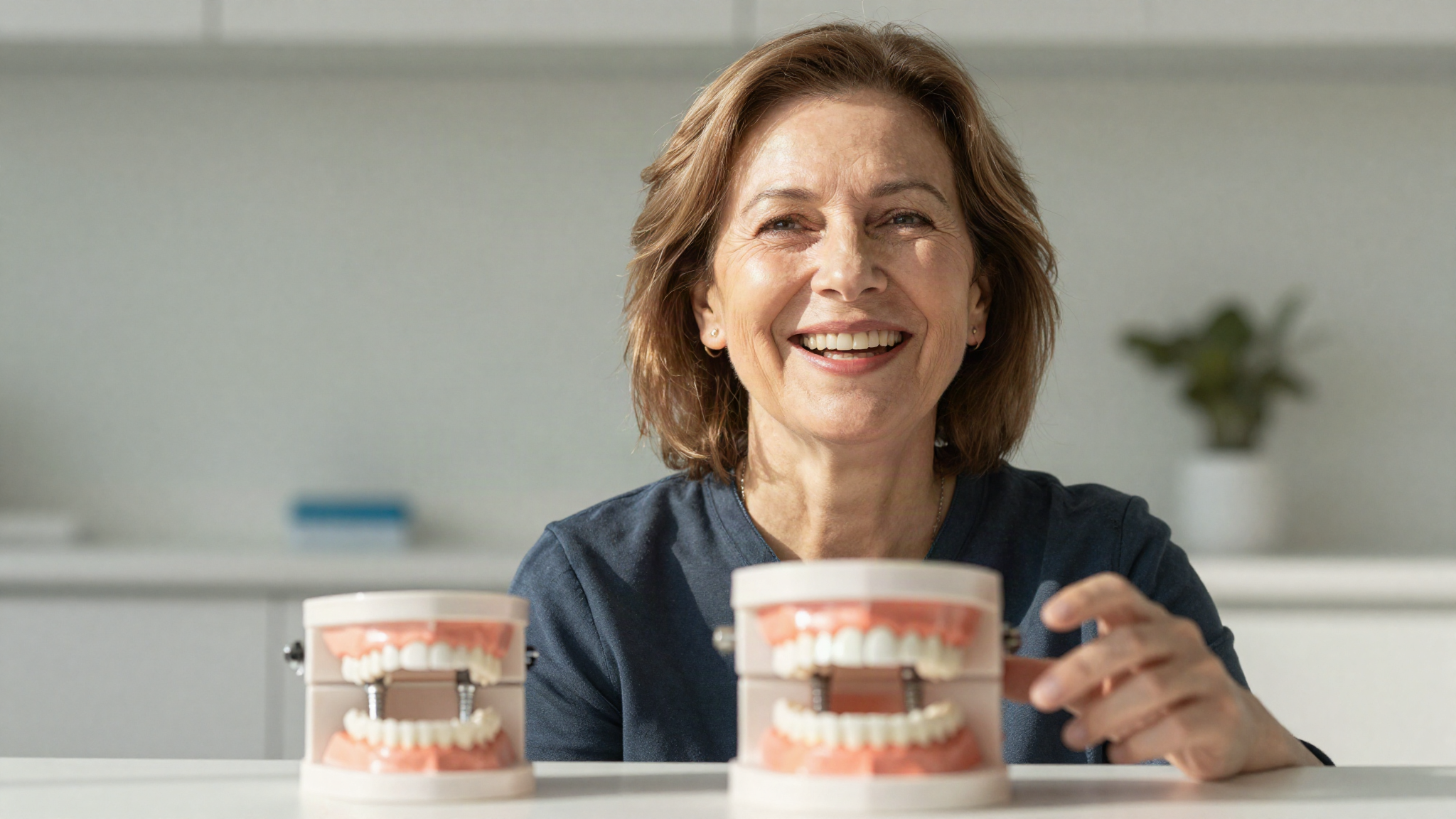
All-on-4 is a technique for replacing all the teeth in one jaw with a fixed bridge supported by four dental implants. Two implants go straight into the front of the jaw. The two back implants are placed at an angle, which lets them use more of the available bone and often avoids the need for extensive bone grafting.
Most patients leave the surgery day with a temporary set of fixed teeth. Over the next four to six months the implants fuse with the jawbone, and then the final, stronger prosthesis is made and attached. Unlike regular dentures, the teeth are not removed at night; only your dentist can take them out.
All-on-4 cost breakdown
| Item | Typical cost | Notes |
|---|---|---|
| One arch (upper or lower) | $12,000 to $27,500 (average about $15,000) | Usually includes 4 implants, surgery and a prosthesis |
| Full mouth (both arches) | $30,000 to $90,000 | Wide range driven by materials and provider |
| Large chain clinics, per arch | About $14,000 to $36,000 | Often all-inclusive package pricing |
| Bone graft | $550 to $5,100 per site | Only if bone is insufficient |
| Sinus lift | About $2,000 | Sometimes needed for upper back implants |
| Temporary prosthesis | $200 to $500 if billed separately | Often included in package pricing |
Figures from TheSeniorList’s 2026 cost analysis. Always compare quotes item by item.
What makes All-on-4 more or less expensive
The final prosthesis material
The permanent teeth are usually made from acrylic (resin on a metal frame) or zirconia. Acrylic costs less and is easier to repair, but it wears and stains faster. Zirconia is extremely strong and stain-resistant, and it is the main reason some quotes sit at the top of the range.
Your bone and gum health
The angled design reduces the need for grafting, but people who have worn dentures for years often have lost bone. Additional grafts or a sinus lift add cost and healing time.
Extractions and sedation
If remaining teeth must be removed on surgery day, extractions add to the bill. IV sedation or general anesthesia, common for this procedure, may also be billed separately.
Who does the work
An oral surgeon and a prosthodontist working together, an all-in-one implant center or a general dentist with implant training will price the same treatment differently. Experience matters more than brand names: ask how many full-arch cases the team completes each year.
All-on-4 vs. other options
All-on-4 sits between traditional dentures and replacing every tooth individually.
- Conventional dentures cost far less upfront but can slip, cover the palate, reduce chewing force and do nothing to stop bone loss.
- Implant-supported snap-in dentures (overdentures) clip onto two to four implants and are removable. They usually cost less than a fixed All-on-4 bridge.
- Individual implants for each tooth are the most natural option but the most expensive and often require more bone. If you are missing only one or a few teeth, see our guide to single dental implant costs.
Is All-on-4 worth it?
For the right candidate, success rates are high, above 90 percent in studies of patients aged 65 and older. Benefits people report most often include being able to eat foods they had given up, no adhesives, clearer speech and confidence when smiling. The fixed bridge also helps preserve bone where the implants sit.
It is not maintenance-free. You still need to clean under the bridge daily with a water flosser or special brushes, get professional cleanings, and expect that the prosthesis itself may eventually need repair or replacement. Smoking and uncontrolled diabetes increase the risk of implant failure.
Does insurance or Medicare pay for All-on-4?
Original Medicare does not cover routine dental care, including implants, and Medigap does not fill that gap. Some Medicare Advantage plans include dental benefits, typically with annual maximums of about $1,000 to $3,000. Private dental insurance works similarly, with annual maximums that cover a small portion of a full-arch case.
A practical tip: because annual maximums reset every year, some patients ask their dentist to split treatment across two calendar years, for example implant surgery in December and the final prosthesis in the new year. This can let you use two years of benefits for one treatment.
Many retirees discover that Medicare also excludes hearing aids. If that affects you, read our comparison of OTC vs. prescription hearing aids to keep total costs down.
How to pay less for All-on-4
- Get at least three written quotes that list implants, surgery, extractions, sedation, temporary and final prosthesis, and follow-up visits.
- Ask about prosthesis options. An acrylic final bridge can save thousands compared with zirconia, with the trade-off of more wear over time.
- Use HSA or FSA money. Dental implants are a qualified medical expense, so pre-tax dollars stretch further.
- Look at dental schools. University programs may offer full-arch treatment at lower fees, supervised by specialists.
- Use financing carefully. In-house payment plans or medical lenders spread costs over time. Read the terms on deferred-interest offers.
- Be cautious with dental tourism. Prices abroad can be lower, but follow-up care, repairs and complications are harder to manage from home.
- Consider your nutrition before surgery. Healthy bone heals better; our overview of essential vitamins and minerals covers calcium and vitamin D.
What the process looks like
- Consultation and 3D scan: a cone-beam CT scan measures bone volume and nerve and sinus positions.
- Surgery day: extractions if needed, placement of four implants, and attachment of temporary teeth, often in one appointment.
- Healing: a soft-food diet for several weeks while the implants integrate over four to six months.
- Final teeth: impressions or scans for the permanent bridge, then fitting and bite adjustment.
- Maintenance: cleanings and checkups, usually every three to six months.
Book an evaluation if dentures are loose, painful or affecting what you can eat, if you have several failing teeth, or if you have bleeding gums or loose teeth. After implant surgery, contact your surgeon right away for fever, swelling that worsens after three days, bleeding that does not stop with pressure, numbness that persists, or a temporary bridge that feels loose or cracked.
Frequently asked questions
How long does All-on-4 last?
The implants themselves can last decades with good care. The prosthesis may need repairs or replacement over time, especially acrylic versions.
Does All-on-4 hurt?
The surgery is done under anesthesia or sedation. Swelling and soreness are common for several days and are usually managed with prescribed or over-the-counter pain relief.
Can I get All-on-4 if I have bone loss?
Often yes. The angled back implants are designed to use the bone that remains. Severe bone loss may require grafting or alternative implant types.
Why is there such a big price difference between clinics?
Packages differ in what they include: the number of implants, sedation, extractions, the temporary set and especially the final prosthesis material.
Is All-on-4 better than dentures?
It is more stable and feels closer to natural teeth, but it costs much more. Dentures remain a reasonable choice for people who cannot have surgery or prefer a lower-cost option.
Sources
- TheSeniorList, All-on-4 Dental Implants Cost
- Cleveland Clinic, Dental Implants
- Medicare.gov, Dental Services
- IRS Publication 502, Medical and Dental Expenses
Save this guide for later on Pinterest