Last updated:
Struggling to follow conversations at dinner or turning the TV up louder every month? Hearing aids can change daily life, but traditional prescription devices average about $4,600 a pair. Since the FDA created a new over-the-counter (OTC) category, many adults can now buy hearing aids without a prescription or a hearing exam. Here is how the two options compare on price, who each one is for, and how to choose without wasting money.
- Prescription hearing aids average about $4,600 per pair; premium models can reach $12,000.
- OTC hearing aids have been sold without a prescription since the FDA rule of August 2022.
- OTC devices are only for adults 18 and older with perceived mild to moderate hearing loss.
- Original Medicare and most private insurers do not cover hearing aids.
How much do hearing aids cost in 2026?
AARP reports that prescription hearing aids cost around $4,600 per pair on average, with premium models reaching $12,000. When OTC hearing aids were authorized, government officials estimated Americans would save about $2,800 per pair on average (AARP).
Prices for OTC models vary widely by brand and by the support included, such as app-based fitting, phone help or a remote audiologist (UCSF EARS).
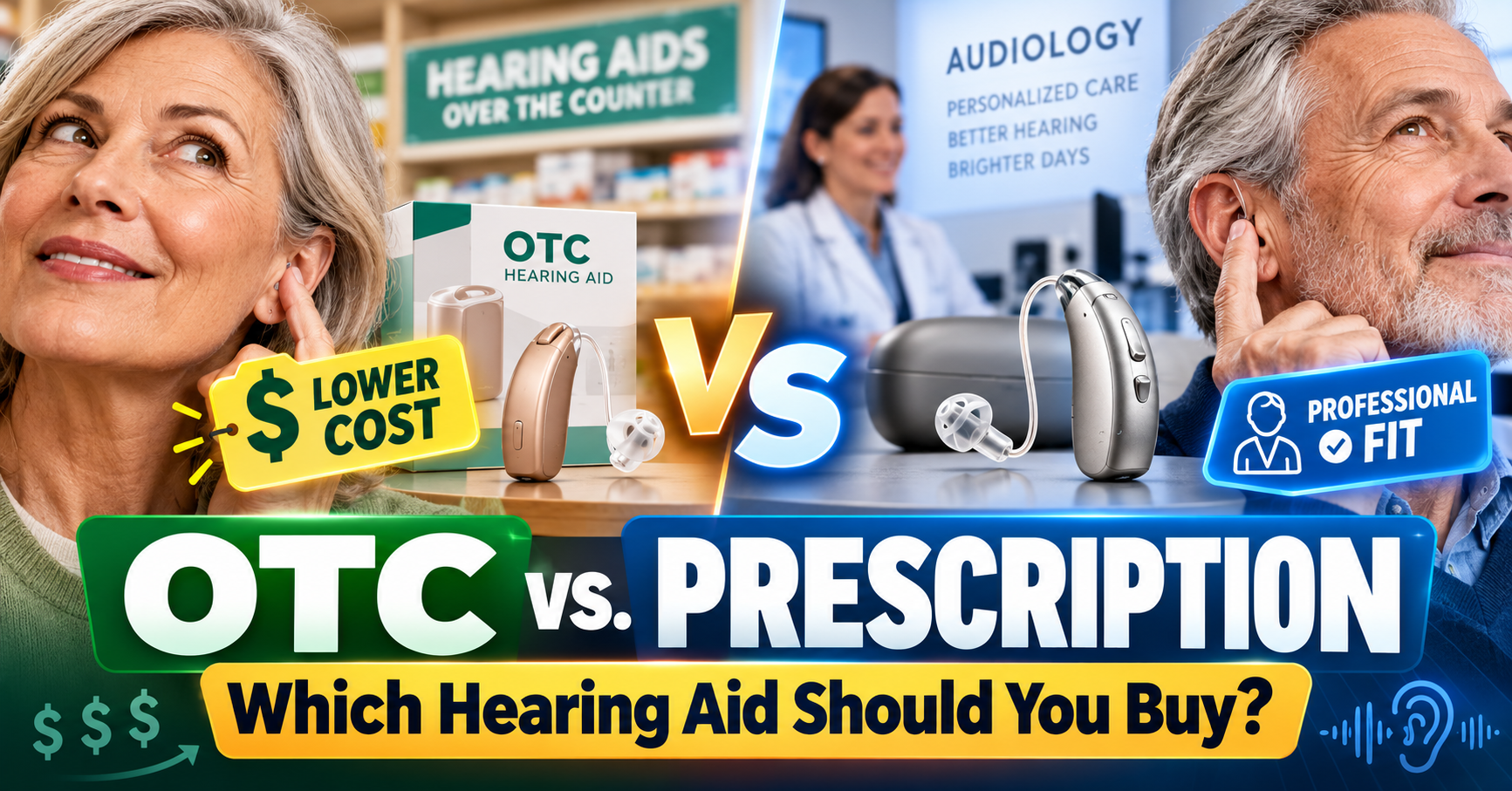
OTC vs. prescription hearing aids at a glance
| OTC hearing aids | Prescription hearing aids | |
|---|---|---|
| Who they’re for | Adults 18+ with perceived mild to moderate loss | All levels of hearing loss, including severe, and children |
| Hearing test needed | No | Yes |
| Fitting | You set them up, often with an app | Programmed by a professional |
| Average price | Varies widely; much lower on average | About $4,600 per pair |
| Where to buy | Pharmacies, electronics stores, online | Audiologists and hearing clinics |
Are OTC hearing aids right for you?
UCSF audiologists say OTC devices tend to suit people who struggle in noisy places or at a distance but still hear fairly well in quiet rooms, and whose hearing loss is similar in both ears (UCSF EARS).
Signs you may have mild to moderate loss include:
- Asking people to repeat themselves, especially in restaurants.
- Finding speech clear but “mumbled” on the phone.
- Family members commenting on the TV volume.
- Feeling tired after group conversations because listening takes effort.
How to choose an OTC hearing aid (and not waste money)
- Check the label. The package should say “OTC hearing aid.” Personal sound amplifiers are not the same thing.
- Read the return policy before you buy. Look at the length of the trial, any restocking fee and when the clock starts.
- Think about comfort and controls. Small buttons can be hard to use; an app may be easier.
- Choose the battery type that fits your life: rechargeable or replaceable.
- Check phone compatibility if you want to stream calls.
Checklist adapted from UCSF EARS.
Does Medicare or insurance pay for hearing aids?
AARP notes that most private insurers and Medicare don’t cover hearing aids (AARP). Some Medicare Advantage plans offer hearing benefits or discounts, so compare plans during open enrollment. You can also pay with an HSA or FSA.
Get a professional hearing evaluation if you have sudden hearing loss, ear pain or drainage, dizziness, hearing loss mainly in one ear, bothersome ringing (tinnitus), or if an OTC device gives little improvement after a 7 to 14 day trial (UCSF EARS). Sudden hearing loss should be checked urgently.
Frequently asked questions
Do I need a hearing test to buy OTC hearing aids?
No. The FDA says you do not need a hearing test to try an OTC device. A test can still help you understand how much loss you have and whether both ears are affected.
Can an audiologist help with OTC hearing aids?
Yes. Some audiologists will help fit and adjust OTC devices for a fee, which can be a good middle ground.
Are cheap hearing amplifiers the same as OTC hearing aids?
No. Personal sound amplification products make sounds louder but are not regulated as hearing aids. Look for the “OTC hearing aid” label.
Does Medicare cover dental implants?
Usually not. See our guide to dental implant costs and ways to pay less.
Sources
Save this guide for later on Pinterest