Last updated:
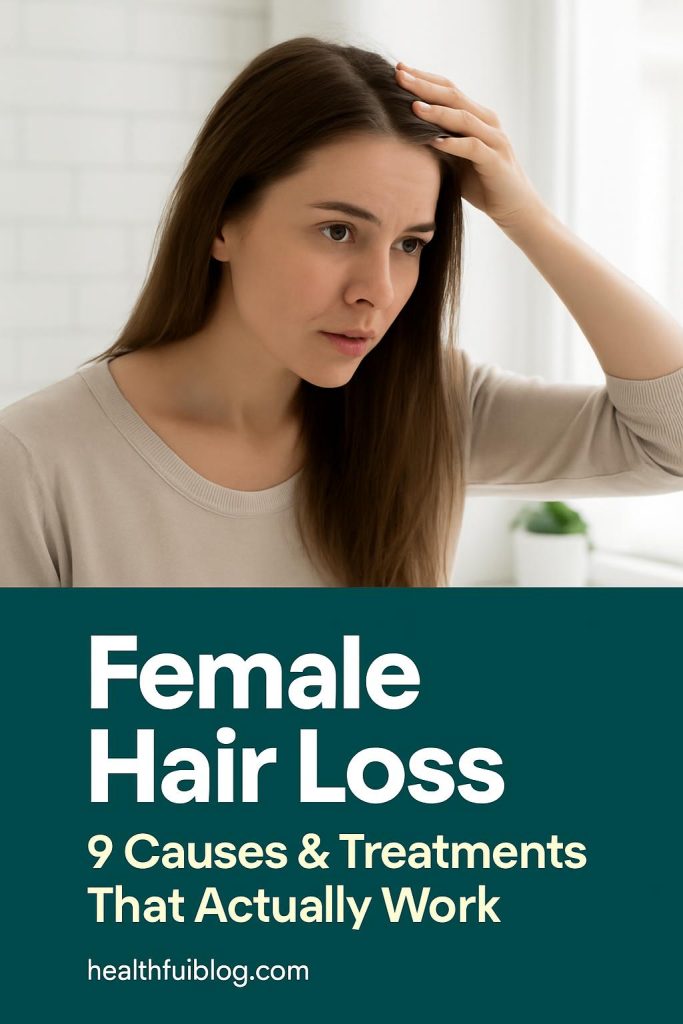
Finding more hair than usual on your pillow, in the shower drain or on your hairbrush can be unsettling. Hair loss in women is far more common than most people think, and the good news is that many of its causes are temporary or treatable. The key is figuring out which type you have, because a thyroid problem, a stressful event and genetic thinning each need a very different approach. Here are the nine most common causes of hair loss in women, how to tell them apart and the treatments that have real evidence behind them.
- Losing 50 to 100 hairs a day is normal. More than that, a widening part or visible scalp is worth checking.
- The two most common causes are female pattern hair loss (genetic, gradual) and telogen effluvium (sudden shedding 2 to 3 months after a stressor).
- Simple blood tests for iron, thyroid and vitamin D can uncover fixable causes.
- Minoxidil is the first-line treatment for pattern thinning in women; results take 3 to 6 months.
How much hair loss is normal?
According to the American Academy of Dermatology, most people shed 50 to 100 hairs a day as part of the normal hair cycle. You will notice more on wash days, especially if you wash only a few times a week. Signs that something more is going on include:
- A part that looks wider than it used to
- A smaller ponytail
- Scalp visible under bright light
- Clumps of hair coming out, or round bald patches
- Breakage along the hairline or temples
9 common causes of hair loss in women
| Cause | What it looks like | Usually temporary? |
|---|---|---|
| Female pattern hair loss | Gradual thinning at the top and crown, wider part | No, but treatable |
| Telogen effluvium | Sudden diffuse shedding 2 to 3 months after illness, surgery, stress or a crash diet | Yes, often 6 months |
| Postpartum shedding | Heavy shedding about 3 months after giving birth | Yes, 6 to 12 months |
| Iron deficiency | Diffuse thinning, often with fatigue | Often improves with treatment |
| Thyroid disease | Diffuse thinning, dry hair, weight or energy changes | Often improves with treatment |
| PCOS and hormone changes | Thinning on top, acne, irregular periods, extra facial hair | Manageable |
| Traction alopecia | Thinning at the hairline from tight styles or extensions | Yes if caught early |
| Alopecia areata | Round, smooth bald patches | Often regrows; treatments exist |
| Medications | Shedding after starting a new drug | Usually, once adjusted |
1. Female pattern hair loss
The most common cause of long-term thinning in women. It runs in families and can start any time after puberty, though it often becomes noticeable around menopause. Unlike men, women rarely go bald; instead the hair gets thinner on the top of the head while the front hairline usually stays intact.
2. Telogen effluvium
A shock to the body, such as a high fever, COVID-19, surgery, major emotional stress or rapid weight loss, can push many hairs into the resting phase at once. The shedding shows up two to three months later, which is why people rarely connect it to the trigger. It typically settles on its own within about six months once the cause is gone.
3. Postpartum shedding
High pregnancy hormones keep hair in its growth phase. After delivery, those hairs shed together, usually starting around three months postpartum. Hair generally returns to normal within 6 to 12 months.
4. Low iron
Heavy periods, pregnancy and plant-based diets can lower iron stores. Doctors often check ferritin, a measure of stored iron. Do not take iron supplements without testing, since too much iron is harmful.
5. Thyroid problems
Both an underactive and an overactive thyroid can thin hair. A simple TSH blood test screens for it.
6. PCOS and hormonal shifts
Higher androgen levels in polycystic ovary syndrome can cause thinning on the scalp along with acne and excess facial hair. Stopping certain birth control pills and menopause can also trigger shedding.
7. Traction alopecia
Tight braids, ponytails, buns, weaves and extensions pull on follicles over time. Caught early, hair usually grows back once the tension stops; years of pulling can cause permanent loss.
8. Alopecia areata
An autoimmune condition that causes smooth, round patches. Dermatologists have several treatments, including steroid injections and newer prescription pills for severe cases.
9. Medications and treatments
Some blood thinners, antidepressants, acne medications, high-dose vitamin A and chemotherapy can cause shedding. Never stop a prescription on your own; ask your doctor about alternatives.
Tests your doctor may order
- Complete blood count and ferritin for anemia and iron stores
- TSH for thyroid function
- Vitamin D level
- Hormone tests if you have irregular periods, acne or extra facial hair
- Occasionally a scalp biopsy when the diagnosis is unclear
Treatments that actually work
| Treatment | Best for | Typical cost |
|---|---|---|
| Minoxidil 5% foam (OTC) | Female pattern hair loss | About $10 to $40 per month |
| Low-dose oral minoxidil (prescription) | Pattern thinning when topical is impractical | Often under $20 per month |
| Spironolactone (prescription) | Pattern thinning, especially with high androgens or PCOS | Often under $20 per month |
| Low-level laser devices | Add-on for pattern thinning | About $400 to $1,900 one time |
| PRP injections | Add-on for pattern thinning | About $400 to $1,500 per session |
| Treating the cause | Iron, thyroid, medication or stress-related shedding | Varies |
Minoxidil is the only over-the-counter drug approved by the FDA for female pattern hair loss. Most dermatologists recommend the 5% foam once a day. Expect some extra shedding in the first weeks and give it at least six months. Spironolactone is not safe during pregnancy, and anyone who could become pregnant needs reliable contraception while taking it.
For women with advanced thinning in a stable pattern, a transplant can be an option; see our guide to hair transplant costs.
Everyday habits that protect your hair
- Choose loose styles and rotate where you place ponytails and clips.
- Limit heat styling and use a heat protectant.
- Space out bleaching, perms and relaxers.
- Eat enough protein, plus iron-rich foods such as lentils, beans, lean meat and leafy greens.
- Avoid crash diets, which often trigger shedding months later.
- Be gentle when hair is wet; use a wide-tooth comb.
For more practical day-to-day ideas, read our top tips for thinning hair, and see which vitamins and minerals support healthy hair. Be careful with biotin: high-dose supplements rarely help people who are not deficient and can interfere with some lab tests, including thyroid tests.
See a doctor or dermatologist if you shed hair in clumps, notice round bald patches, have a burning, itchy or painful scalp, or if hair loss comes with fatigue, weight changes, irregular periods, acne or new facial hair. Early treatment gives you the best chance of keeping your hair, especially for pattern thinning and scarring types of hair loss.
Frequently asked questions
Will my hair grow back?
Hair lost to telogen effluvium, postpartum shedding, low iron or thyroid problems usually regrows once the cause is treated. Pattern hair loss can be slowed and partly reversed with treatment.
How long until treatments work?
Most hair treatments need three to six months to show visible changes and up to a year for full results.
Can stress really make your hair fall out?
Yes. Major stress can trigger telogen effluvium, with shedding appearing two to three months later.
Is minoxidil safe for women?
Topical minoxidil is approved for women and generally well tolerated. It is not recommended during pregnancy or breastfeeding.
Does hair loss in women mean I will go bald?
Rarely. Women with pattern hair loss usually experience thinning rather than complete baldness.
Sources
- American Academy of Dermatology, Hair Shedding
- Mayo Clinic, Hair Loss: Symptoms and Causes
- Johns Hopkins Medicine, Postpartum Hair Loss
- MedlinePlus, Hair Loss
Save this guide for later on Pinterest